The San Juan–Bayamón–Caguas metro has 2.1M residents (per 2024 ACS 5-year Estimates ), a 2024 median household income of $29K, median home value of $146K, median age of 44, and a 32% bachelor's-degree share among adults 25 and older. The analysis below clusters neighborhoods within the metro's urbanized areas, covering 1.5M of those 2.1M residents. The highest home values, incomes, and education concentrate in the north-central urban core anchored by the island's capital, San Juan , while the outlying western and interior areas sit at the bottom. The metro's median household income runs well below that of any mainland metro in this series.
Median home value
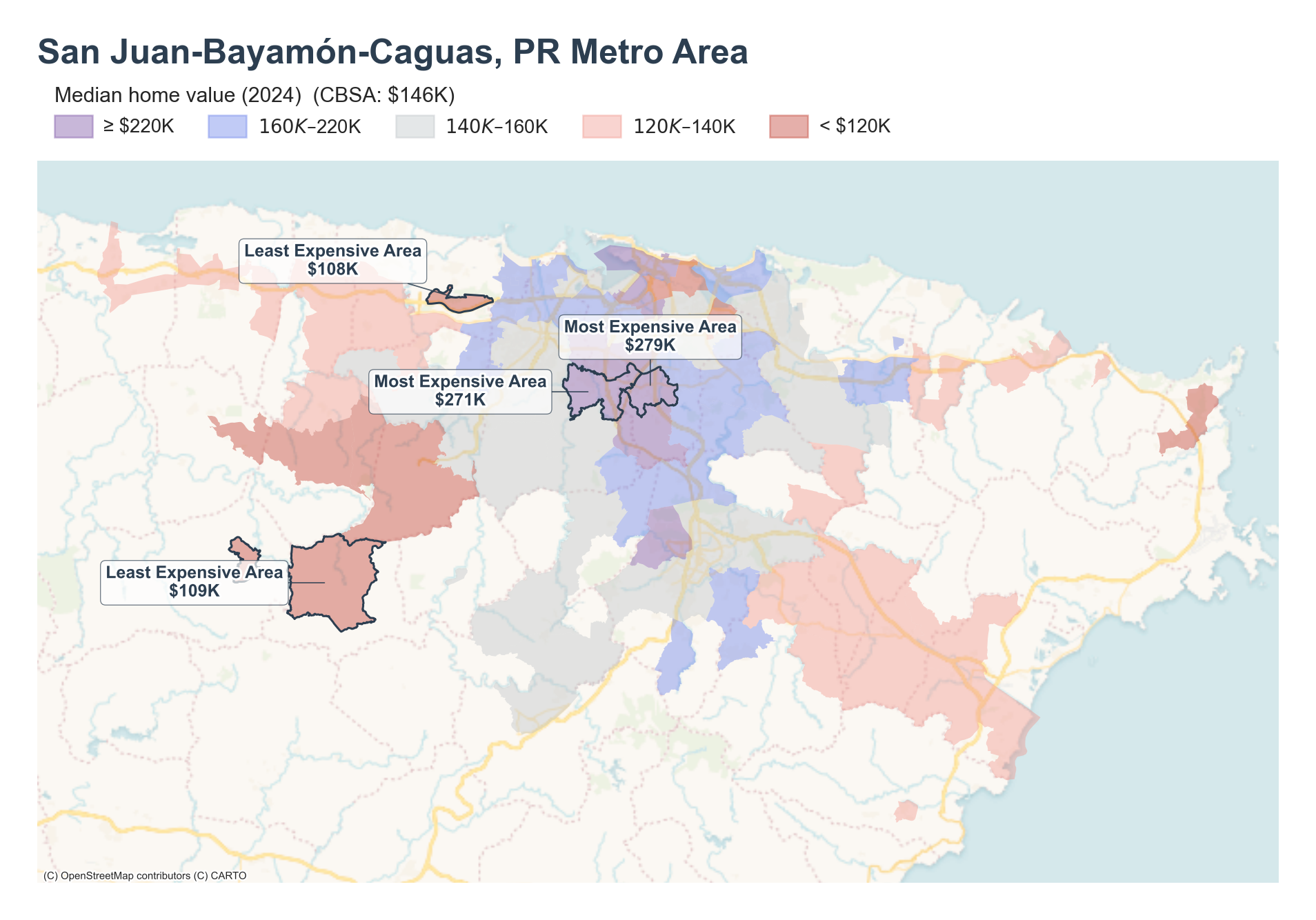
The highest values cluster in the north-central urban core. The metro's most expensive area tops out at $279K, with a neighboring core area at $271K, a third at $266K, a fourth at $261K, and a fifth at $249K. At the bottom, the lowest values sit in the outlying western and interior areas: the least expensive area at $108K, followed by areas at $109K, $112K, $114K, and $115K. The ≥$220K tier is confined to the core; the under-$120K tier covers the western and interior edges of the metro.
Median household income
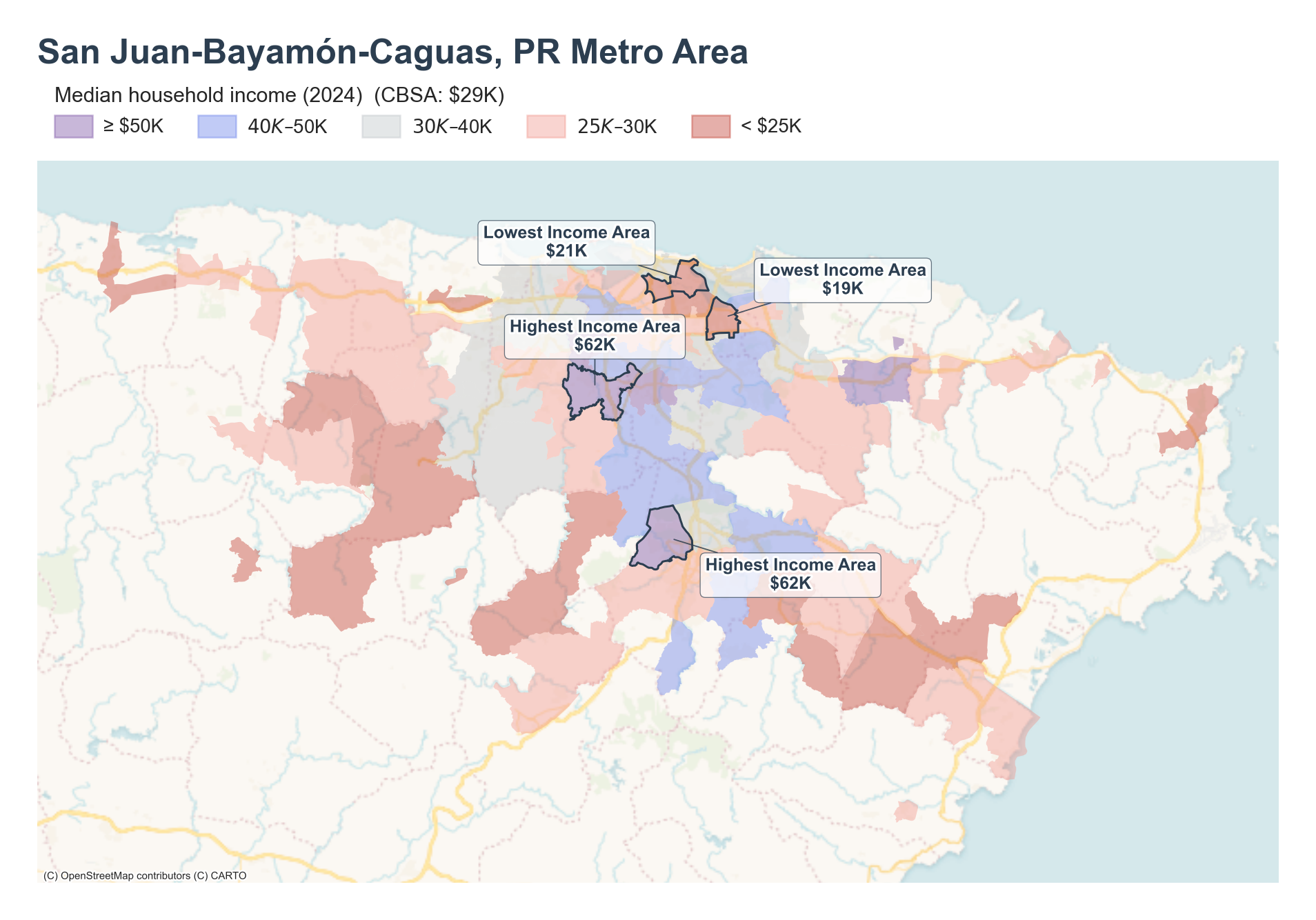
The highest incomes sit in the same north-central core. The top area reaches $62K, with a second area also at $62K, a third at $59K, a fourth at $57K, and a fifth at $55K. The lowest incomes are in the outlying and eastern areas: the lowest at $19K, followed by areas at $21K, $22K, $22K, and $22K. Even the metro's highest-income area sits below the median household income of most mainland metros in this series, and the ≥$50K tier is limited to the core.
Median age
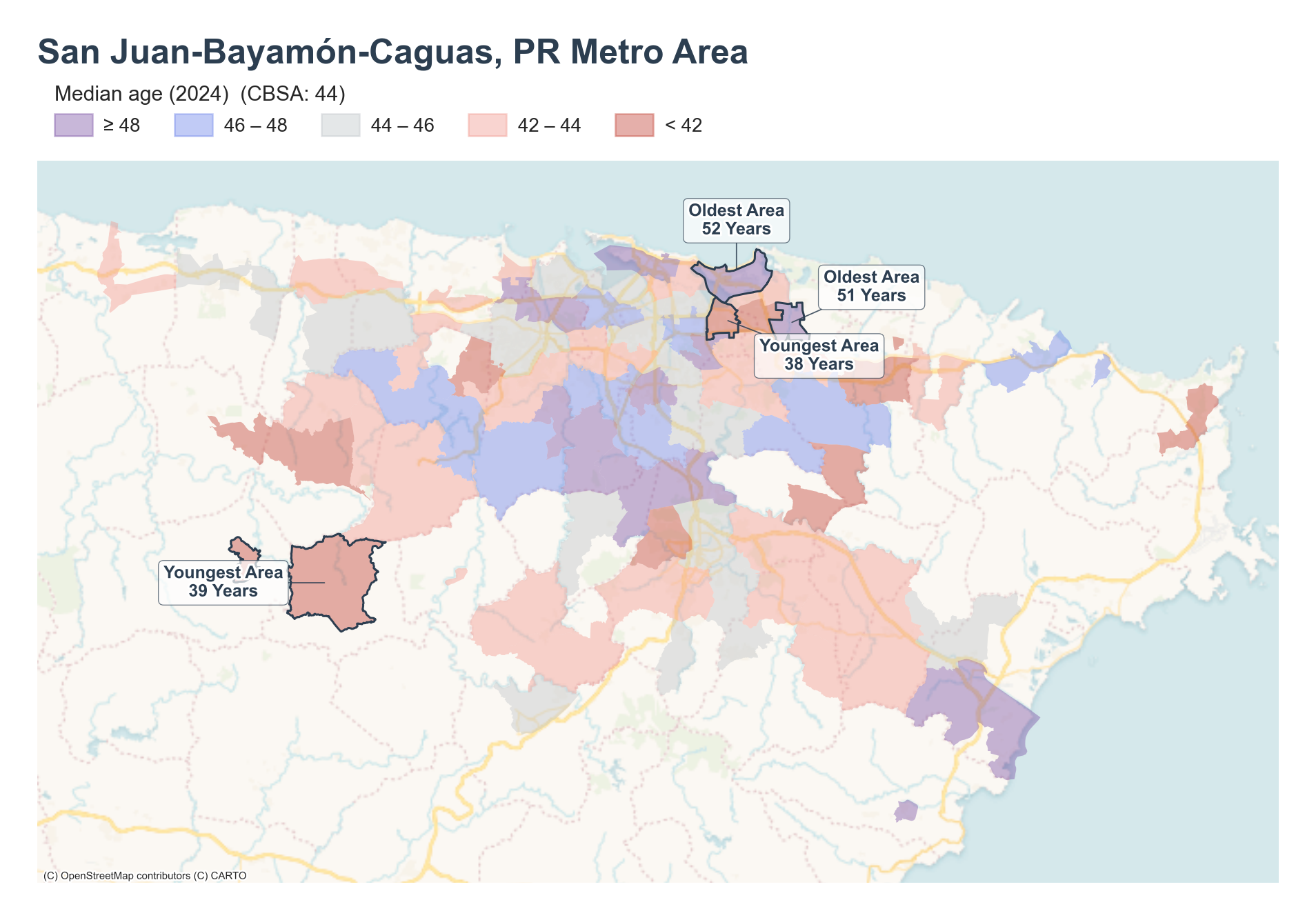
The oldest neighborhoods are scattered through the core and the eastern side. The oldest area tops the metro at 52, with another at 51, and three more at 49. The youngest neighborhoods sit in the core and the southwestern interior: the youngest area at 38, two areas at 39, and two more at 40. Most of the metro sits in the 42–48 range, an older profile than most mainland metros in this series.
Adults with a bachelor's degree
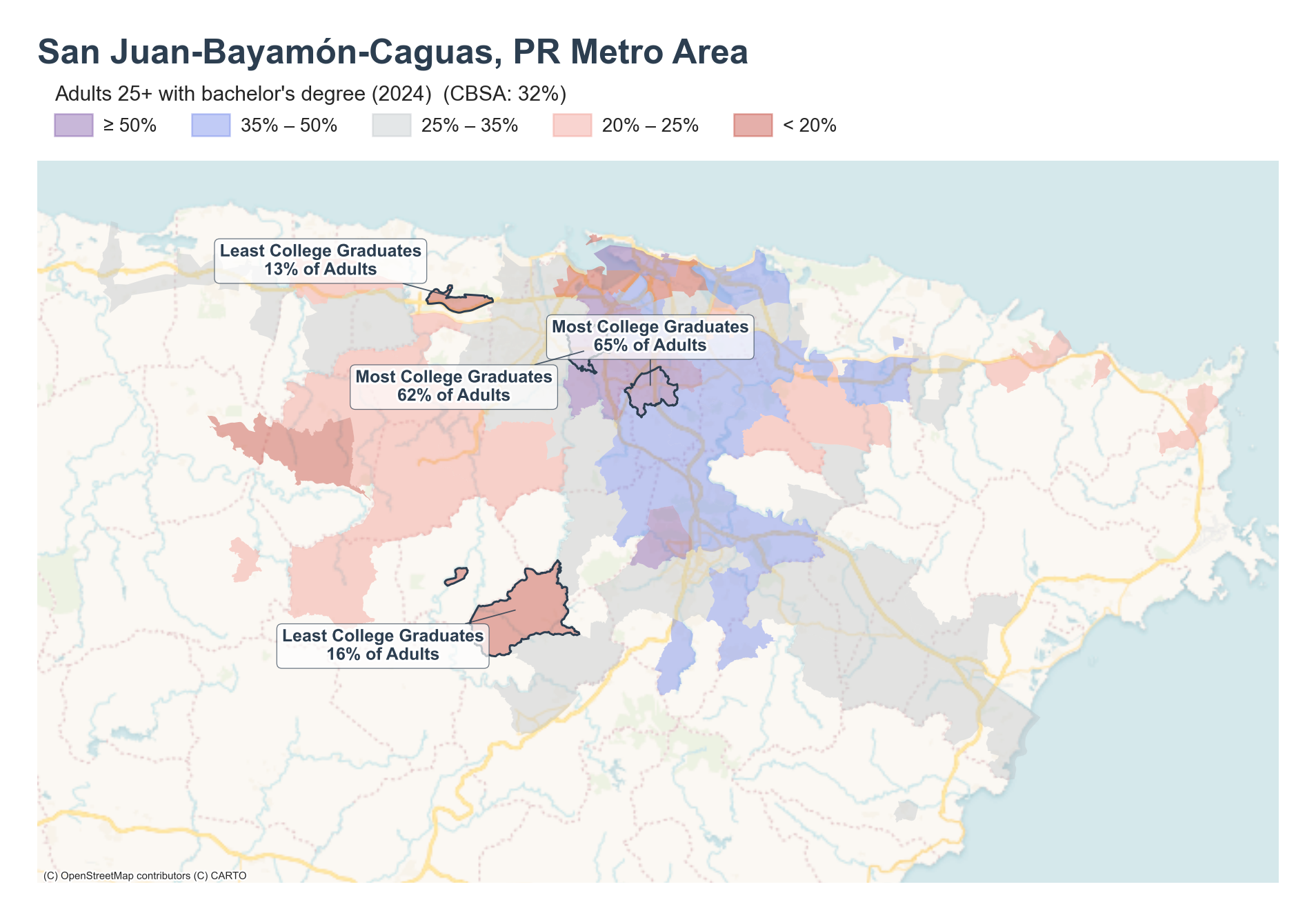
Education peaks in the north-central core. The top area leads at 65%, with a second core area at 62%, a third at 57%, and two more at 55%. The lowest shares are in the western and interior areas: the lowest at 13%, followed by areas at 16%, 17%, 17%, and 18%. The ≥50% tier follows the core; the under-20% tier covers the outlying western and interior areas.
Where the metrics overlap
The north-central urban core sits at the top of home value, income, and education together — the metro's most expensive area at $279K also posts the metro's highest bachelor's share at 65% and one of its top incomes at $59K. The outlying western and interior areas form the opposite corner: the least expensive area at $108K pairs a $22K income with a 13% bachelor's share. The sharpest split, though, is between the metro and the mainland — even the core's strongest income area at $62K would rank near the bottom in most of the mainland metros in this series, and the metro-wide median household income of $29K sits below every neighborhood-level low in the wealthier mainland metros.
Key Takeaways
- Across the metro, the median home value is $146K, median household income is $29K, median age is 44, and the bachelor's-degree share is 32%.
- The metro's most expensive area tops home value at $279K and education at 65%.
- The highest-income areas reach $62K, while the lowest fall to $19K.
- The least expensive area sits at $108K, alongside a $22K income and a 13% bachelor's share.
- The oldest neighborhoods reach a median age of 52; the youngest fall to 38.