Kansas Housing Affordability
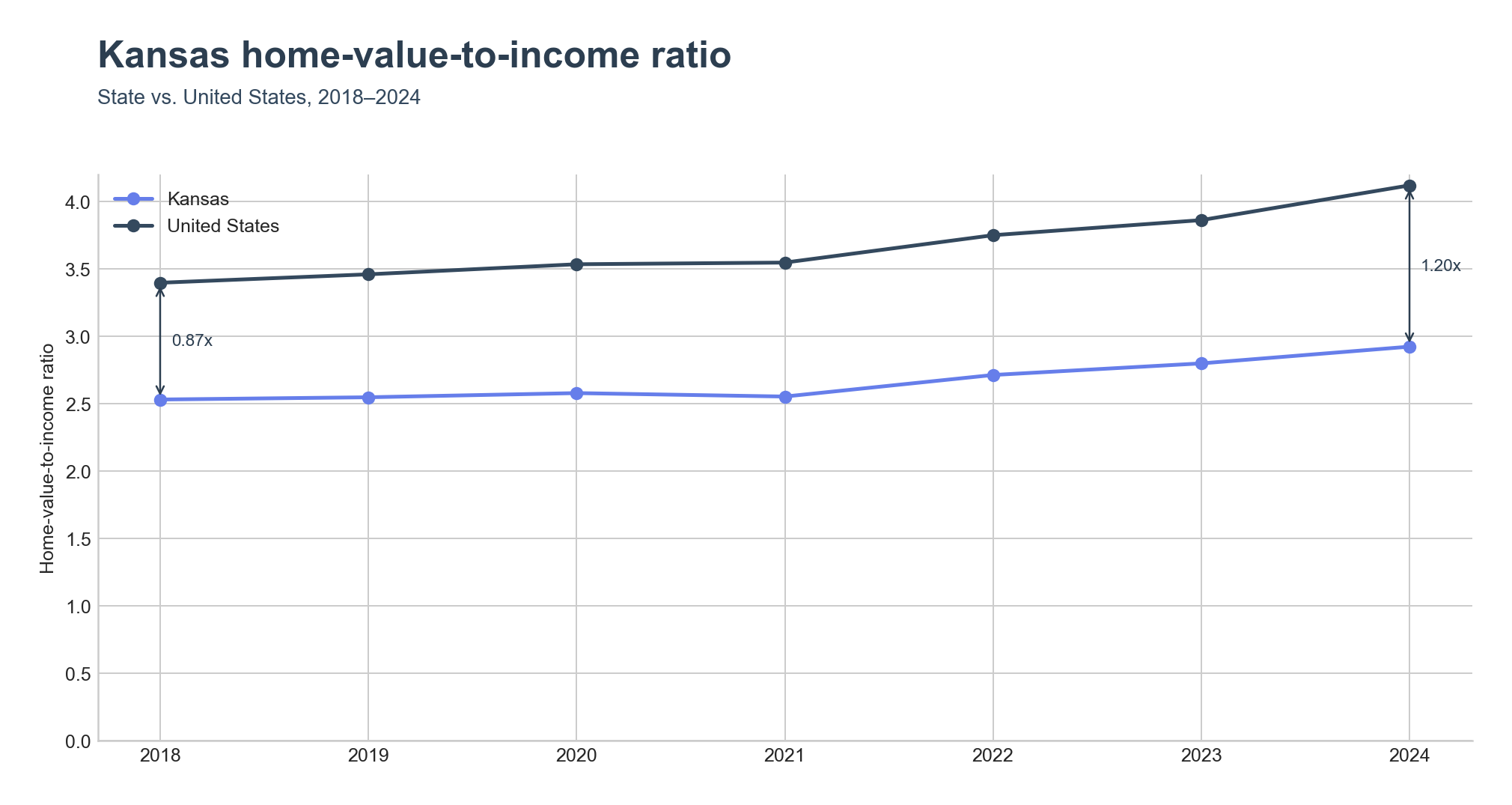
Kansas's home-value-to-income ratio has climbed since 2018, but it has grown more slowly than the national ratio, widening the gap between the state and the country.
Read postNeighborhood Insights Blog
Explore data stories and practical guides built from the same Census-backed datasets used across the site.
Click a highlighted state or metro to filter the posts below.
Kansas's home-value-to-income ratio has climbed since 2018, but it has grown more slowly than the national ratio, widening the gap between the state and the country.
Read post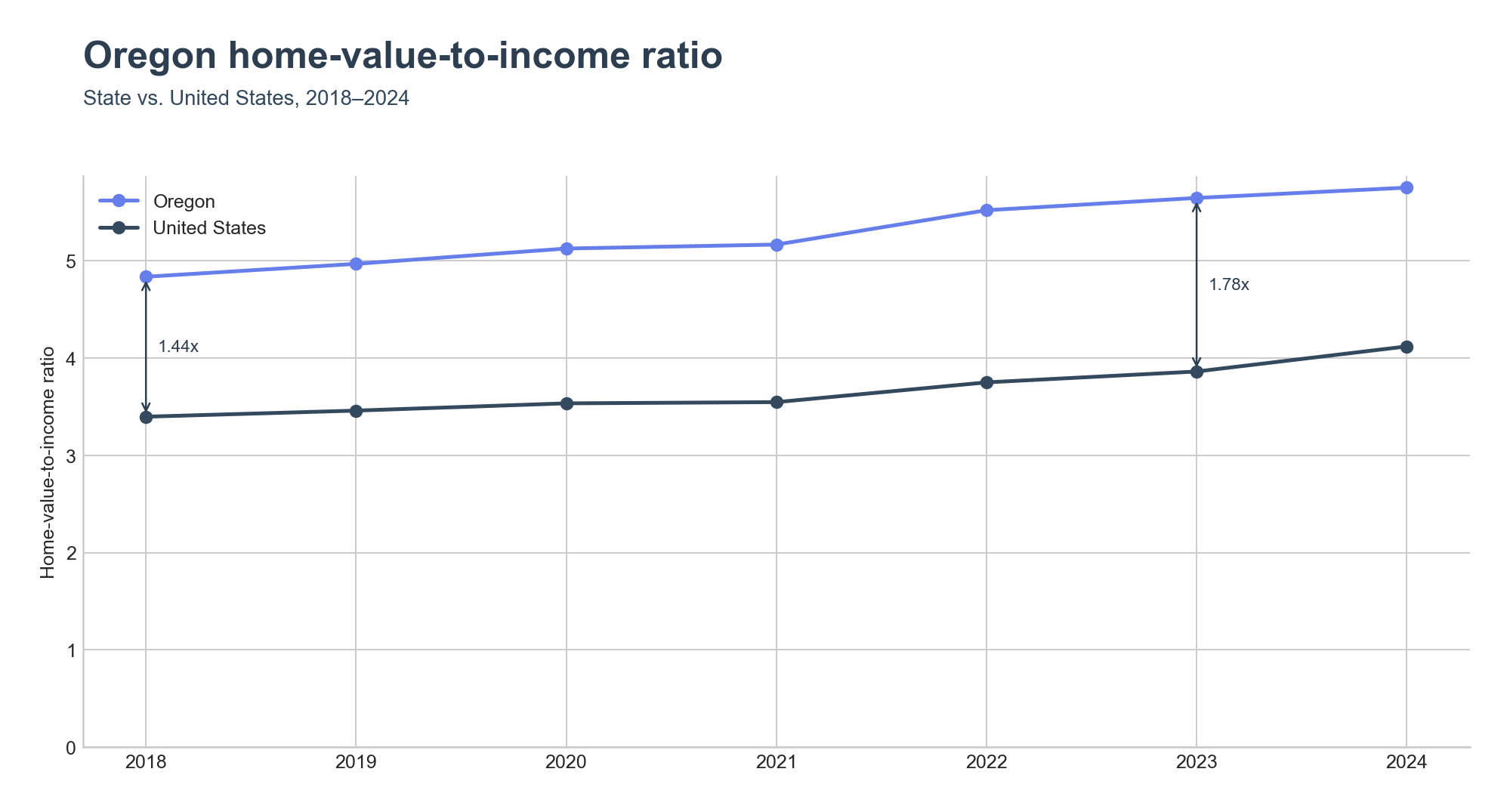
Oregon's home-value-to-income ratio has run well above the national figure since 2018, and the gap between the two has widened rather than closed.
Read post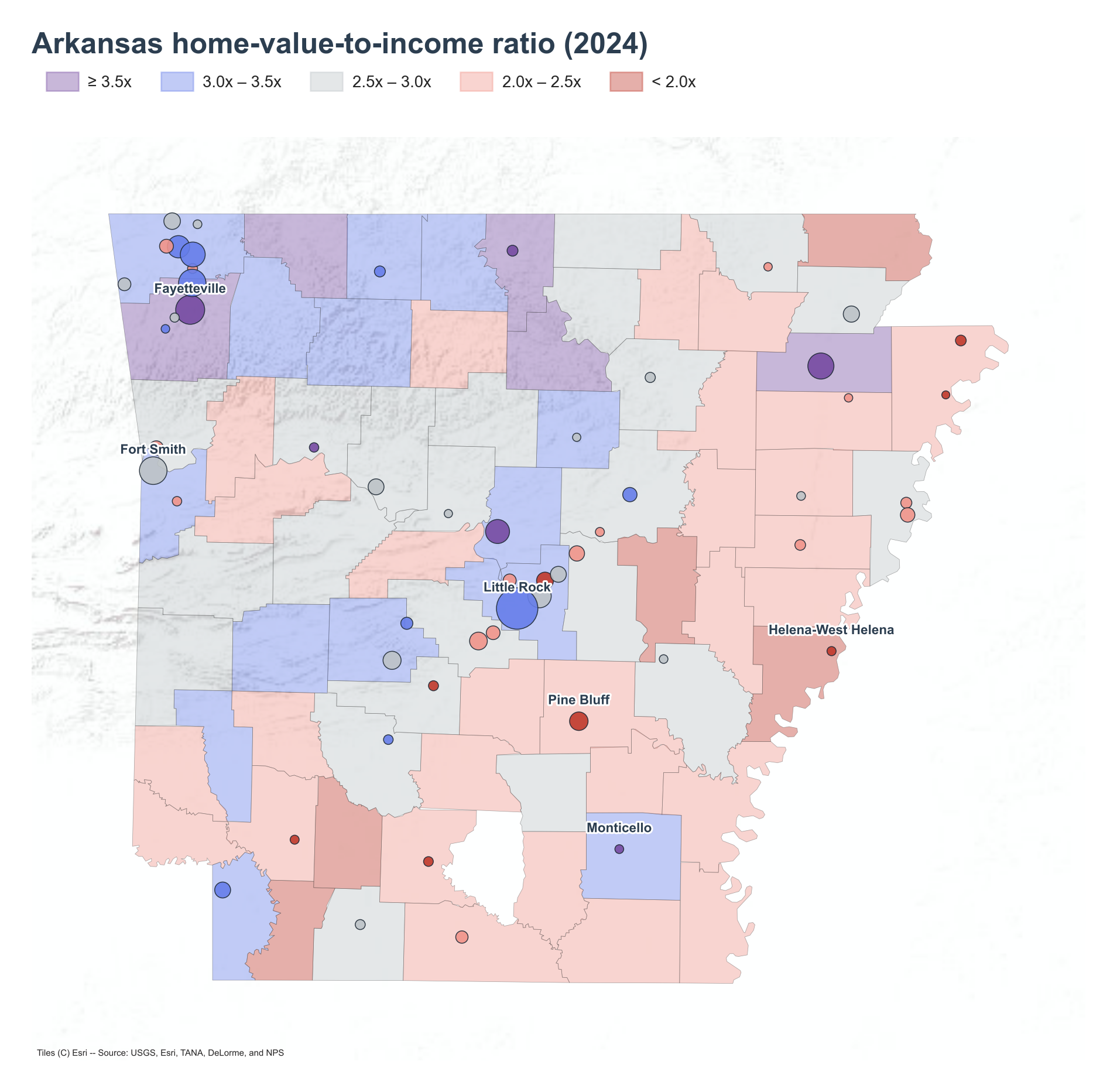
Arkansas homes cost less relative to income than the nation as a whole, but the gap to the national ratio has widened since 2018 as home values climbed faster than household income.
Read post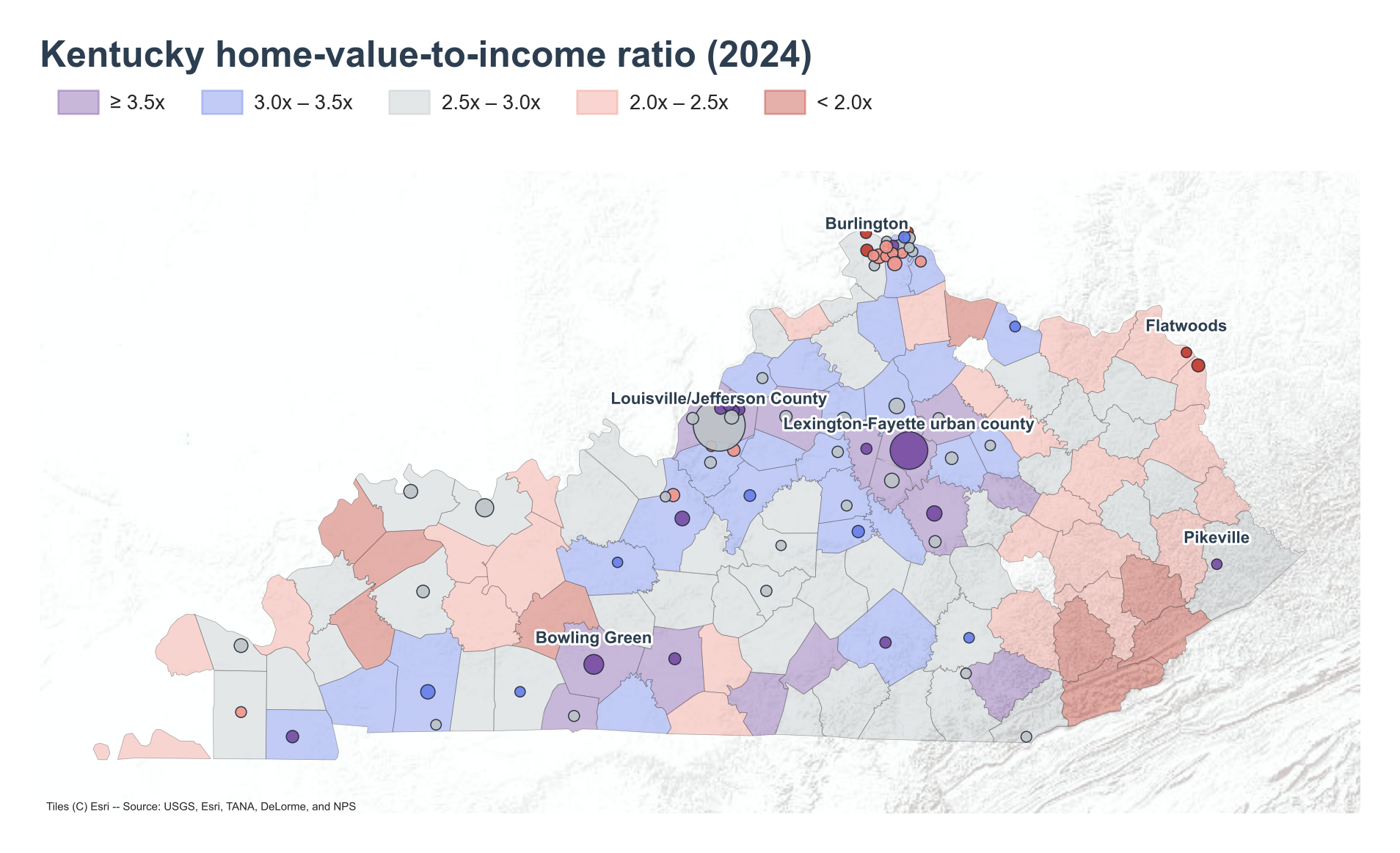
Kentucky's home-value-to-income ratio has climbed since 2018, but the state is falling further behind the national ratio, not catching up.
Read post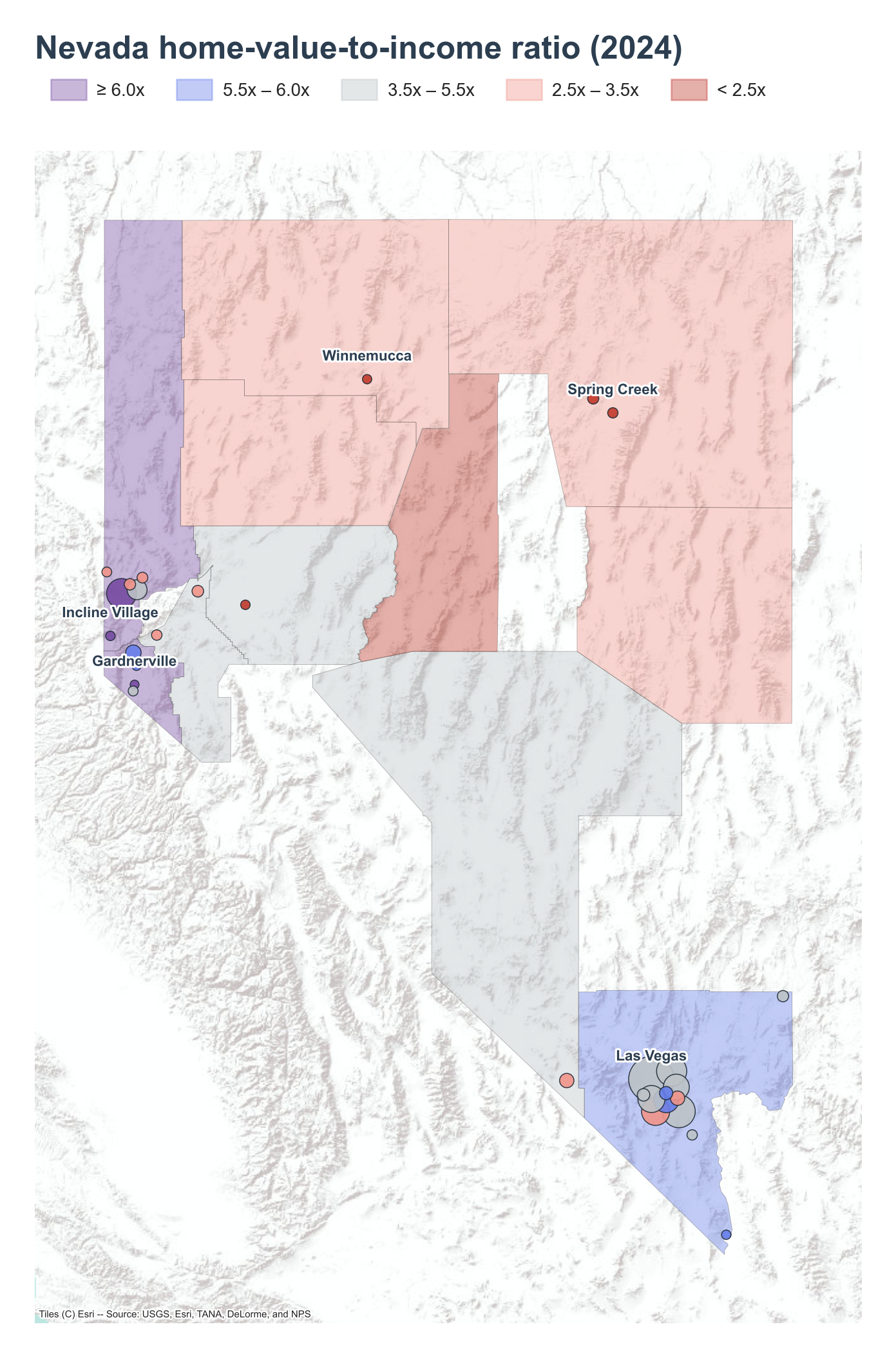
Nevada's home-value-to-income ratio climbed from 4.21x in 2018 to 5.56x in 2024, pulling further above the U.S. ratio each year and pushing most Nevadans into places at 5x or higher.
Read post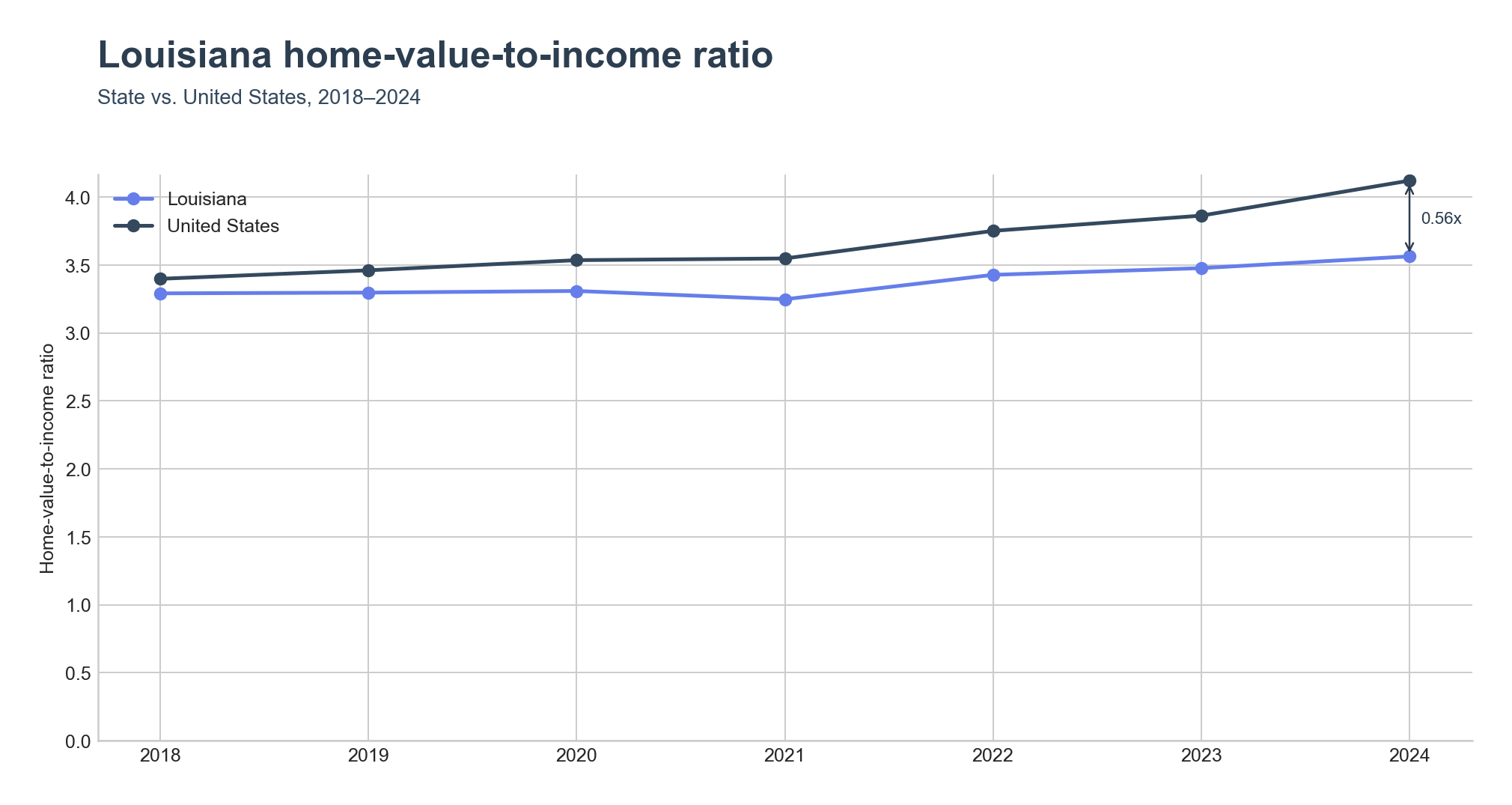
Louisiana's home-value-to-income ratio has climbed since 2018, but it has grown more slowly than the national ratio, leaving the state further behind the US than it was six years ago.
Read post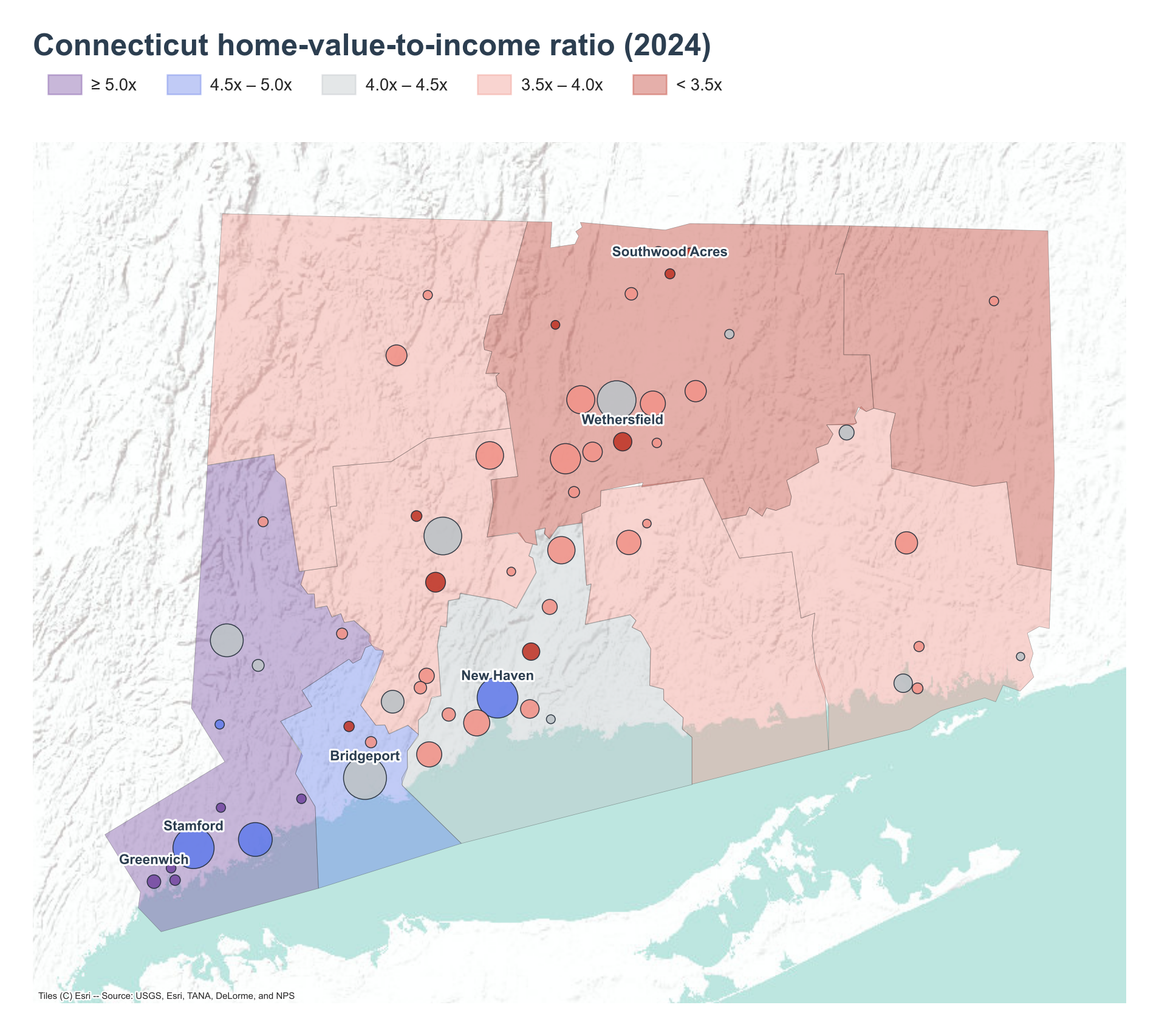
Connecticut's home-value-to-income ratio has risen since 2018, but the national ratio has grown faster and overtaken the state's by 2024.
Read post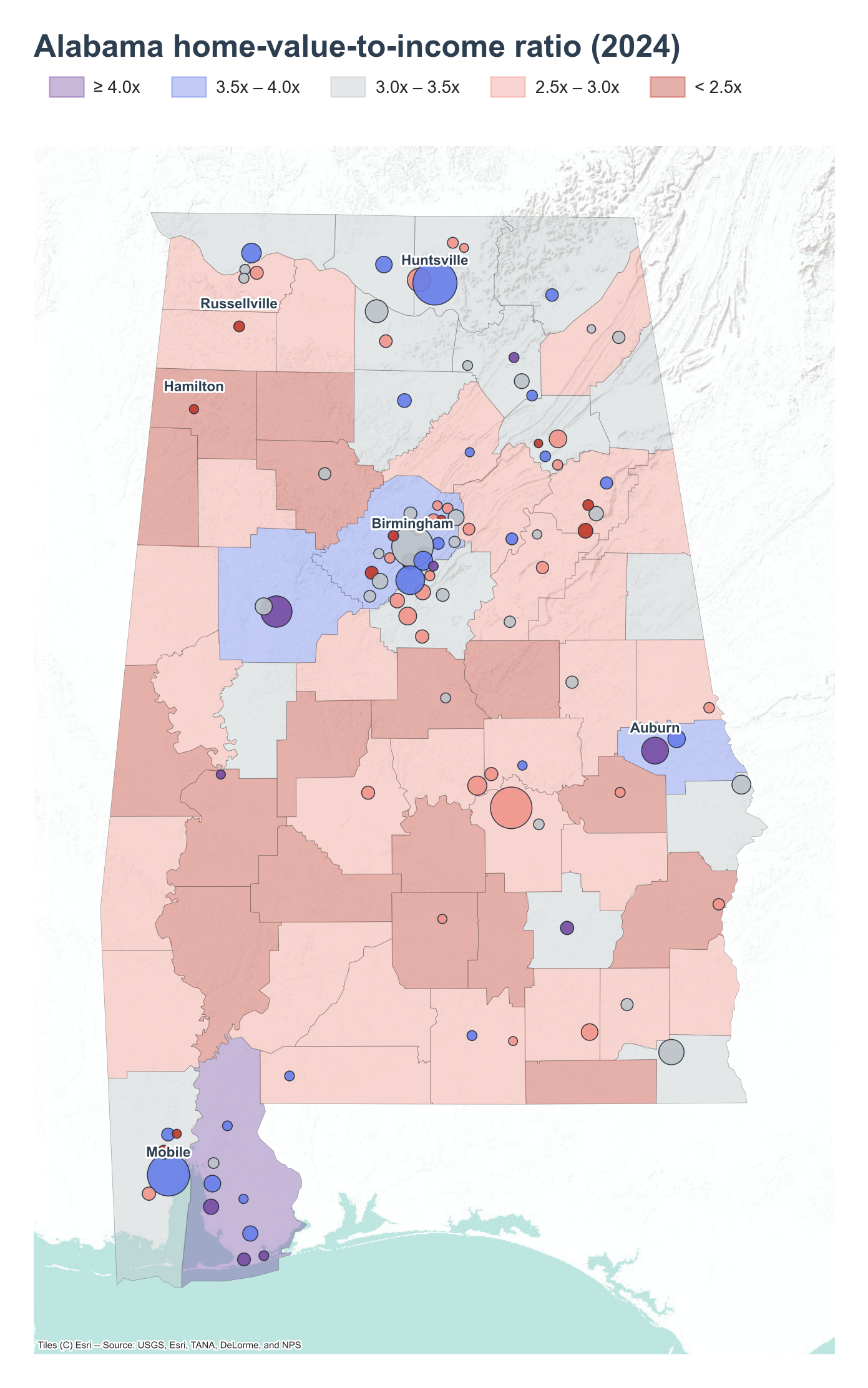
Alabama's home-value-to-income ratio trails the nation, but coastal Baldwin County and college towns like Auburn are pulling further from that pattern each year.
Read post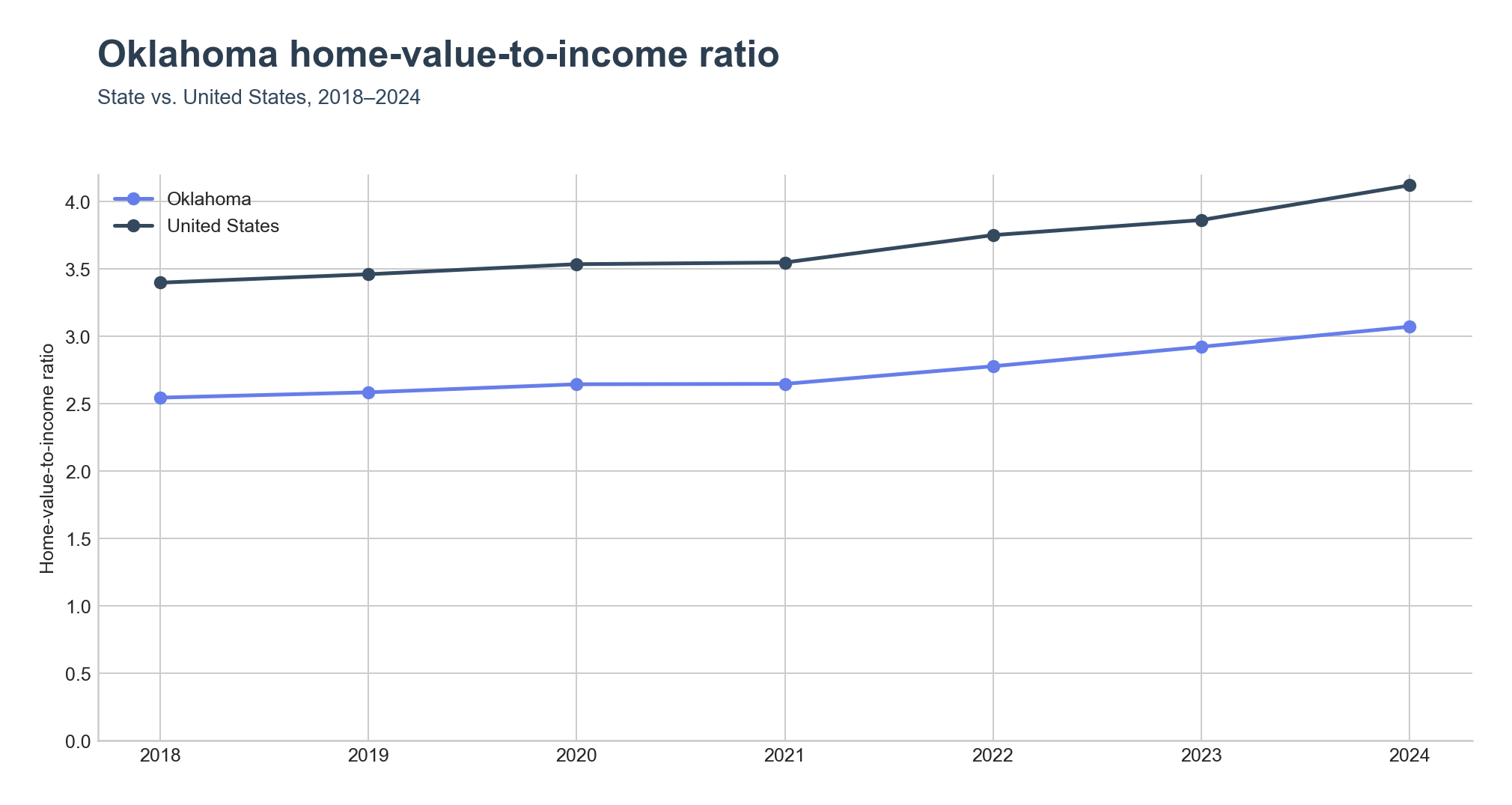
Oklahoma's home-value-to-income ratio has climbed to 3.07x, but the state still trails the nation, and the gap with the US has widened since 2018.
Read post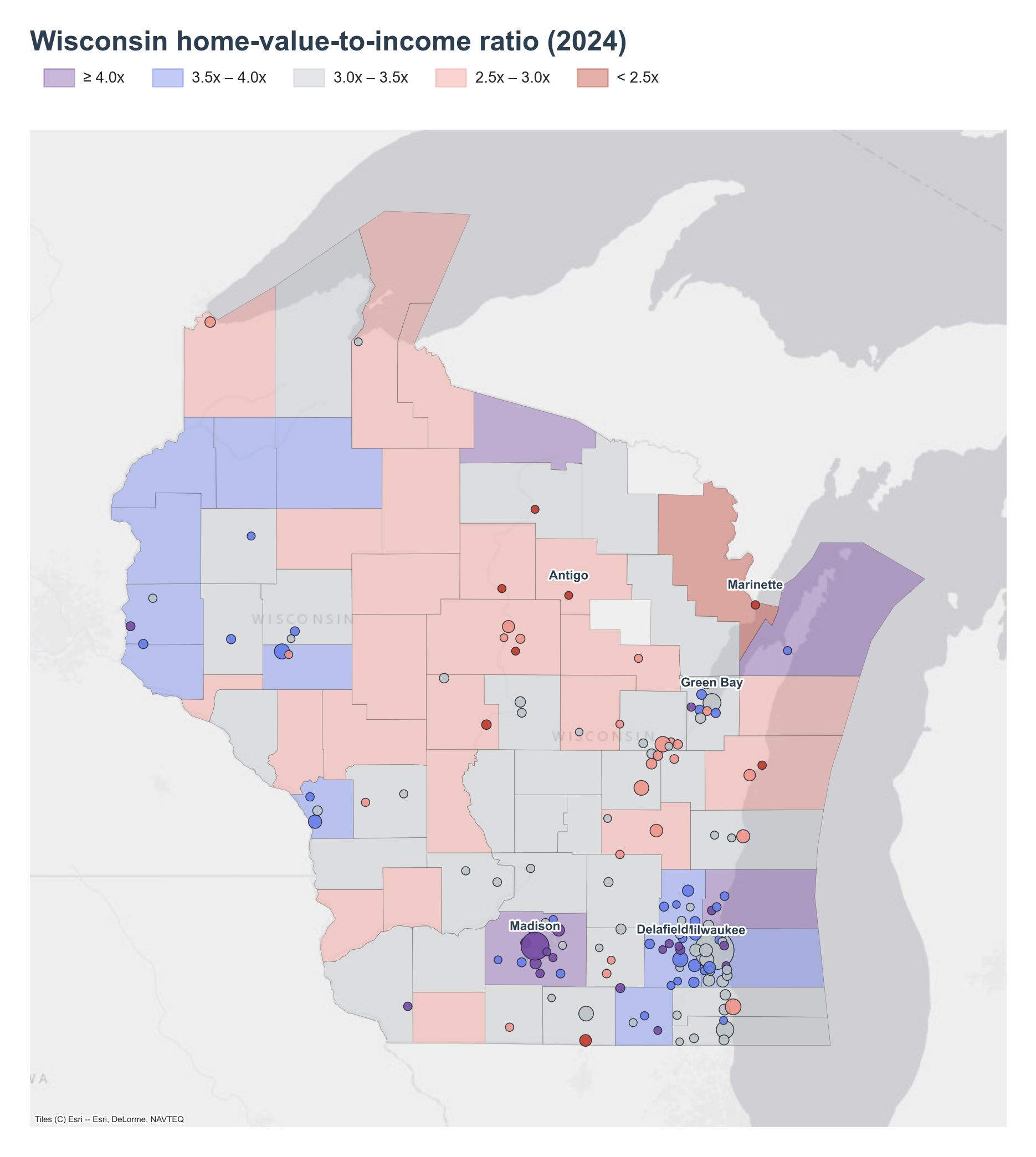
Wisconsin's home-value-to-income ratio sits below the national figure, but the distance between them has grown since 2018, and Madison and the Milwaukee suburbs now run well ahead of the paper and timber towns up north.
Read post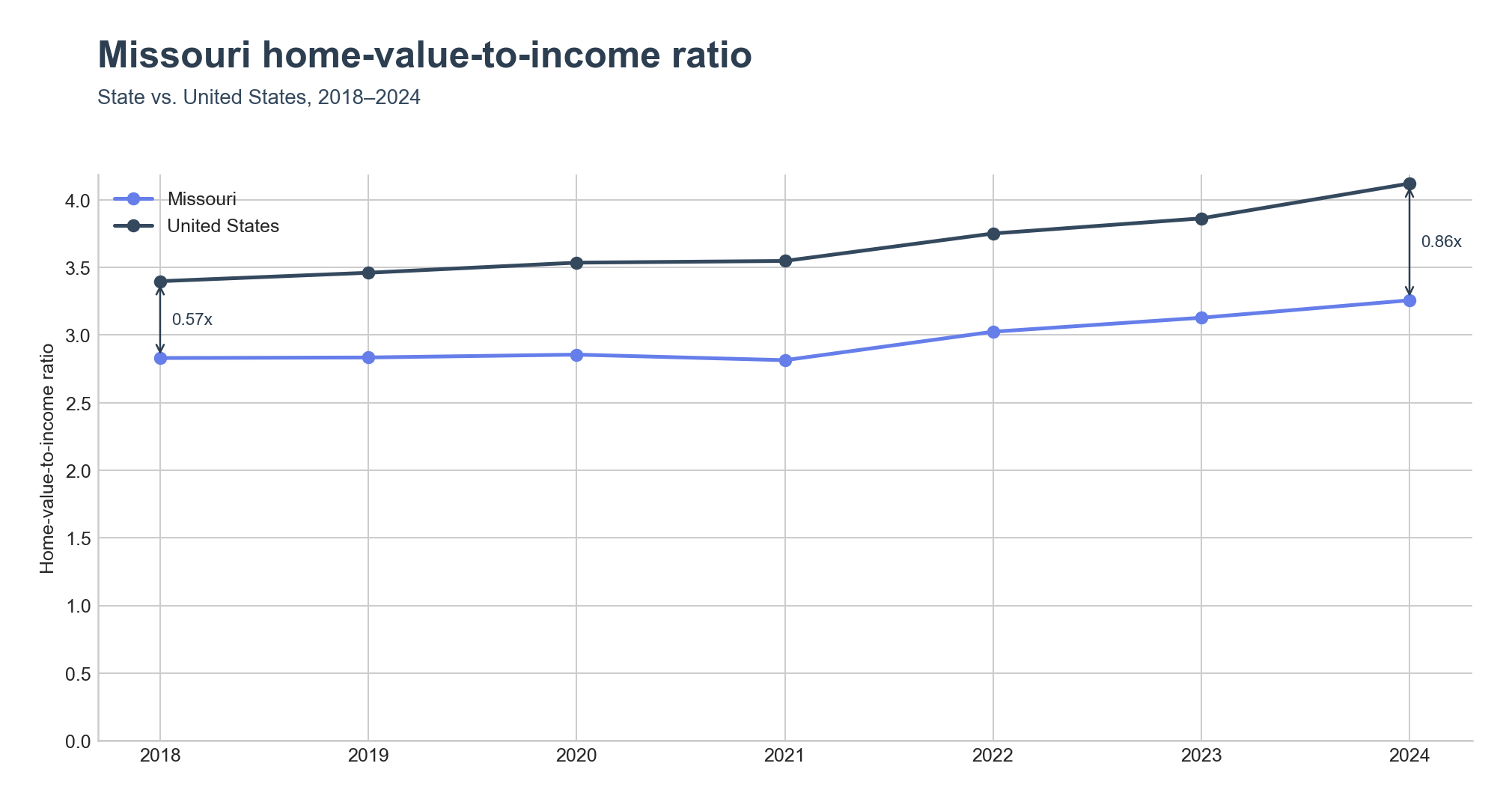
Missouri's home-value-to-income ratio trails the nation, and the gap has widened since 2018, even as St. Louis suburbs and Lake of the Ozarks vacation counties post the state's highest ratios.
Read post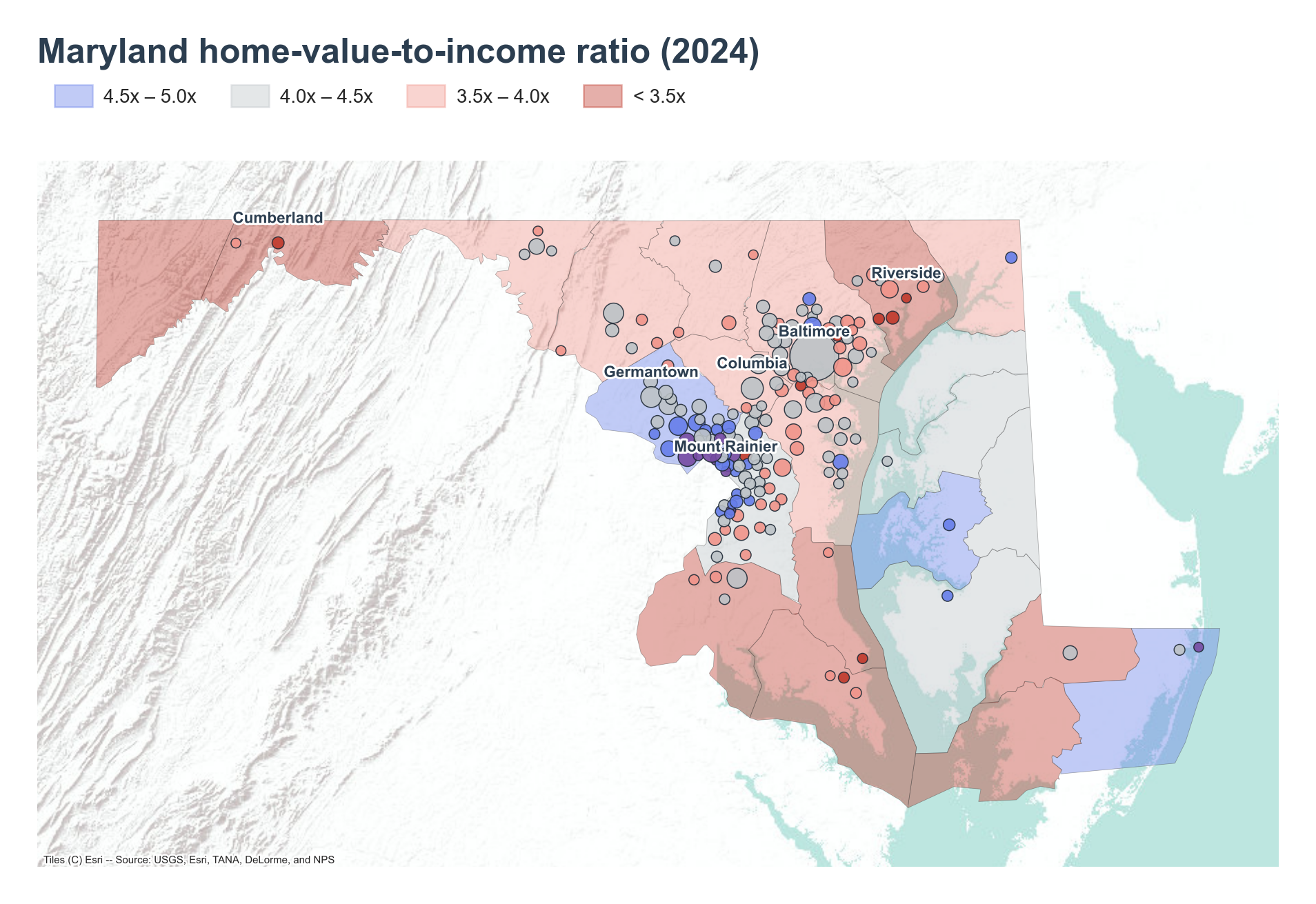
Maryland's home-value-to-income ratio has converged with the national figure, with the widest gaps concentrated in the Washington, D.C. suburbs.
Read post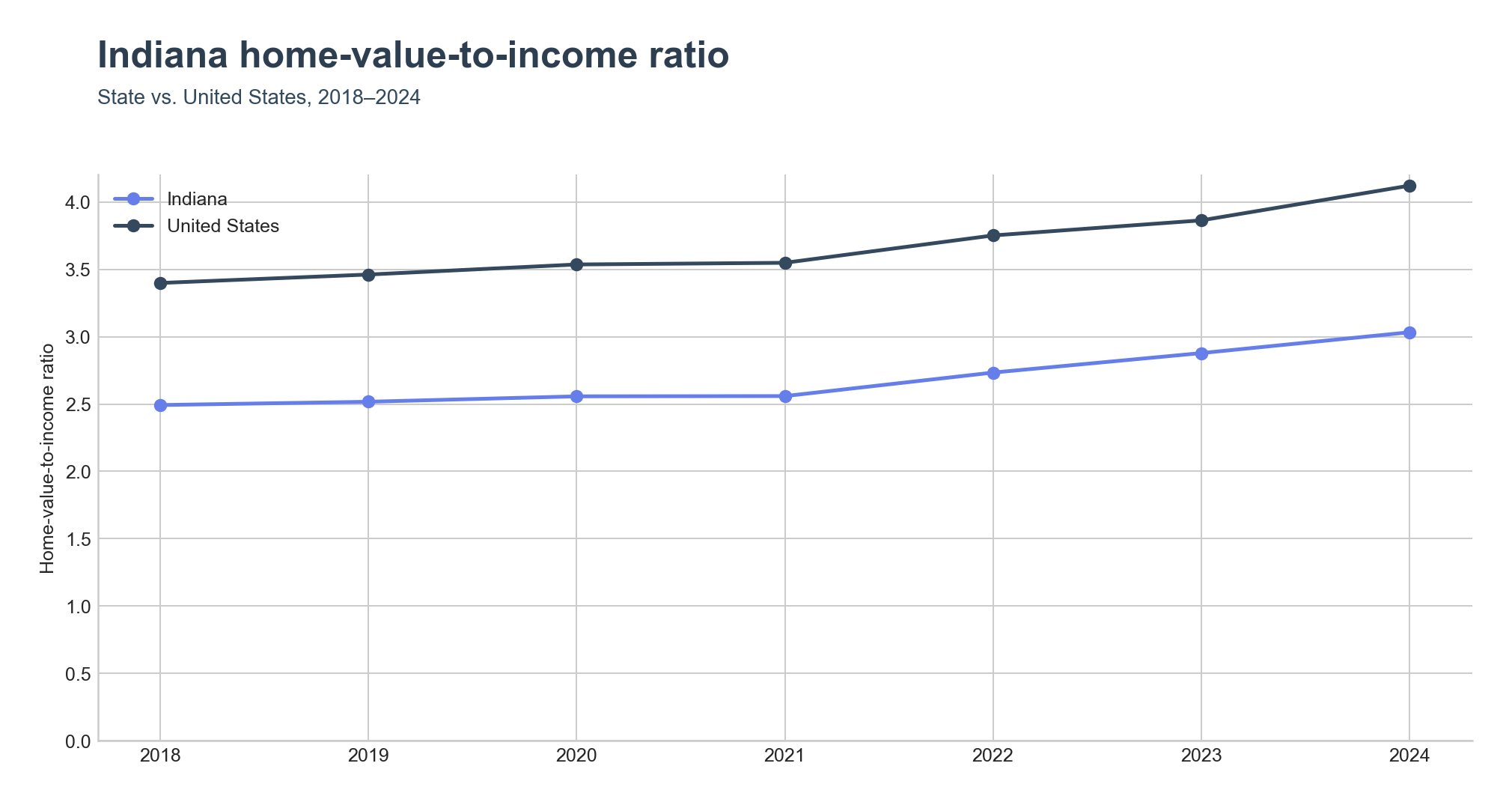
Indiana's home-value-to-income ratio has climbed from 2.49x to 3.03x since 2018, but it still trails the national ratio of 4.12x — with university towns and Indianapolis-area counties pulling away from former Gas Belt manufacturing towns.
Read post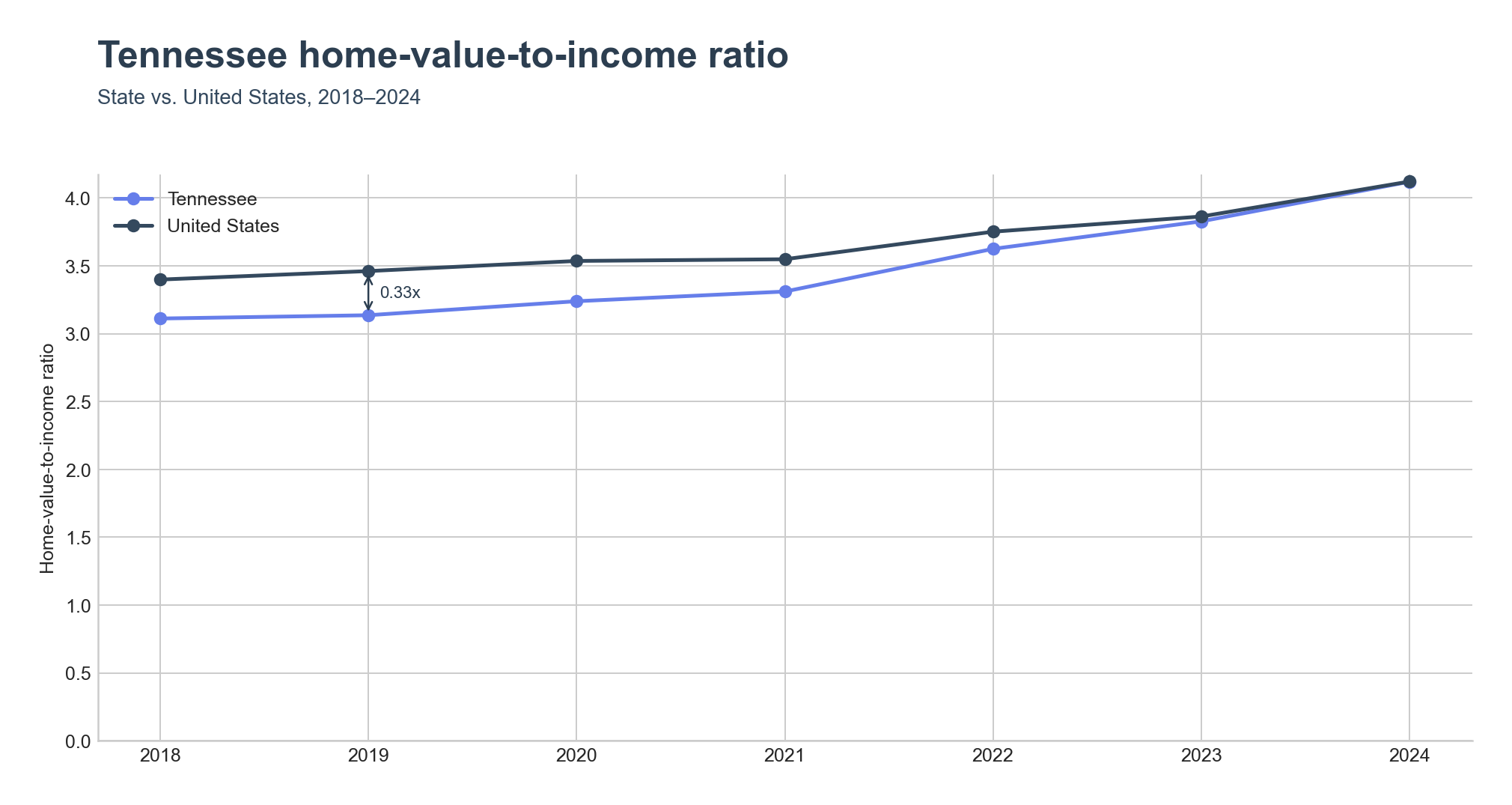
Tennessee's home-value-to-income ratio has climbed to 4.12x, catching up to the US level, with the widest gaps concentrated around Nashville and the Smoky Mountains.
Read post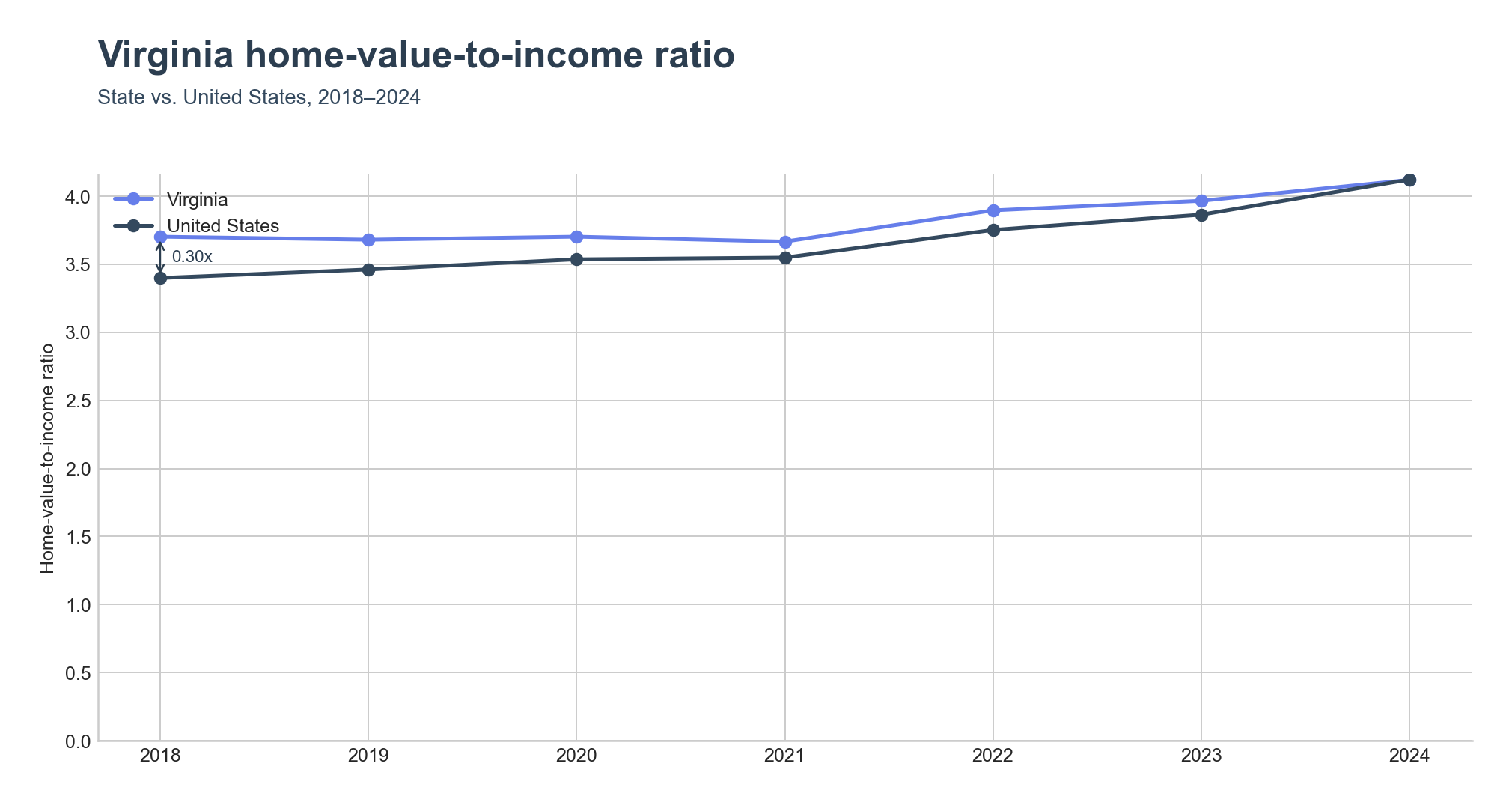
Virginia's home-value-to-income ratio has pulled ahead of the national rate, with a college town and the Washington DC suburbs setting the state's highest ratios.
Read post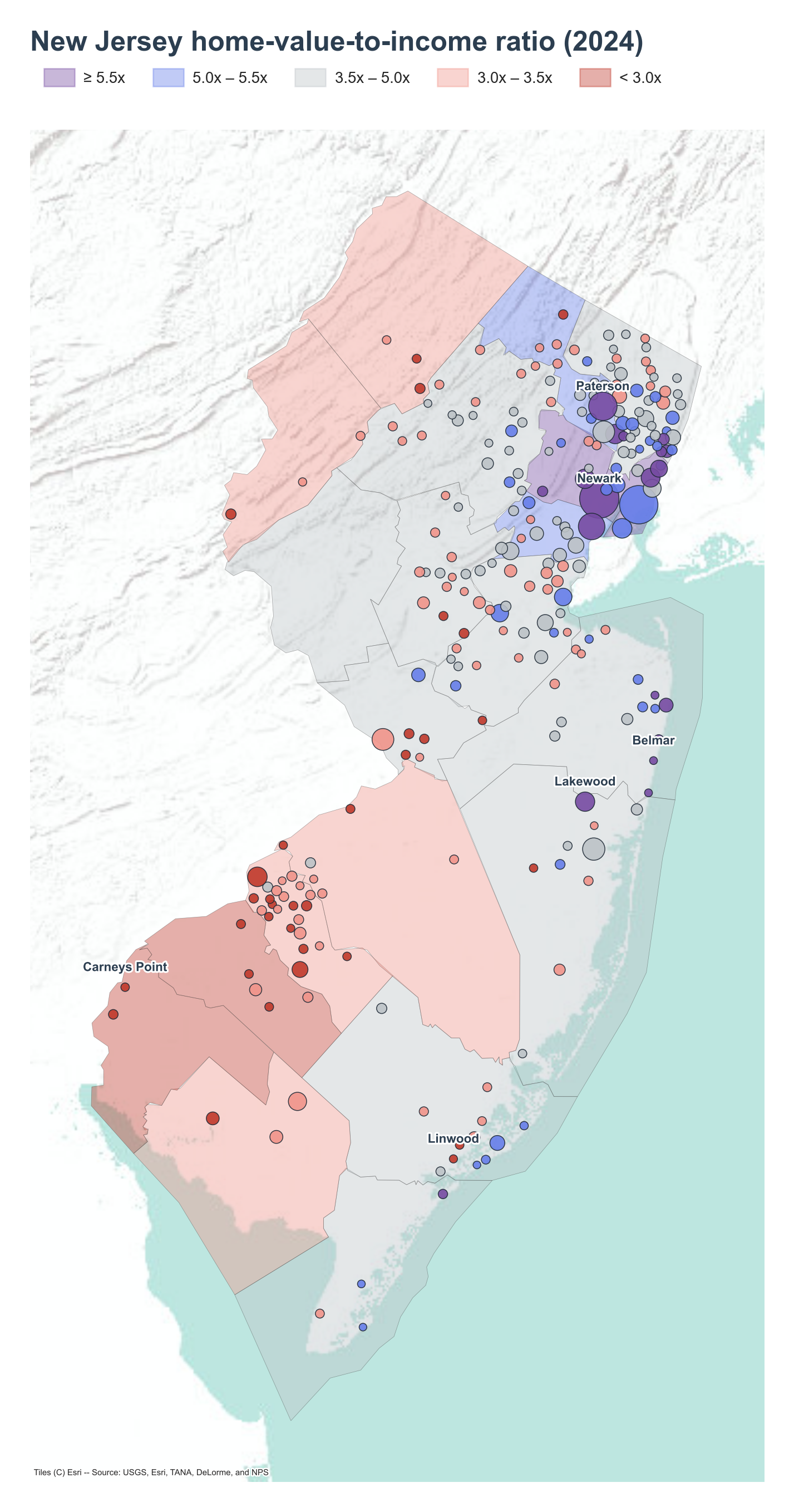
New Jersey's home-value-to-income ratio has climbed to 4.39x, ahead of the US, with the widest gaps concentrated in Newark-area counties and a handful of shore and shore-adjacent towns.
Read post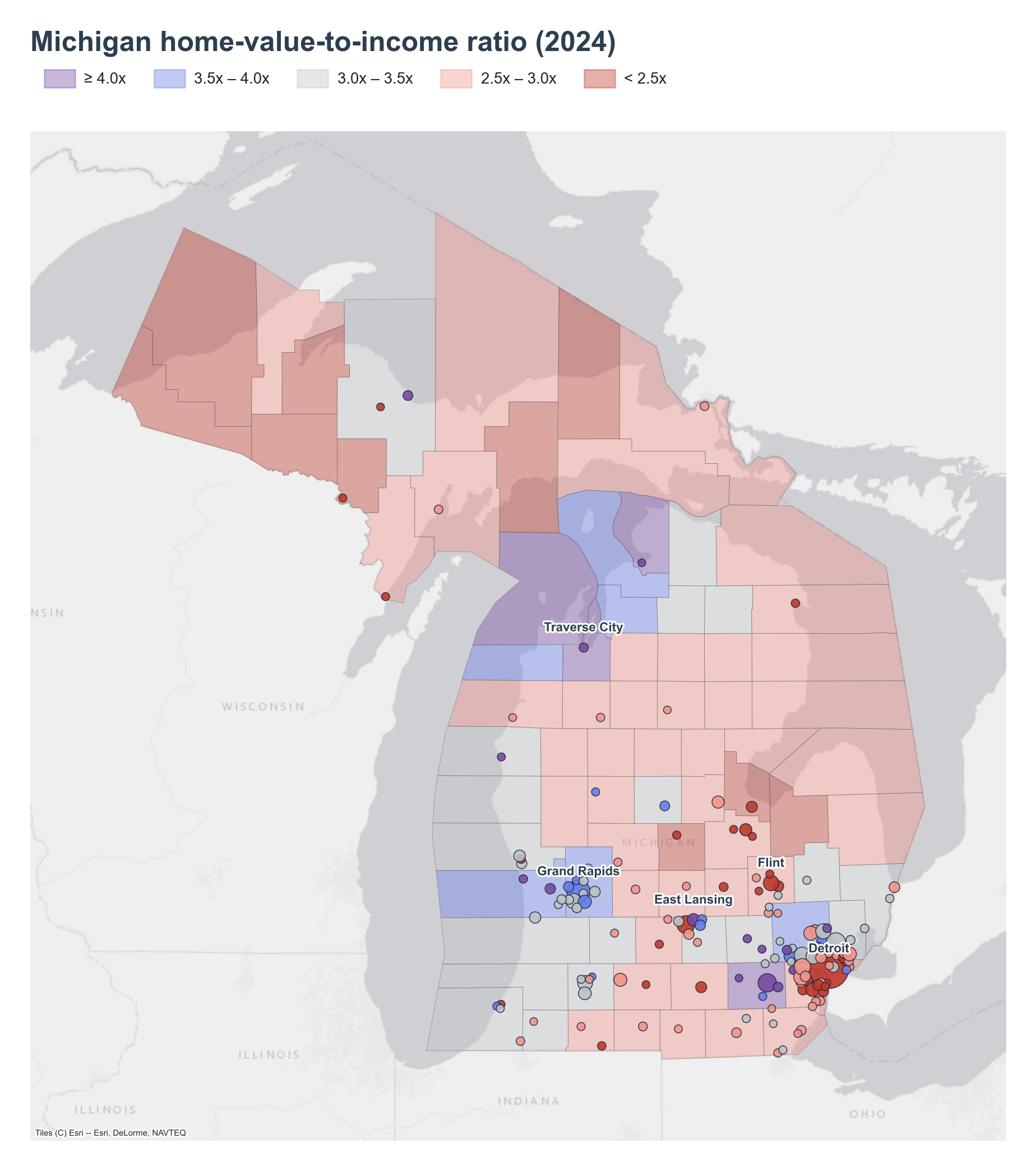
Michigan's home-value-to-income ratio has climbed since 2018 but fallen further behind the national line, and college towns, lakeshore resort counties, and Detroit's outer suburbs are pulling away from Flint and Saginaw at the bottom.
Read post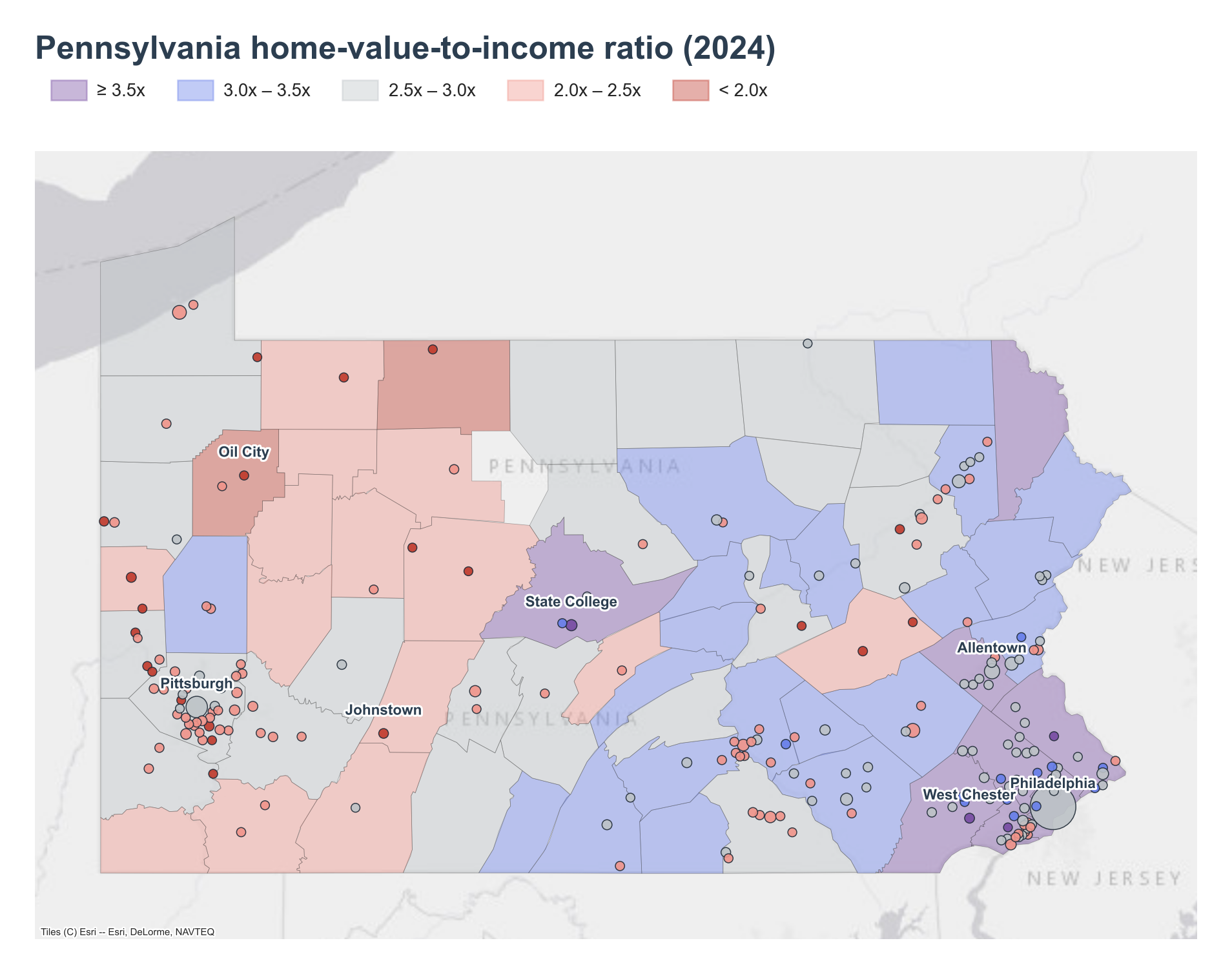
Pennsylvania's home-value-to-income ratio has climbed to 3.26x, but it still trails the national 4.12x by a wide margin, with a college town and Philadelphia's suburbs pulling furthest from that statewide average.
Read post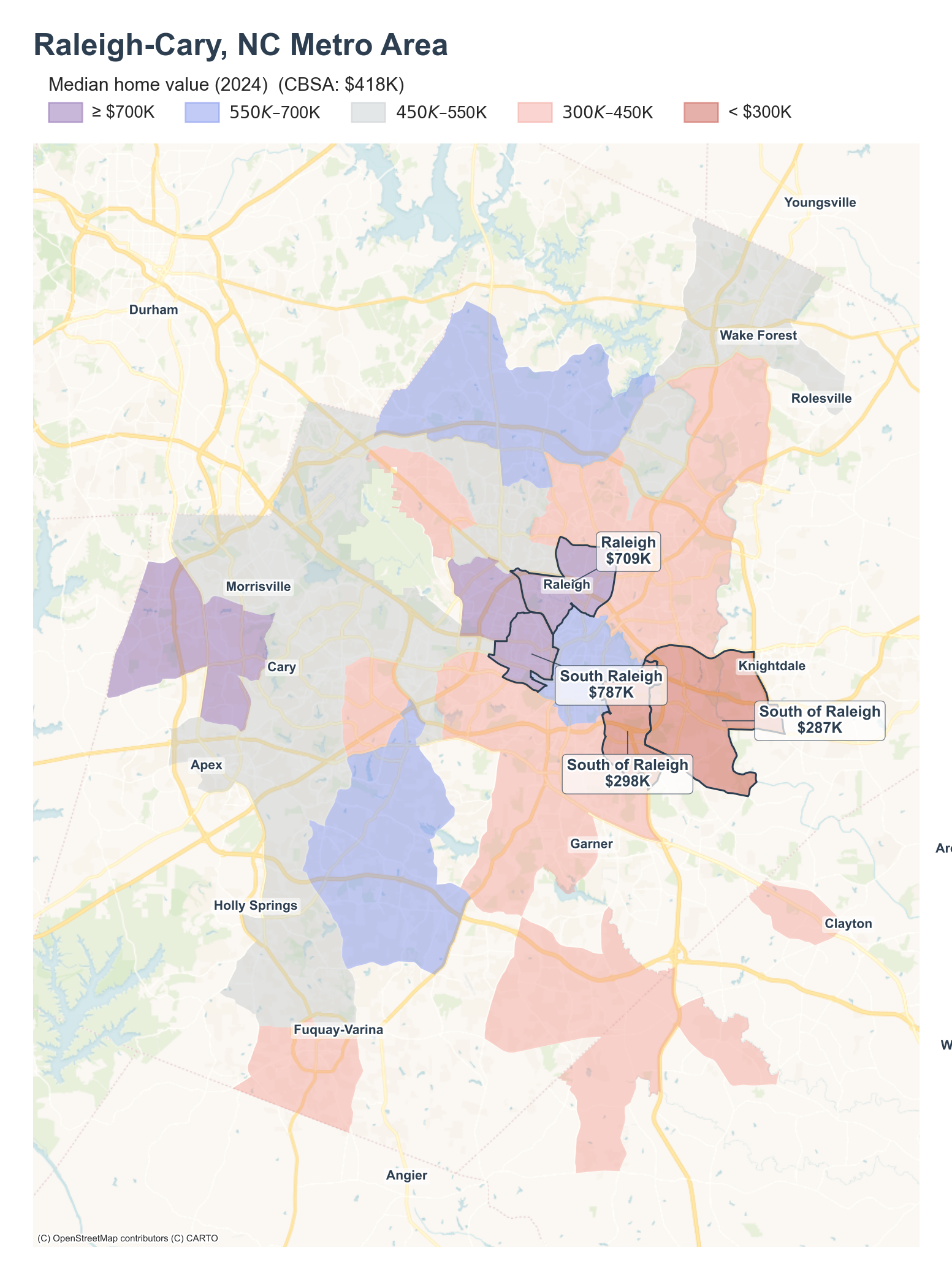
The western tech corridor around Cary, Apex, and Morrisville and the close-in north and central Raleigh neighborhoods lead on wealth and education, while east and southeast Raleigh sit at the bottom — in a metro where even the lowest education shares would rank mid-tier elsewhere.
Read post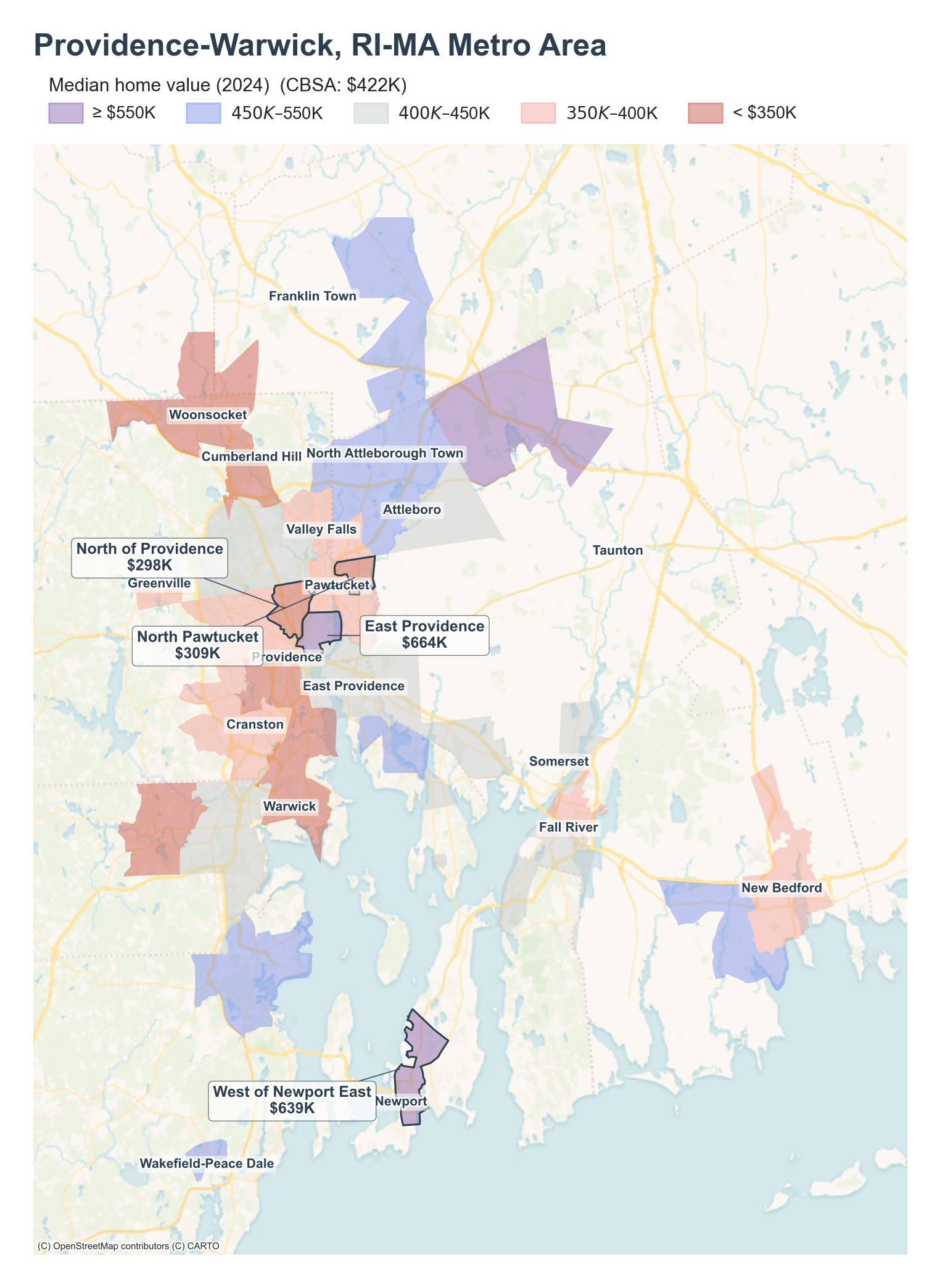
The Massachusetts-side suburbs north of the city and the East Bay around East Providence lead on wealth and education, while the old textile-mill cities of Pawtucket, Woonsocket, Fall River, and New Bedford sit at the bottom.
Read post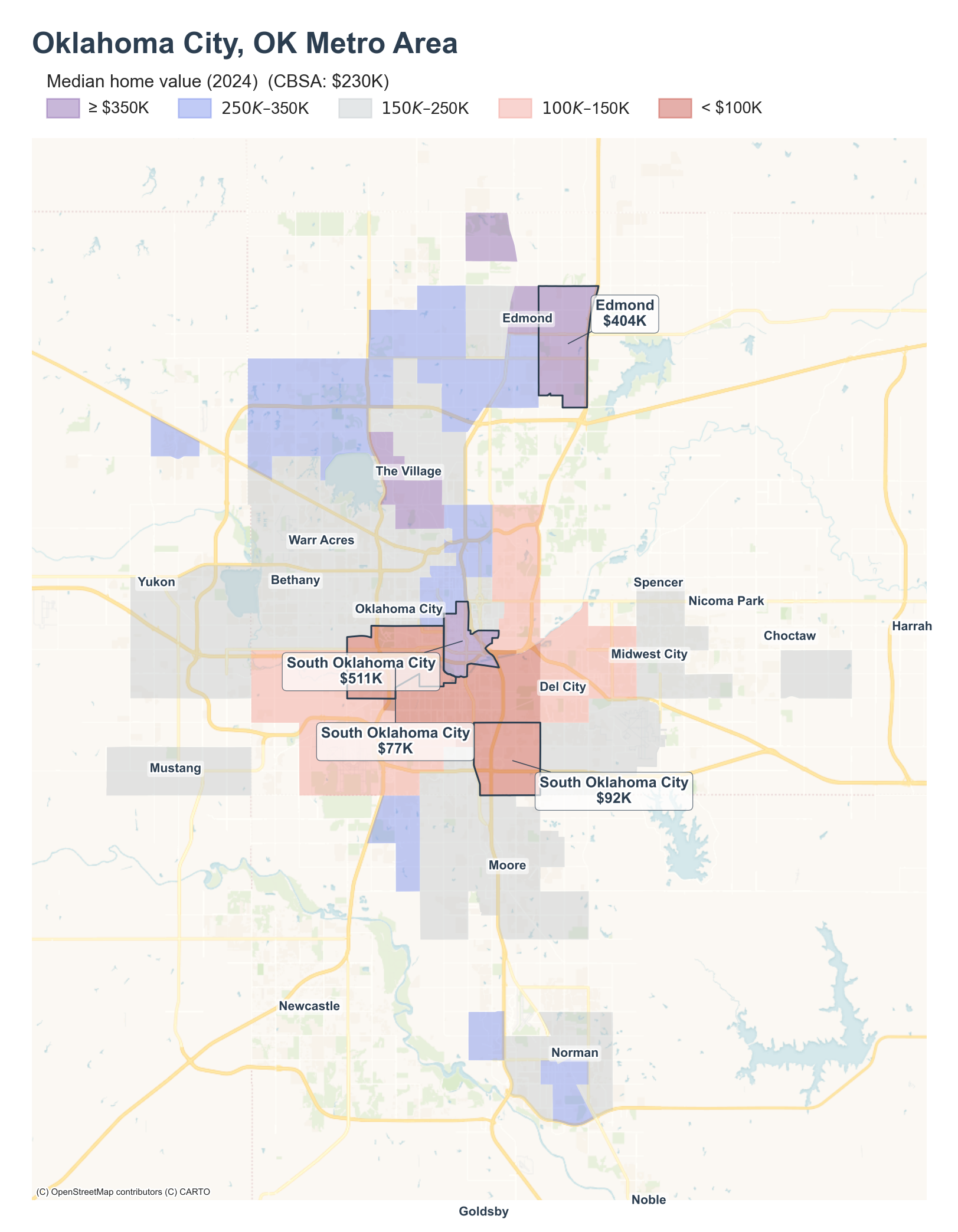
The northern suburbs around Edmond and Nichols Hills lead on wealth and education, the south side of Oklahoma City sits at the bottom with some of the lowest education shares in this series, and Norman forms a young university pole.
Read post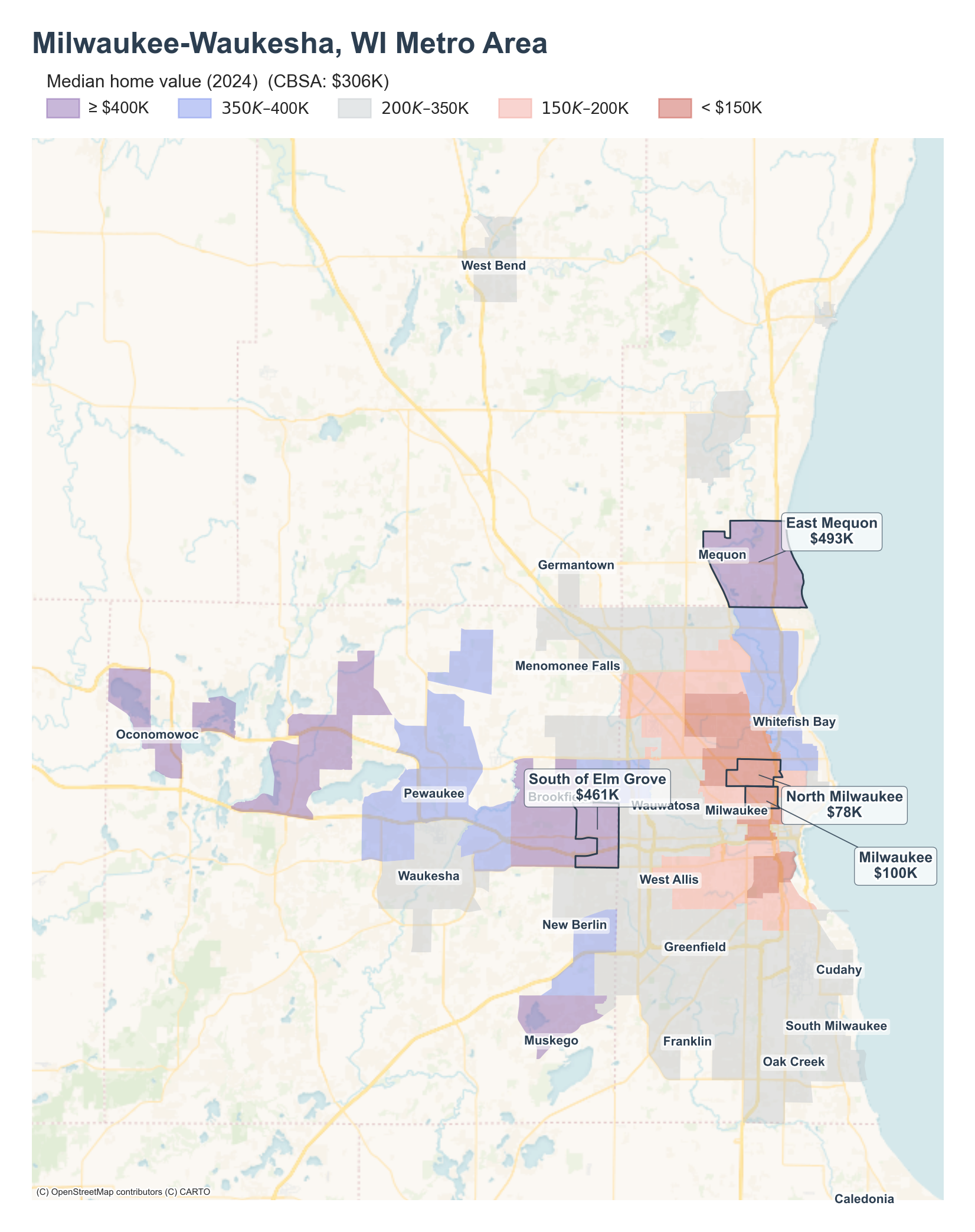
The western Waukesha County suburbs around Brookfield and Elm Grove and the northern Ozaukee lakeshore around Mequon lead on wealth and education, while the central city of Milwaukee sits at the bottom on value, income, and education in one of the country's most segregated metros.
Read post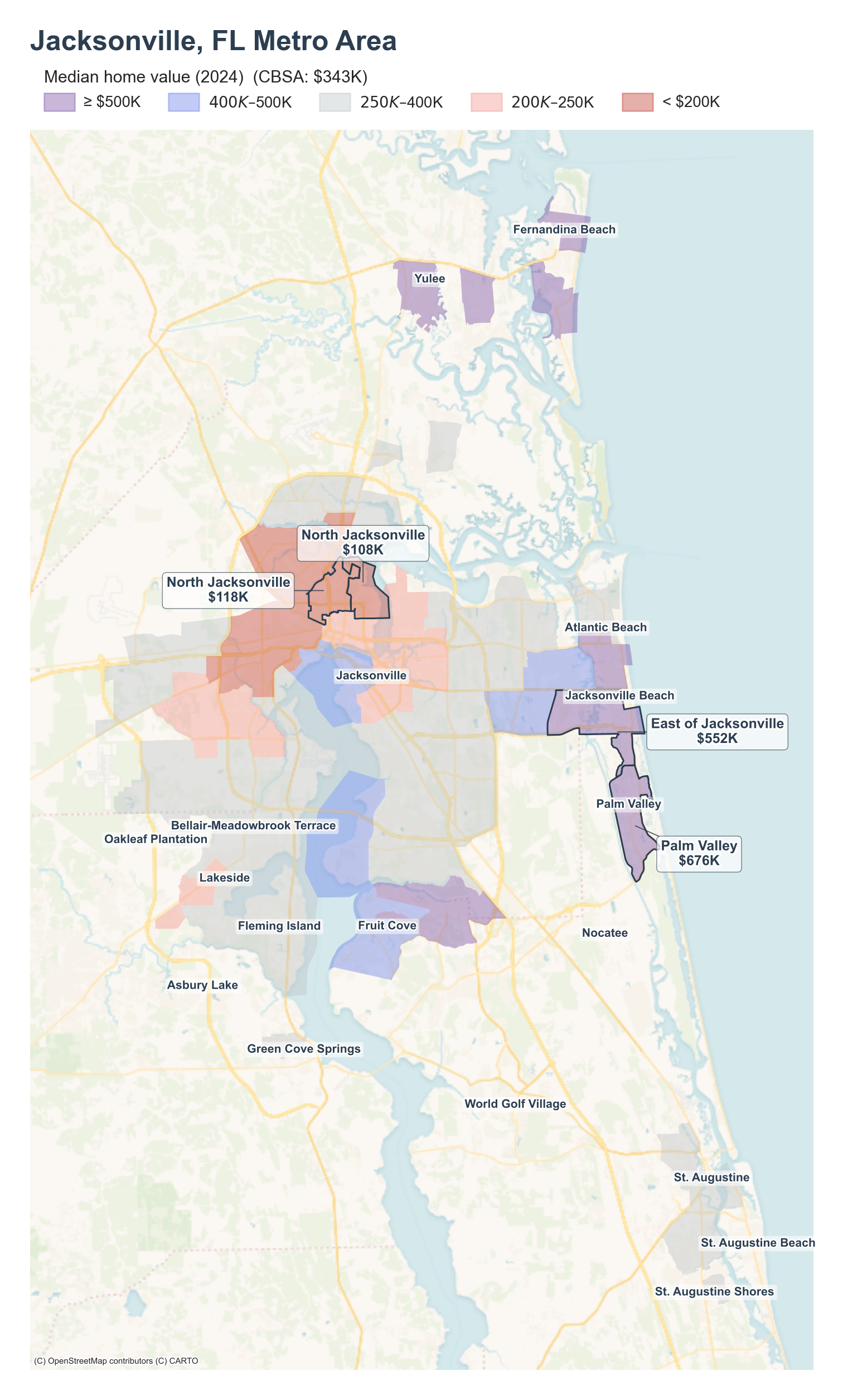
The coastal St. Johns County suburbs around Palm Valley and Fruit Cove and the Atlantic beaches lead on wealth and education, while the North Jacksonville neighborhoods across the river sit at the bottom on value, income, and education.
Read post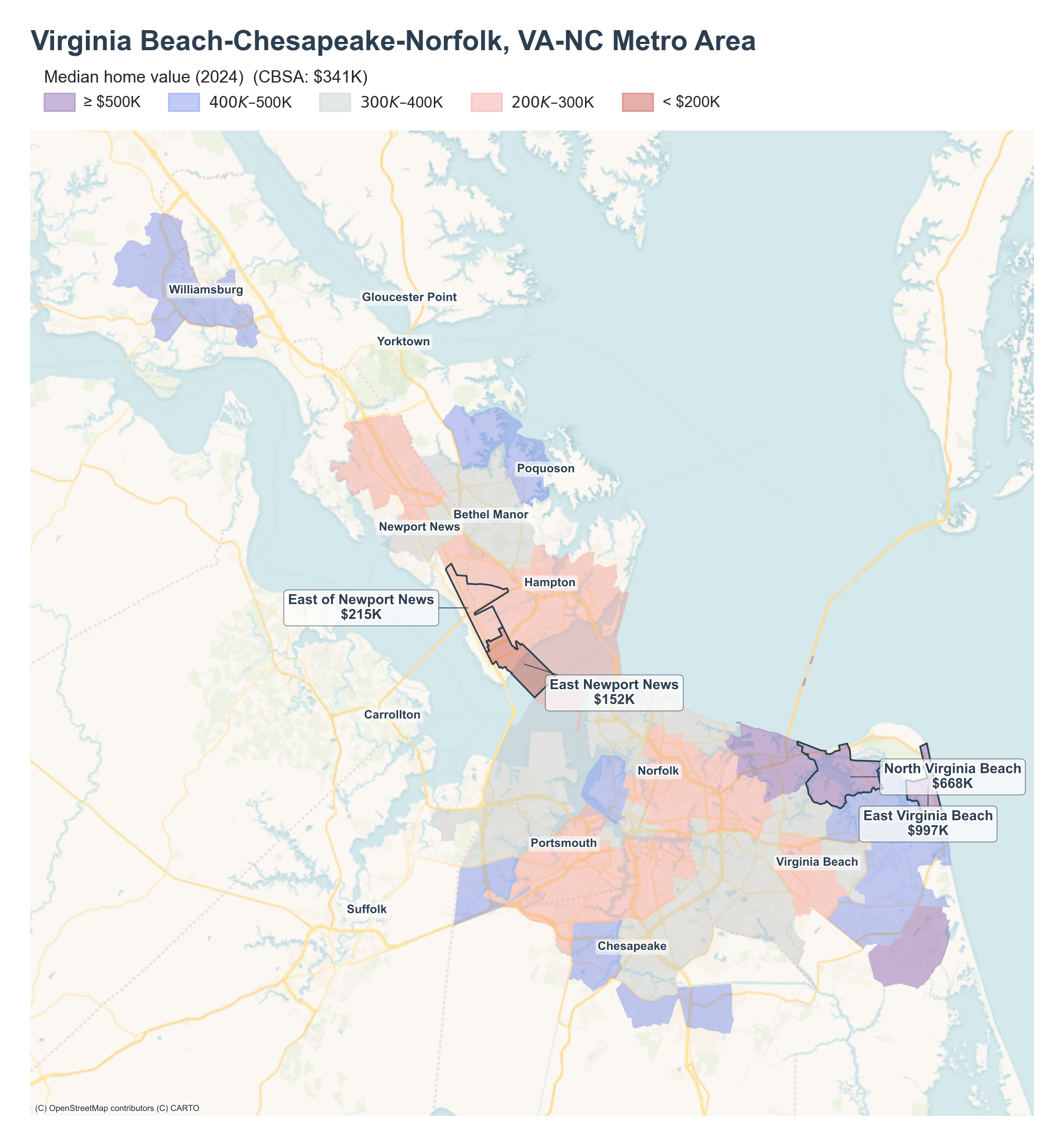
The eastern Virginia Beach oceanfront and the Chesapeake suburbs lead on wealth and education, while the Peninsula shipbuilding cities of Newport News and Hampton and the Portsmouth waterfront sit at the bottom — across a water-divided, Navy-anchored metro.
Read post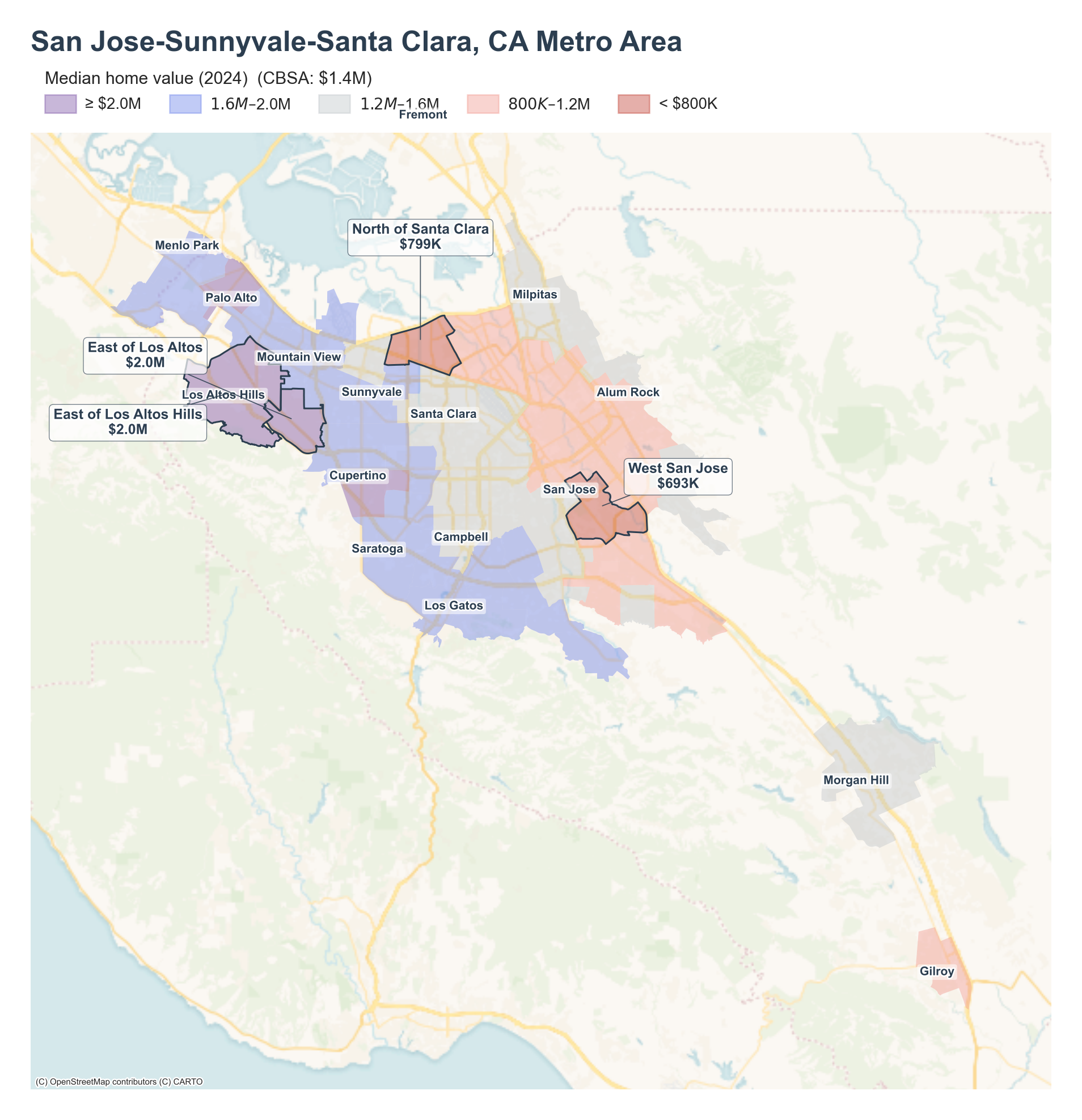
The western foothills around Los Altos Hills, Los Altos, and Palo Alto top every metric, while the San Jose valley floor and the southern Gilroy end sit at the bottom — in a metro whose cheapest neighborhood still clears $690K.
Read post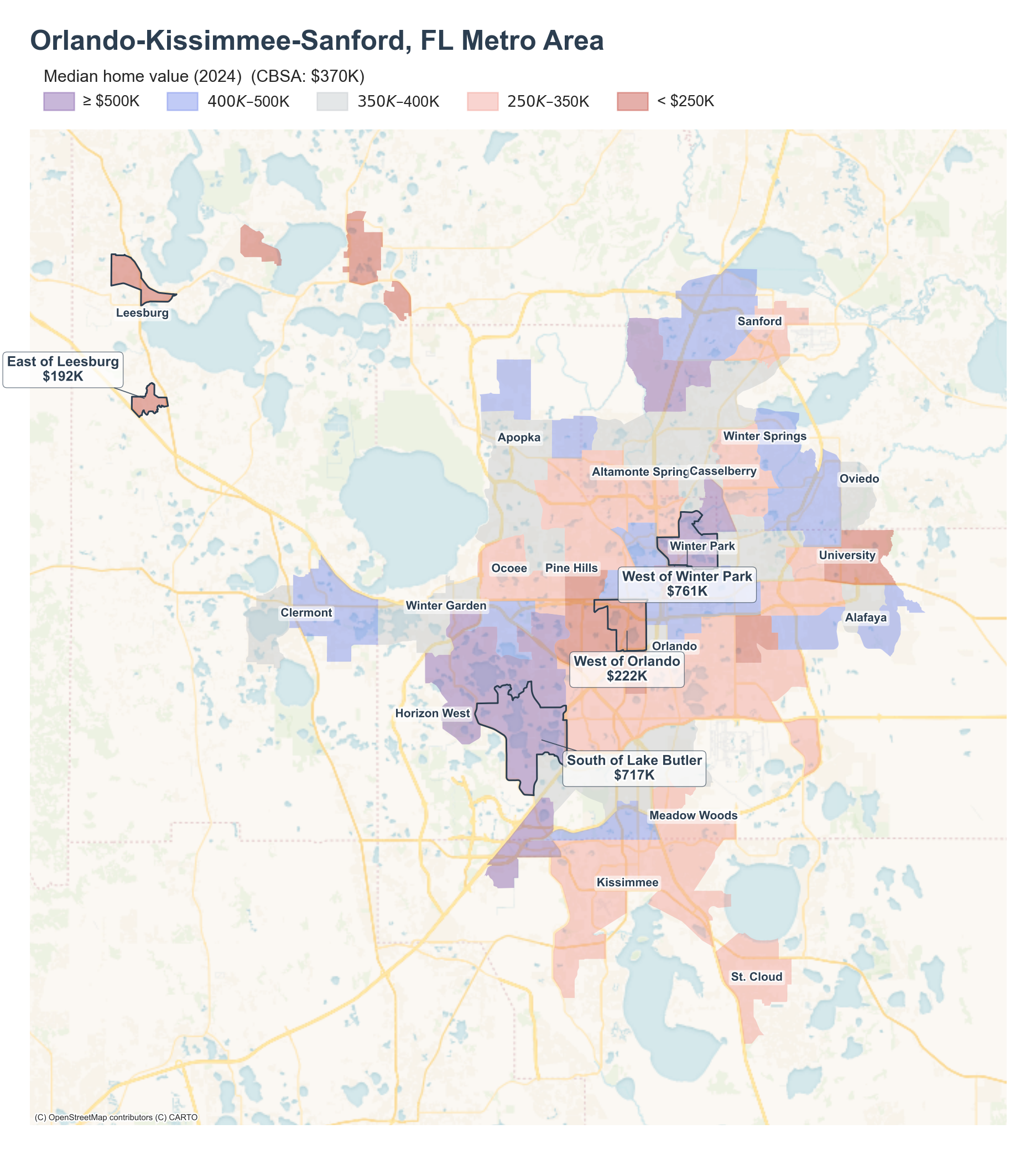
Lakefront wealth concentrates in southwest Orange County around Windermere and Horizon West, while a wedge of low values runs west of downtown through Pine Hills.
Read post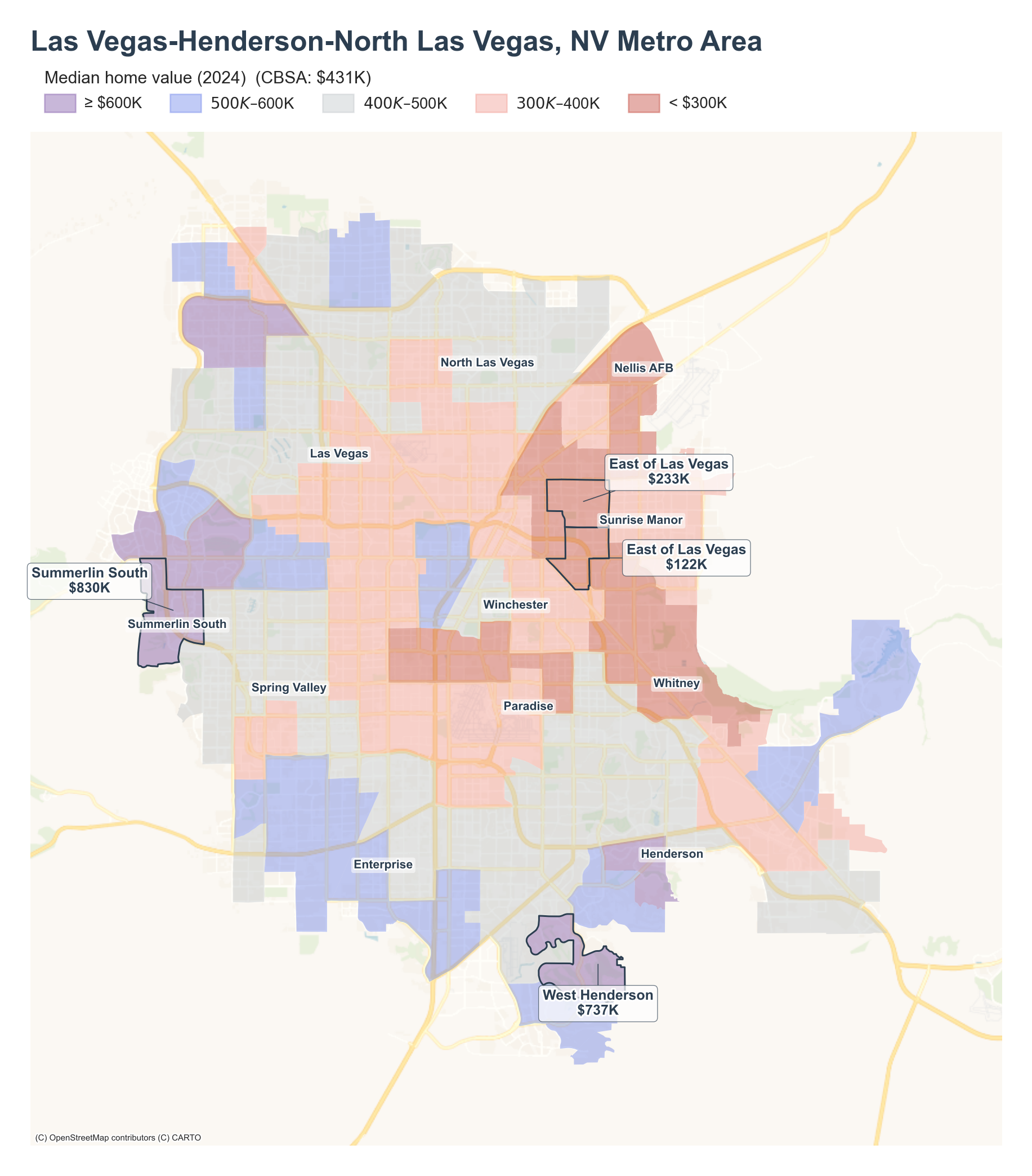
The western and southern rim around Summerlin South and West Henderson is the metro's cross-metric peak, while the inner core east of downtown and Sunrise Manor sits at the bottom on value, income, and education.
Read post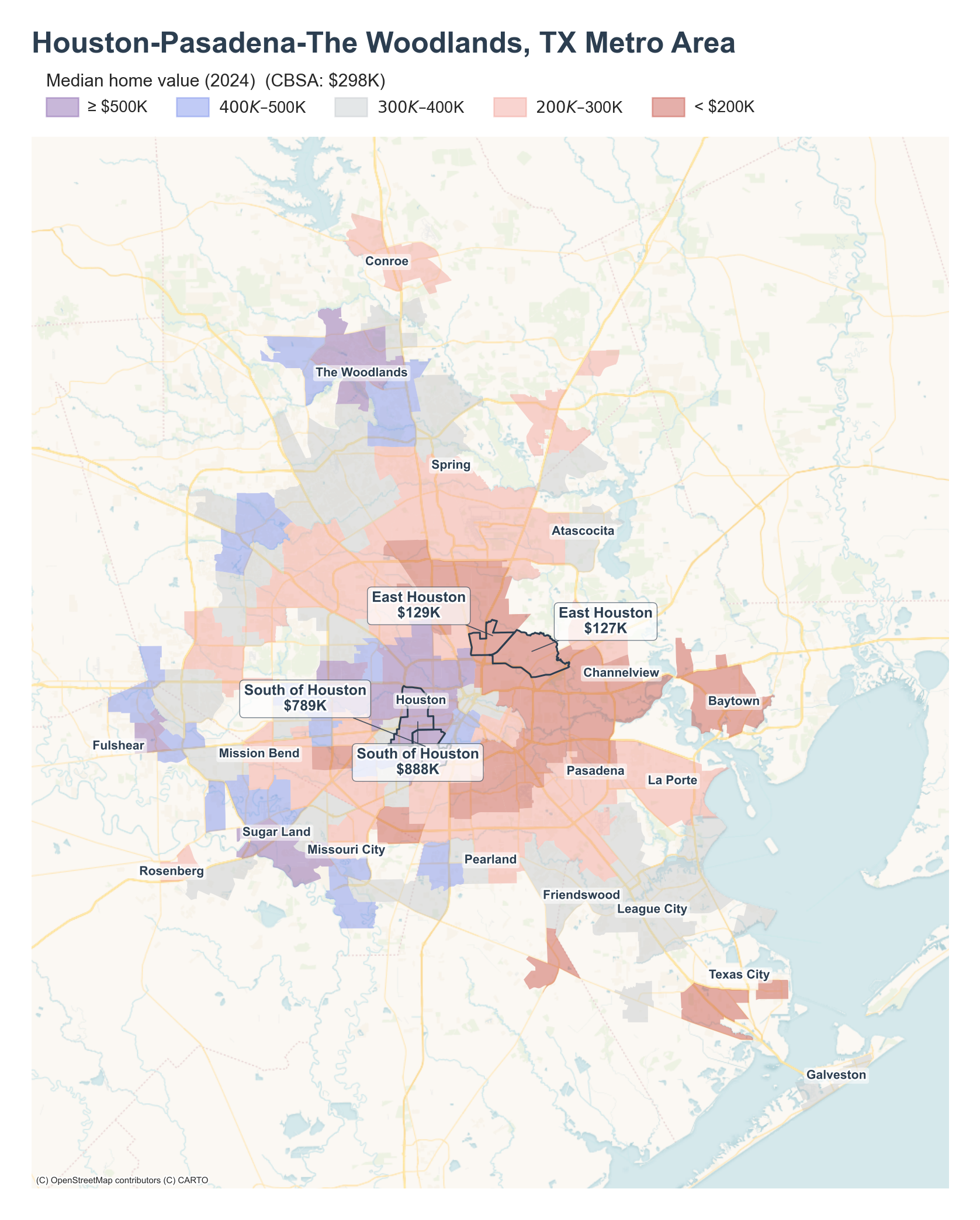
A western and southwestern wedge of high-value, highly educated neighborhoods sits above a lower-value eastern band tracing the Houston Ship Channel.
Read post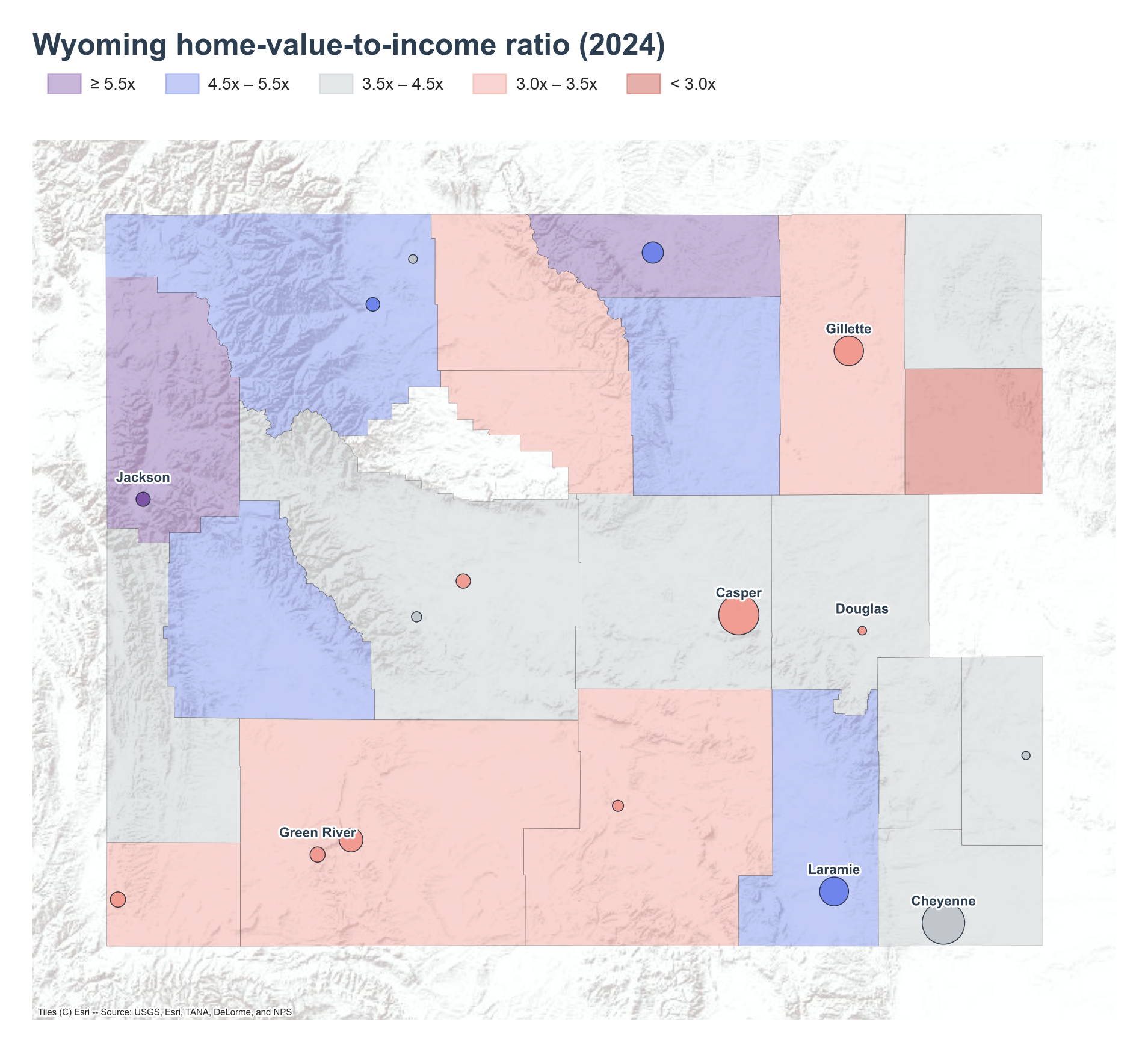
Wyoming's home-value-to-income ratio rose from 3.43x in 2018 to 4.07x in 2024, crossing from just above the US line to just below it, while Teton County and Jackson pulled past 12x and the energy-producing east stayed near 3x.
Read post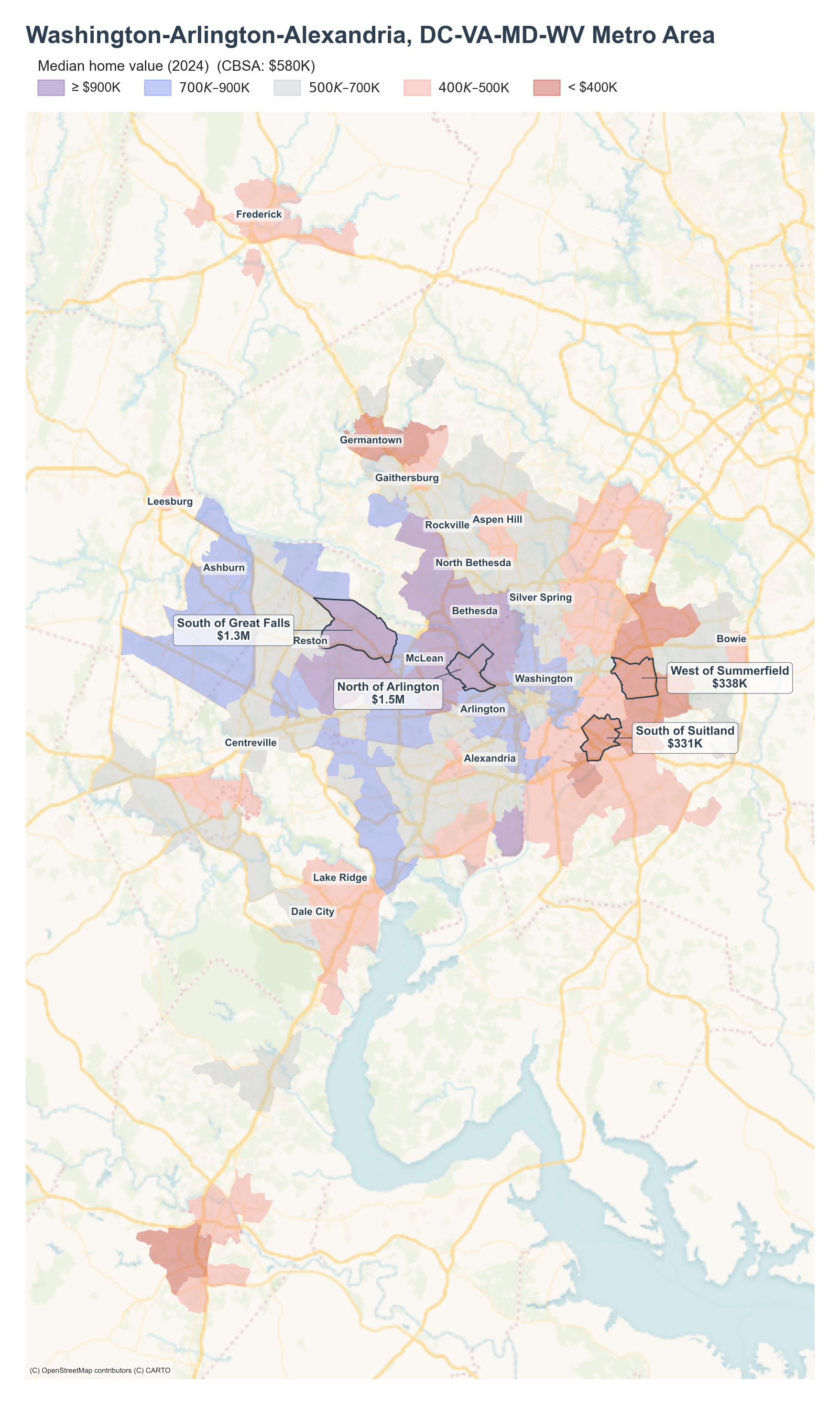
Wealth and education concentrate in the western inner suburbs from Arlington through Bethesda, while the lowest values and incomes sit in Prince George's County to the east and southeast.
Read post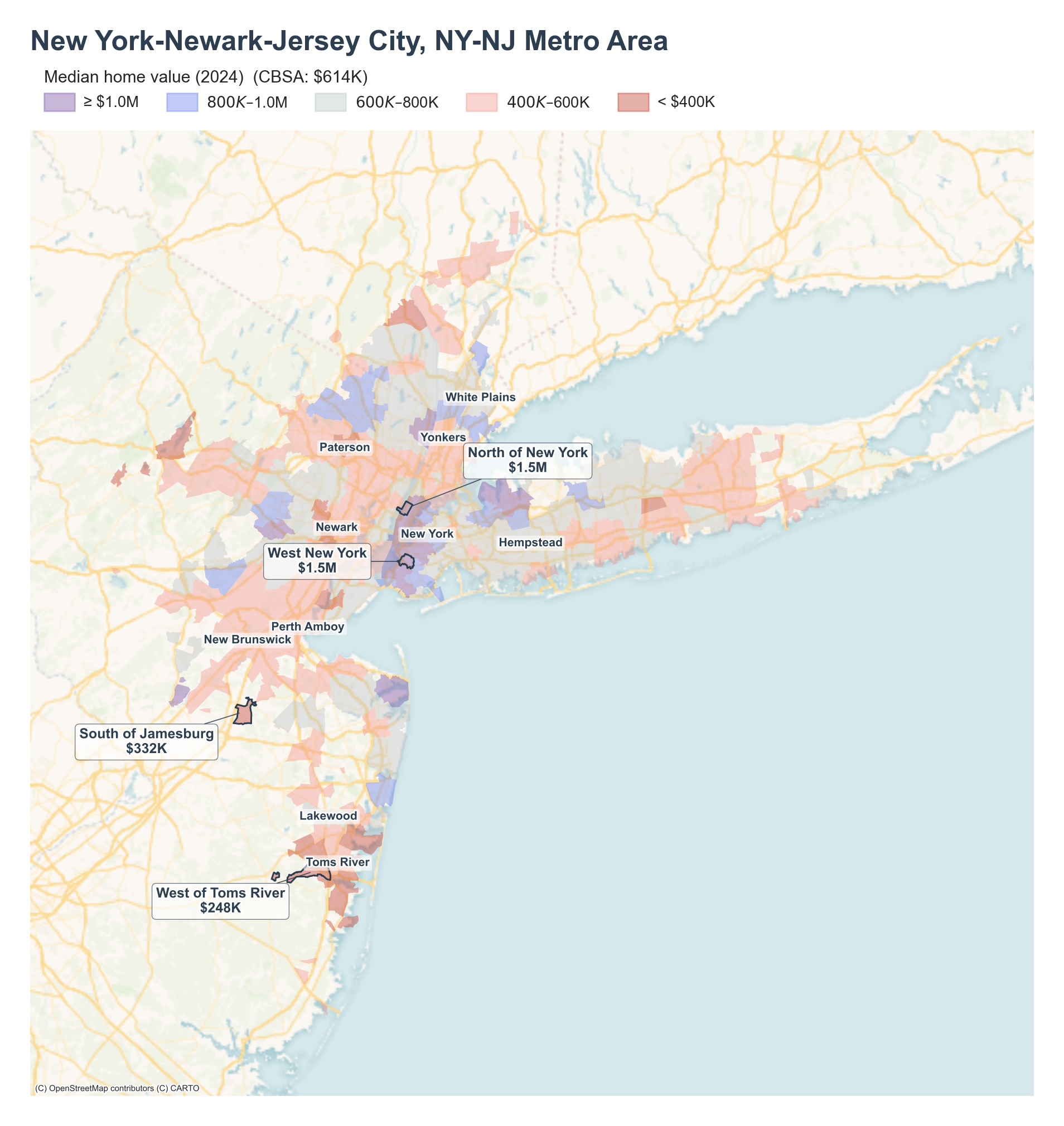
Wealth and education concentrate in the core around Manhattan and the inner New Jersey suburbs, while the oldest neighborhoods line the Jersey Shore and the youngest sit in Lakewood.
Read post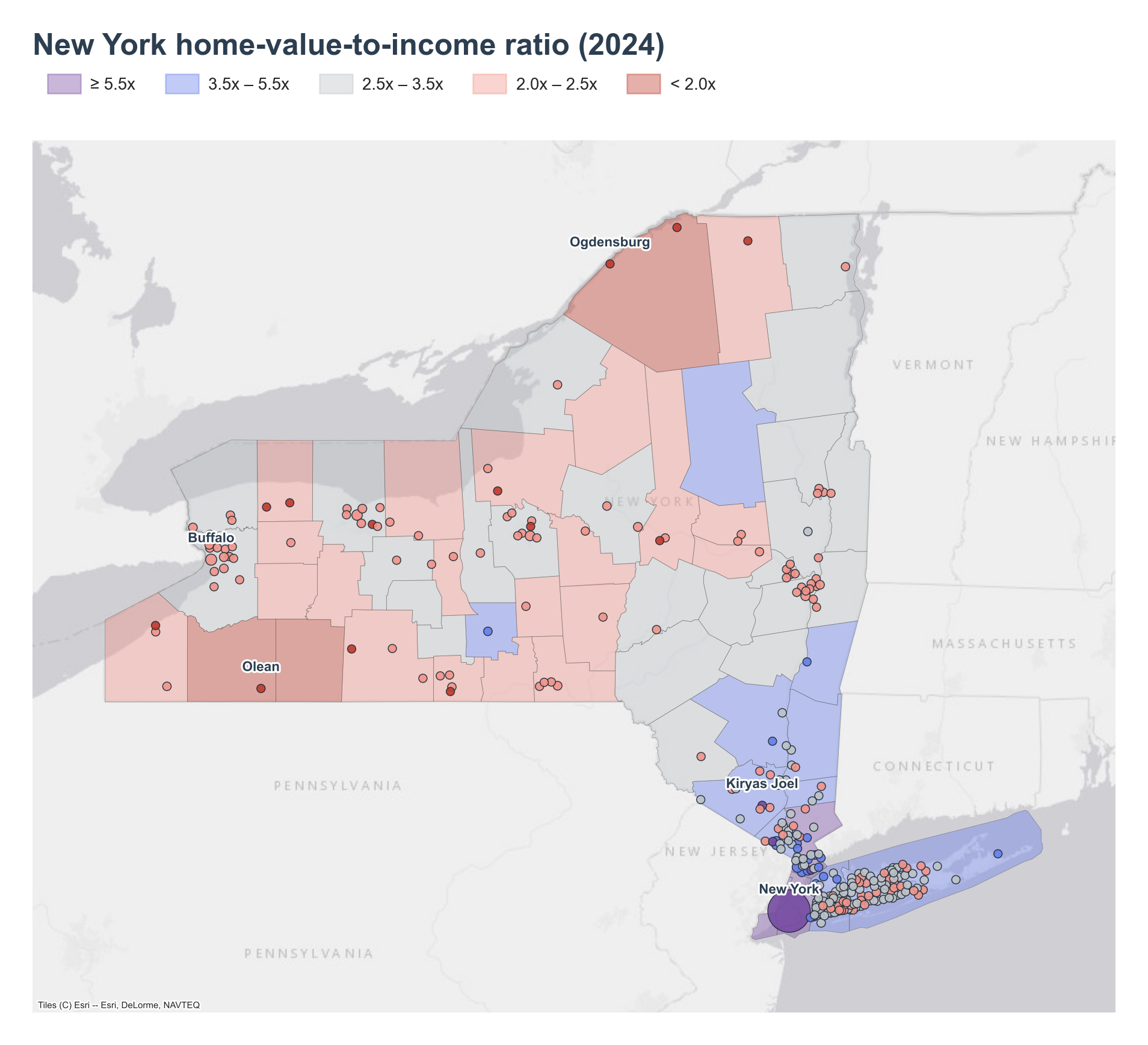
New York's home-value-to-income ratio reached 4.93x in 2024, still above the U.S. 4.12x, but the gap narrowed as national affordability eroded faster. A high-ratio downstate and a low-ratio upstate split the state in two.
Read post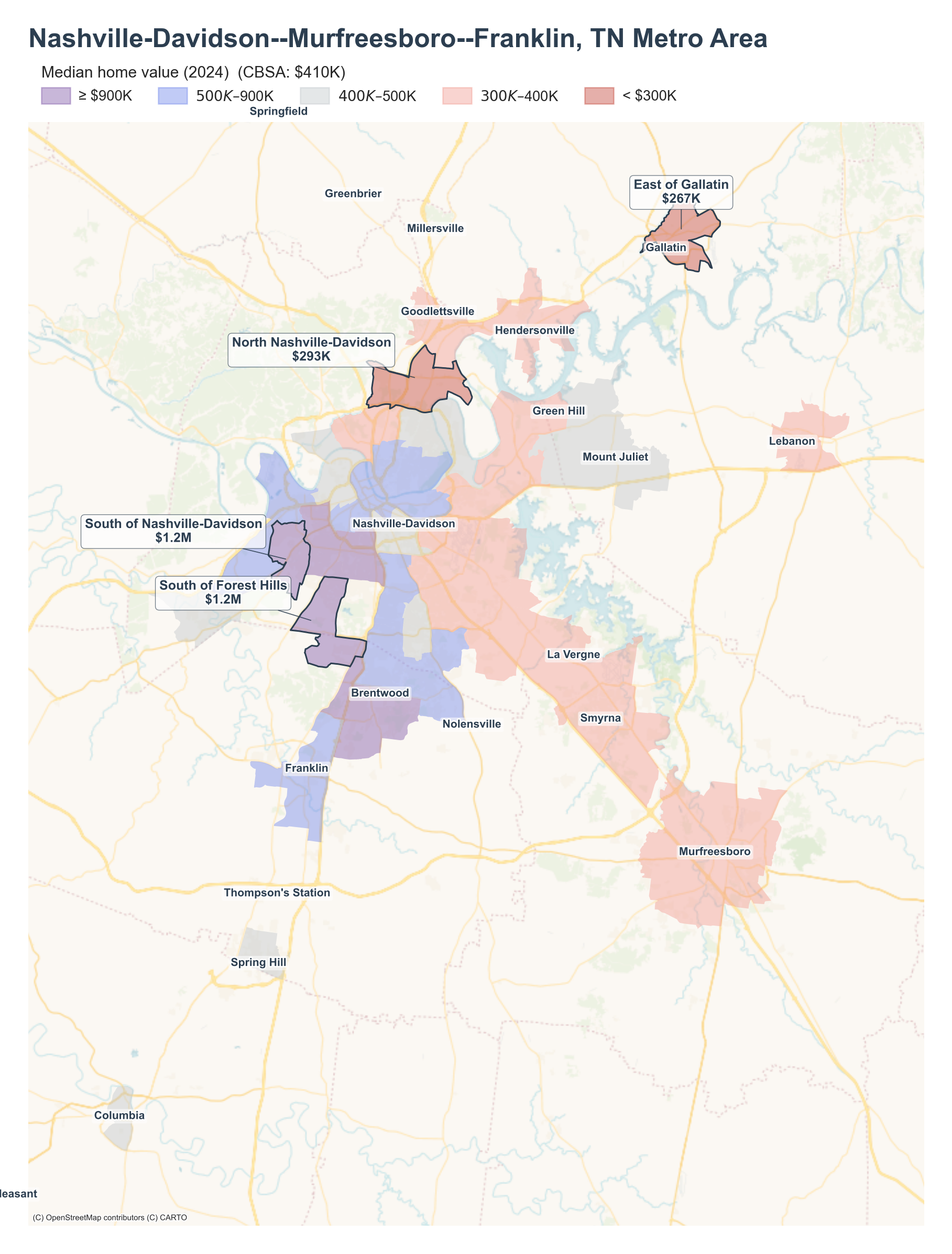
The southern wedge of Davidson County around Forest Hills and Brentwood holds million-dollar home values, while the outer ring around Gallatin, Lebanon, and Smyrna sits at the bottom.
Read post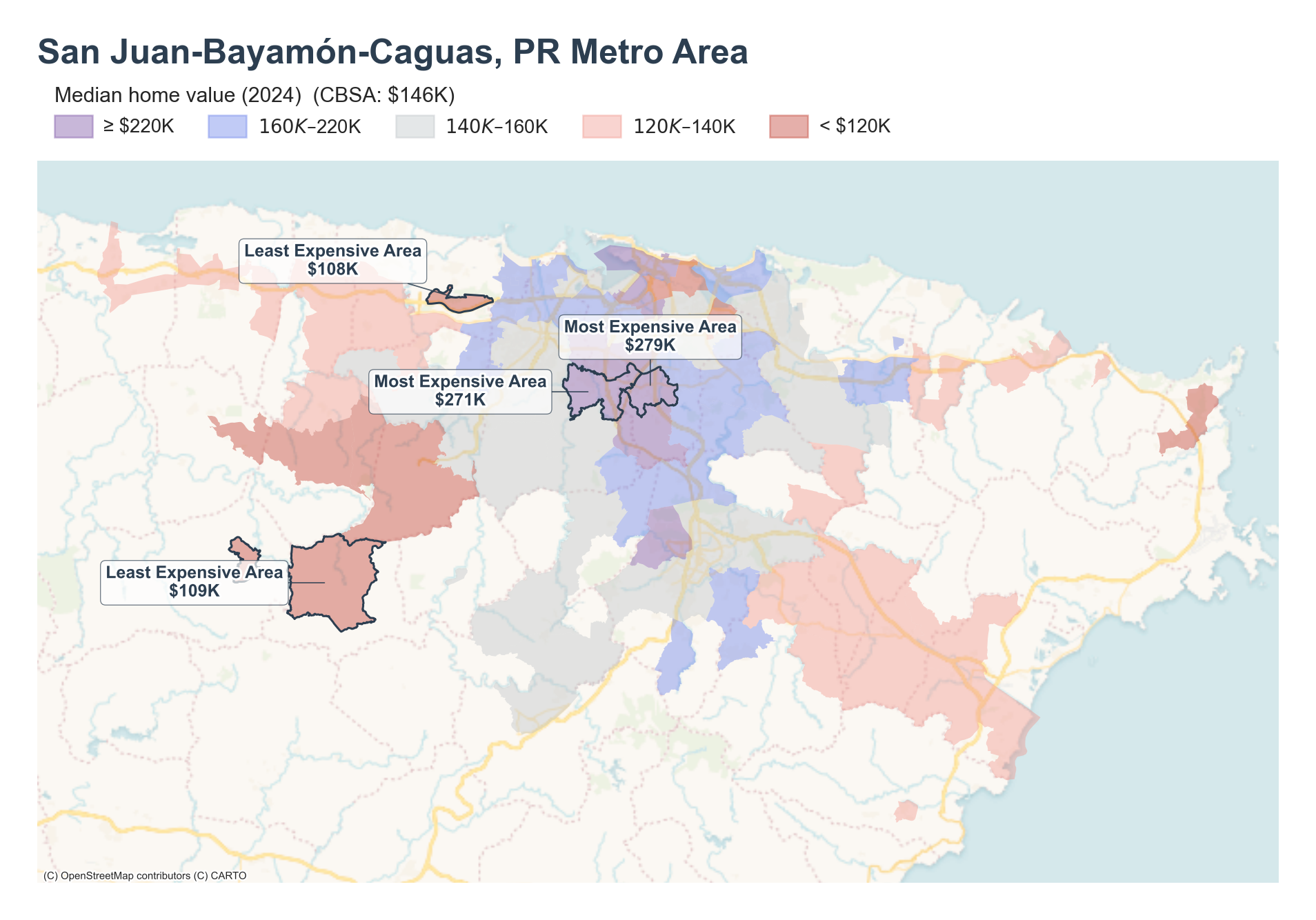
The highest values, incomes, and education concentrate in the north-central urban core, while the outlying western and interior areas sit at the bottom — in a metro whose incomes run far below any mainland metro in this series.
Read post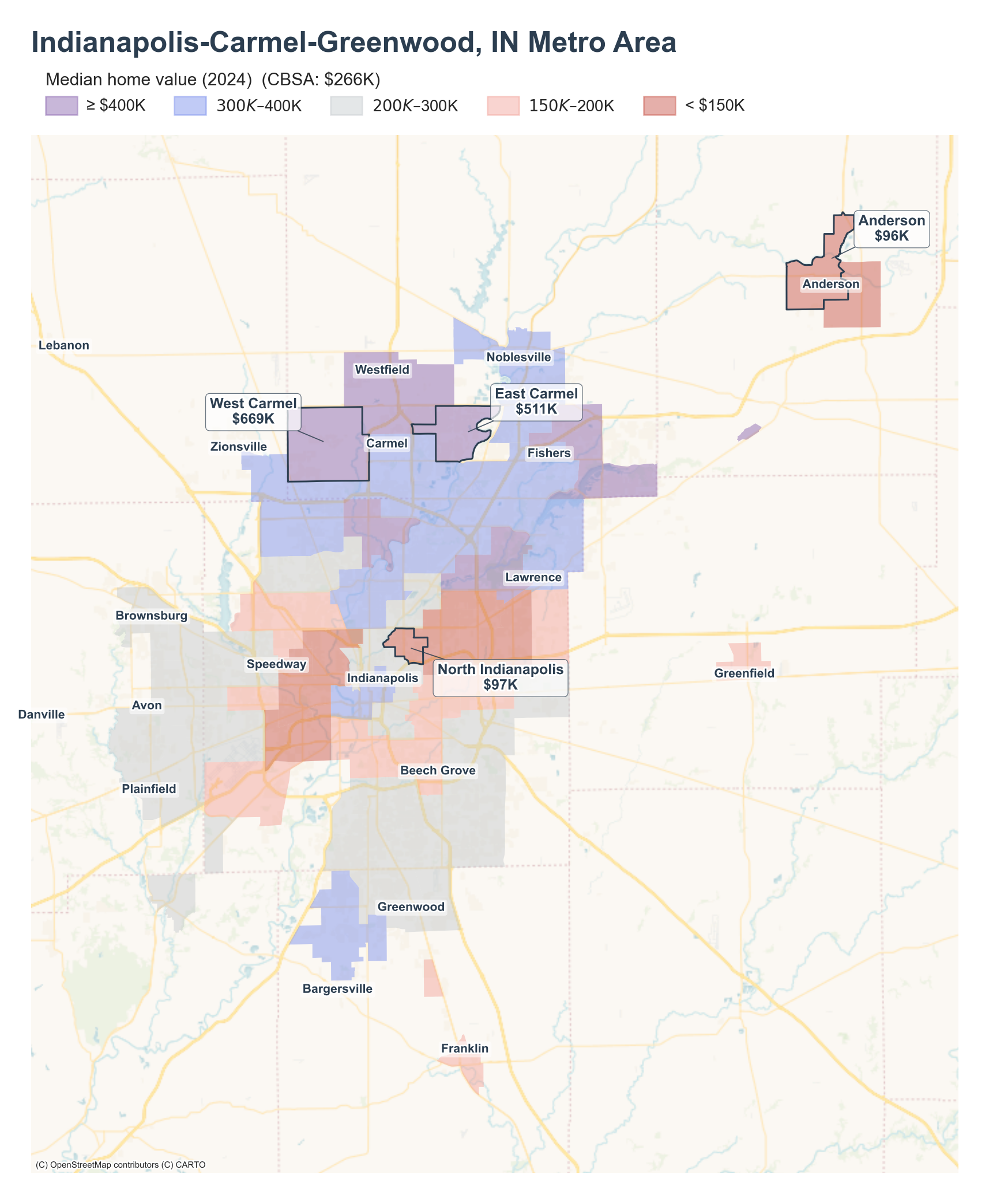
The Hamilton County suburbs around Carmel and Fishers lead on wealth and education, while the city of Indianapolis and the old auto town of Anderson sit at the bottom.
Read post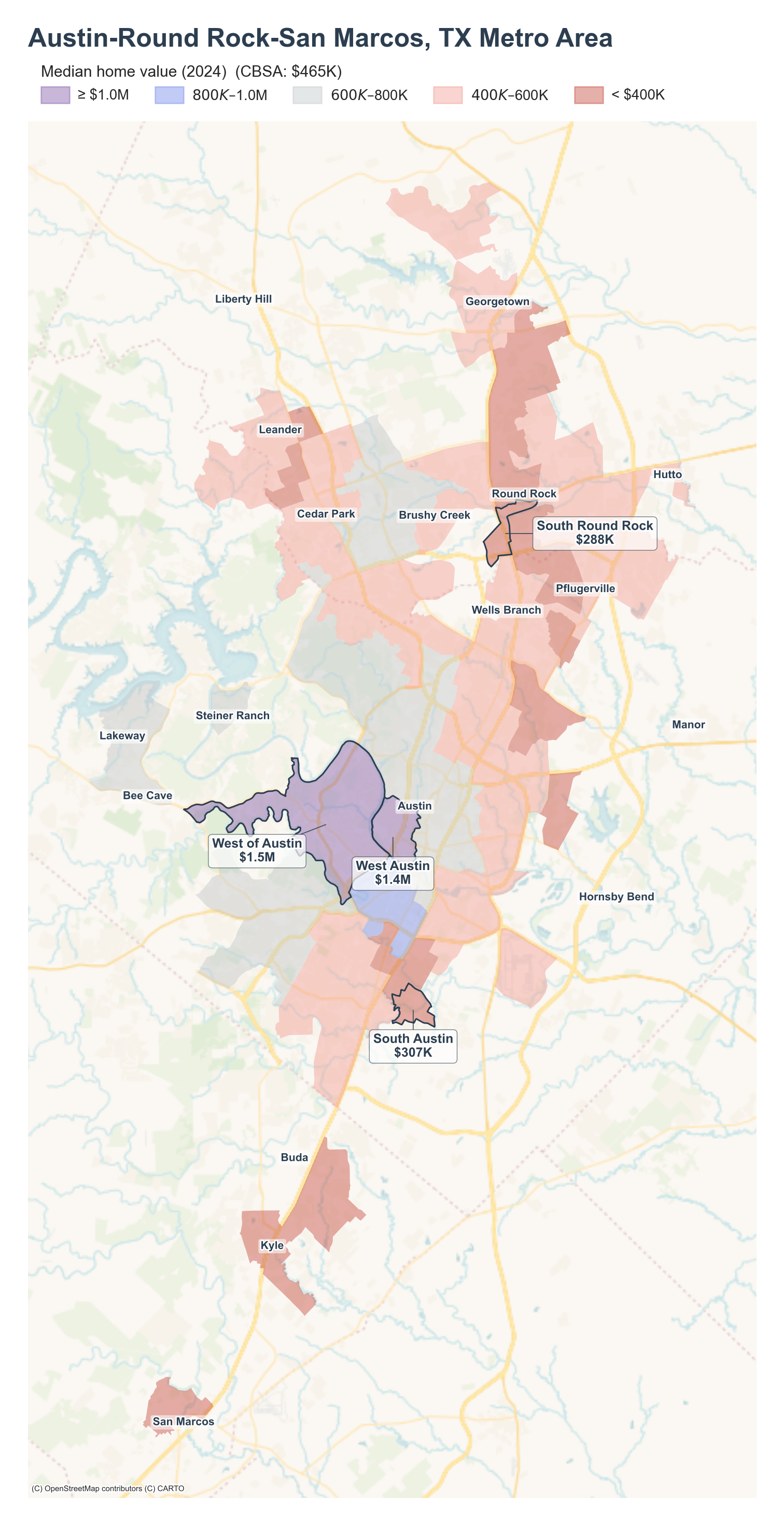
A wealthy wedge west of the city tops every metric, while a band of lower-value, younger neighborhoods runs from east Austin south through Kyle to San Marcos.
Read post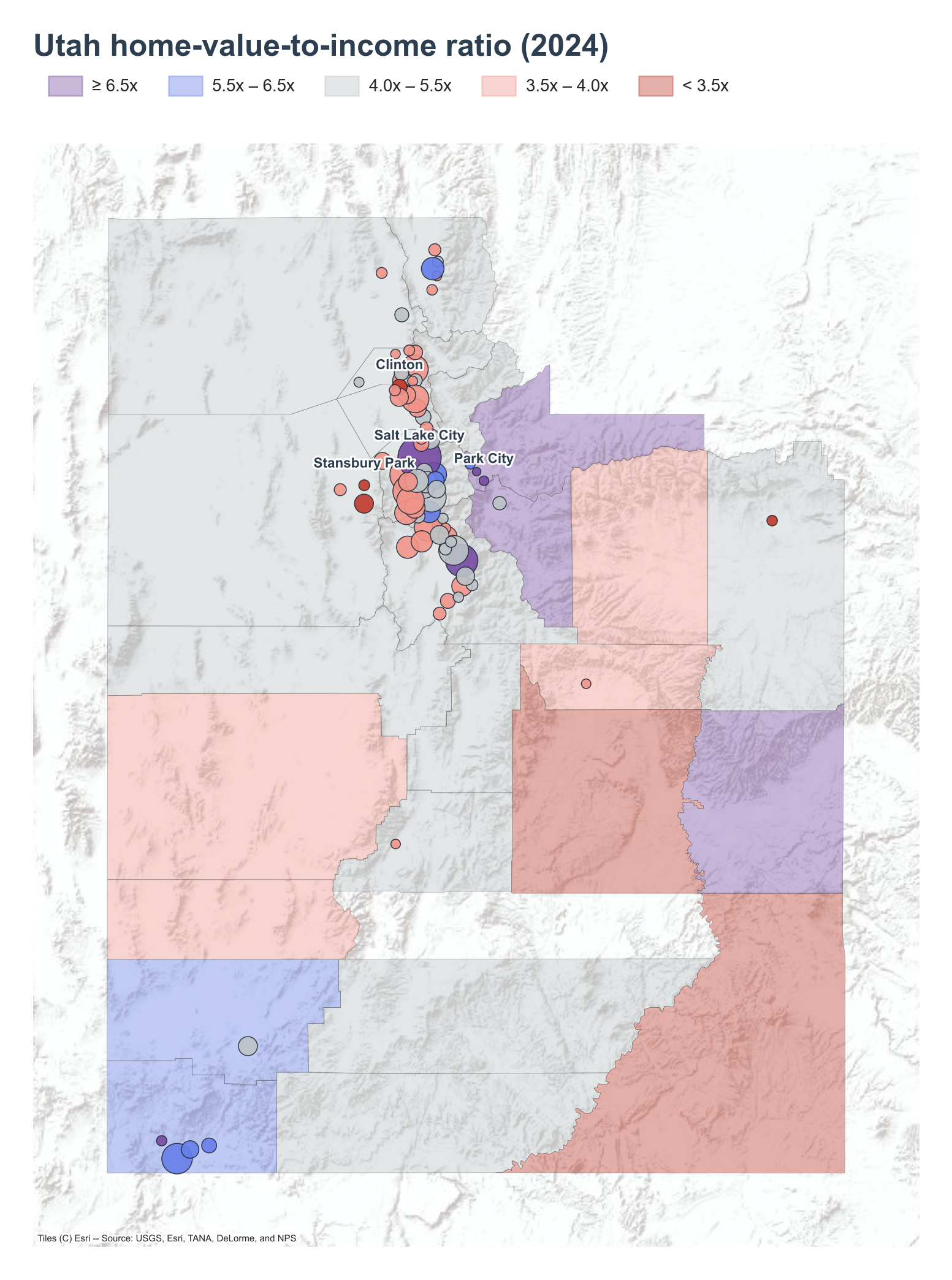
Utah's home-value-to-income ratio reached 5.14x in 2024, opening a full point above the United States as home values grew nearly twice as fast as household income.
Read post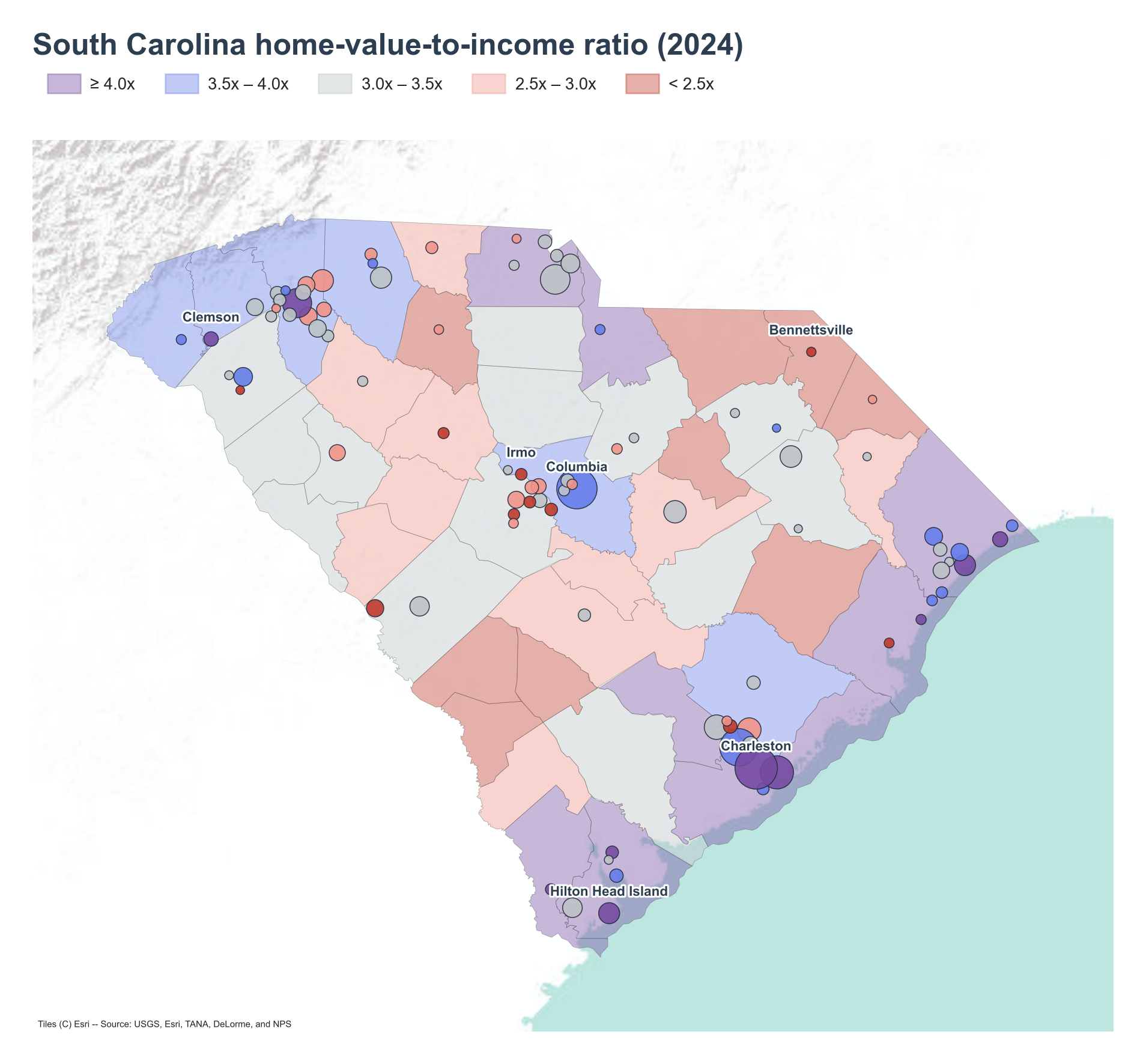
South Carolina's home-value-to-income ratio rose from 3.03x in 2018 to 3.74x in 2024, trailing the US 4.12x. The coast — Charleston, Beaufort, Hilton Head, Myrtle Beach — pulled the high end; rural inland counties anchored the bottom.
Read post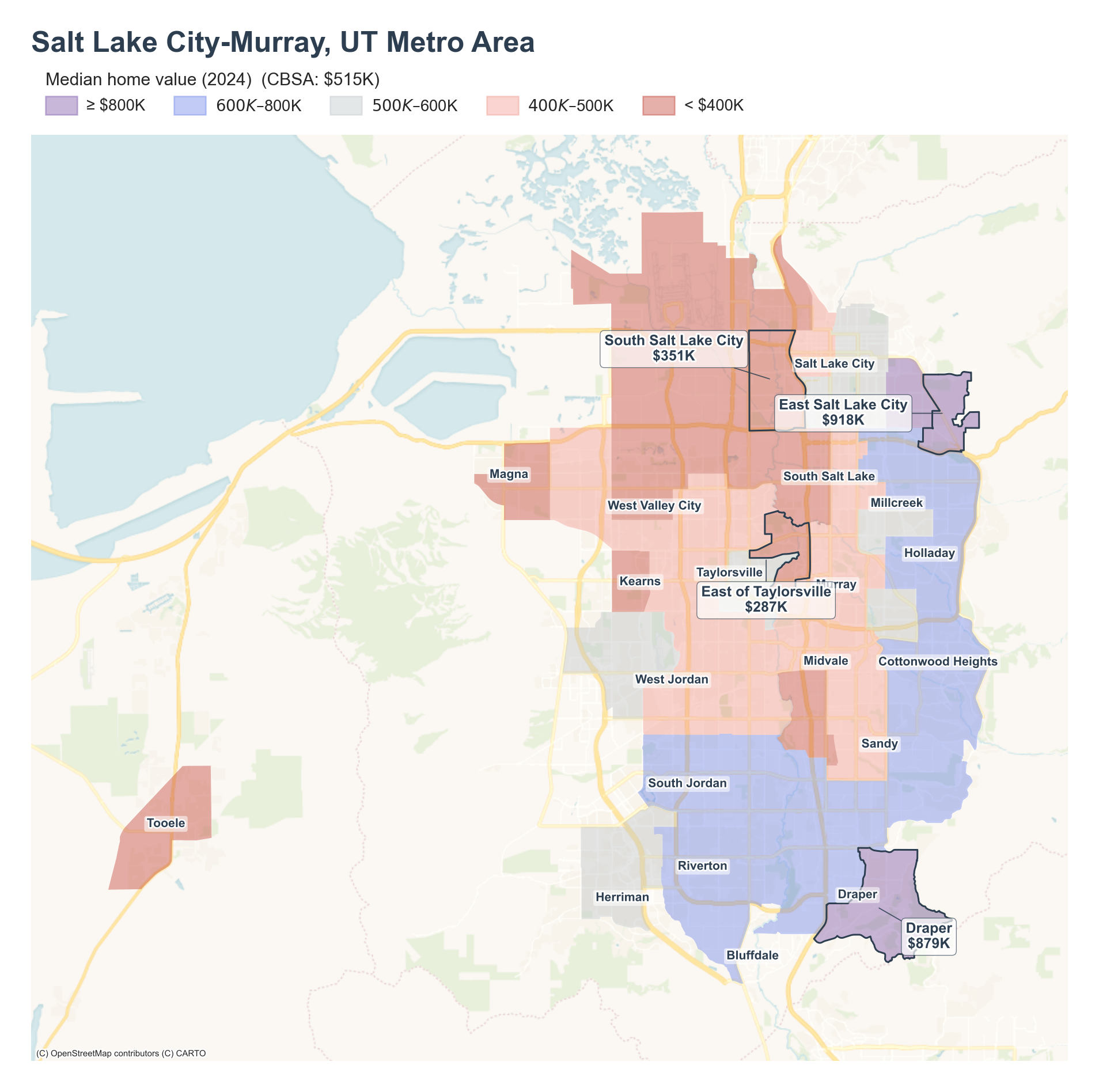
A wealthy east-bench band runs from the University of Utah south to Draper, set against a working-class corridor through West Valley City.
Read post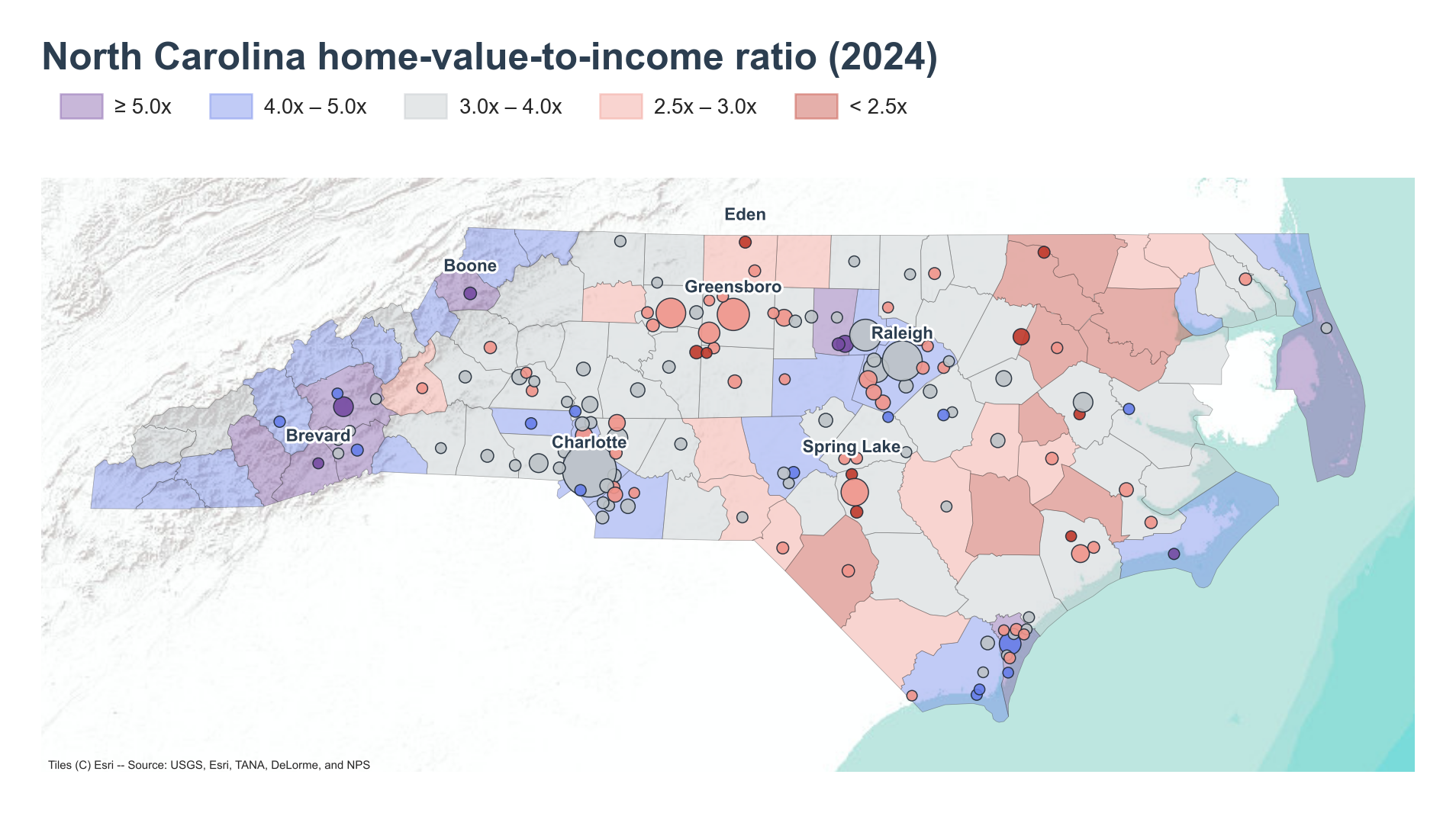
North Carolina's home-value-to-income ratio rose from 3.17x in 2018 to 3.99x in 2024, trailing the US 4.12x but climbing on the same slope. The Blue Ridge mountains, the Outer Banks, and university towns pulled the ≥5x bucket; rural east and coastal-plain counties anchored the bottom.
Read post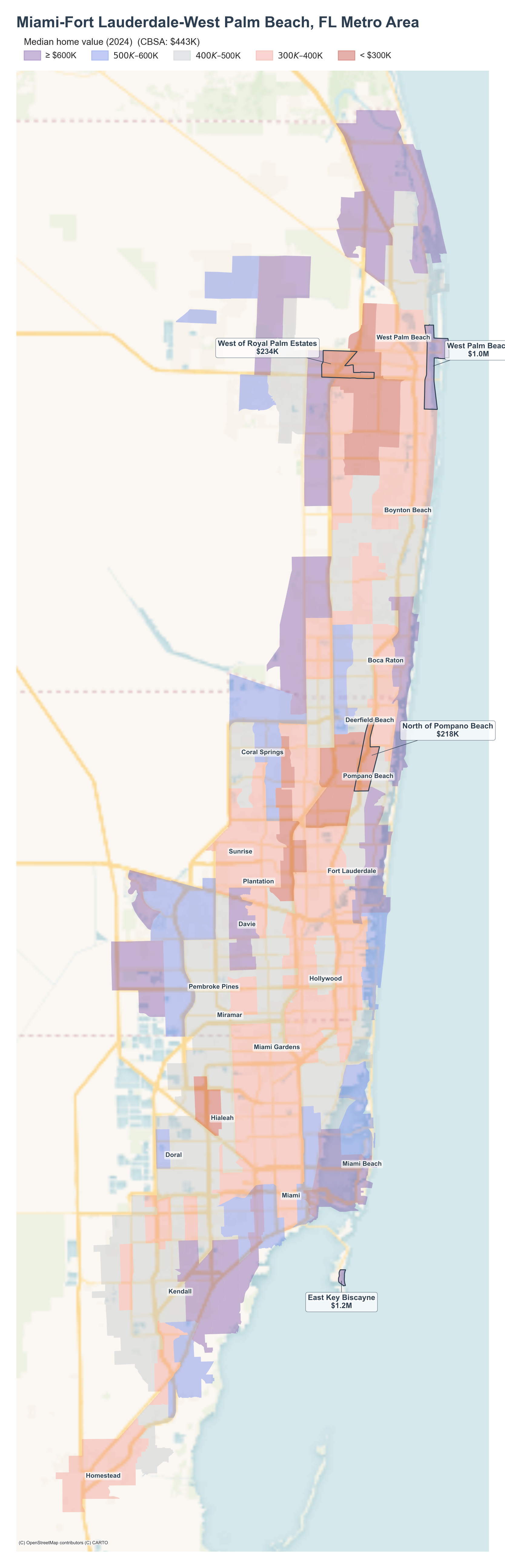
The Atlantic coastal band runs far above the metro, while an inland strip from west Pompano Beach through Homestead sits well below it.
Read post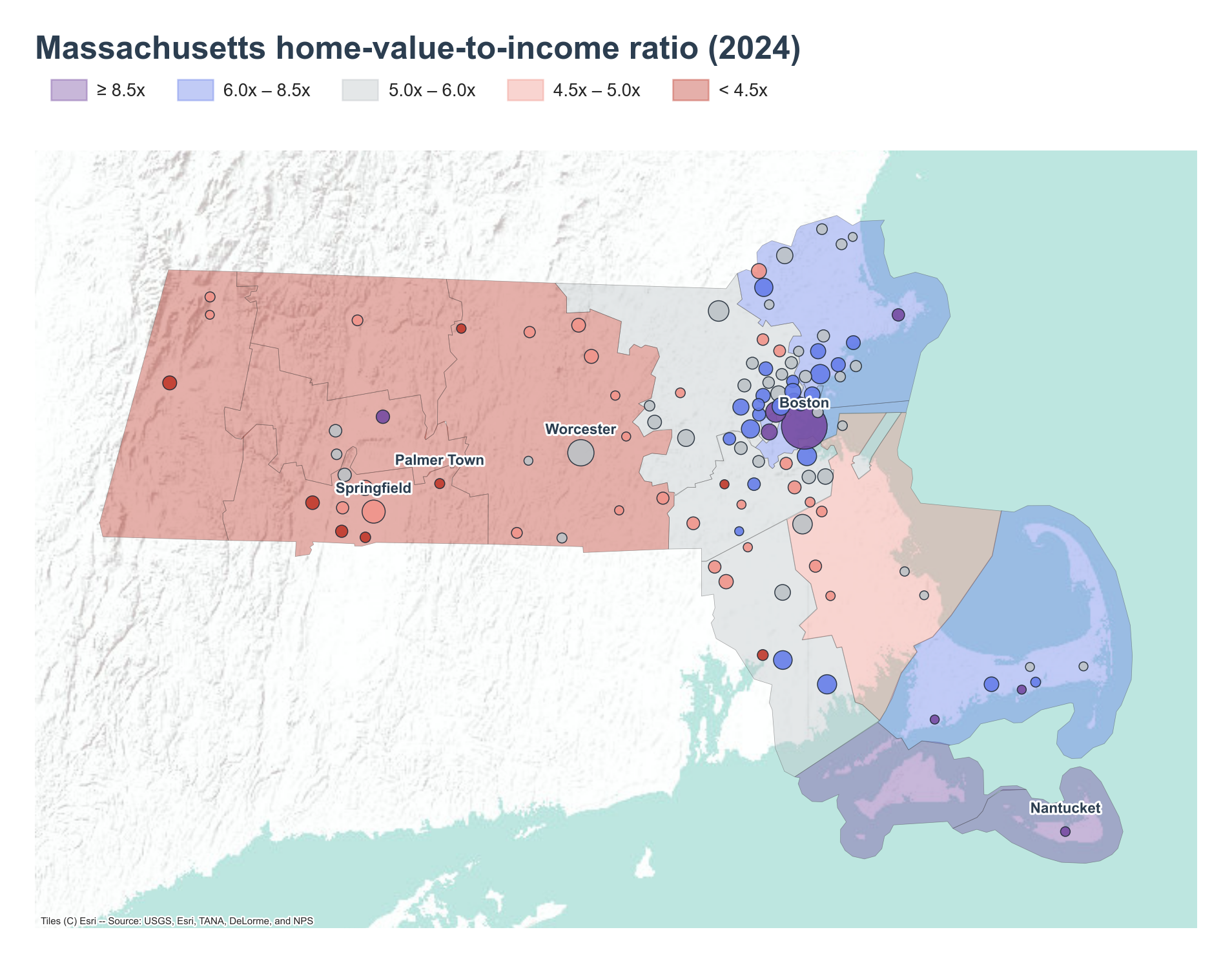
Massachusetts's home-value-to-income ratio reached 5.41x in 2024, well above the US 4.12x, with the islands and Greater Boston pushing past 7x while the western counties still sit near 4x.
Read post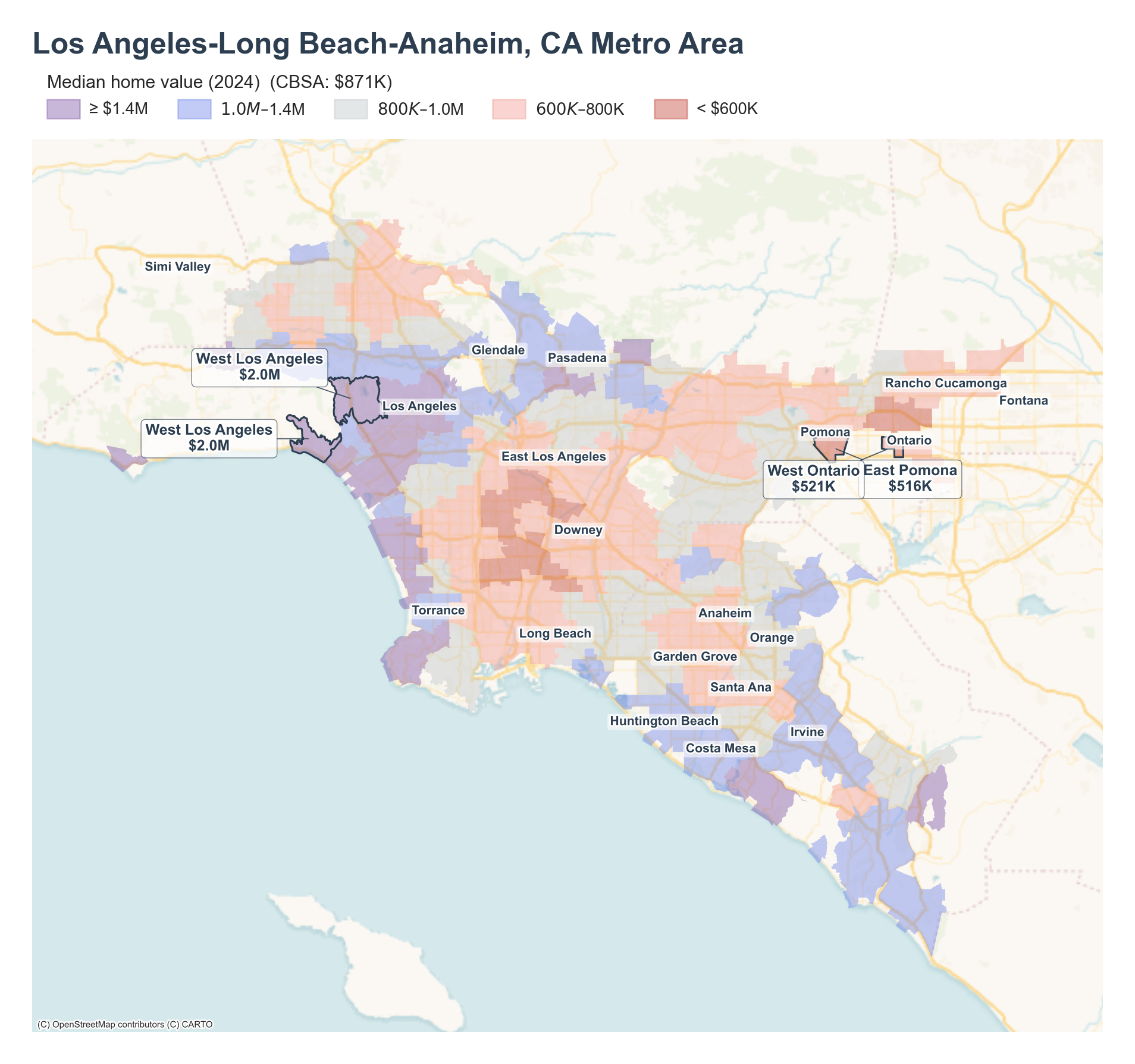
A coastal Westside–Palos Verdes–south-Orange-County wedge anchors the high end, while an inland band from central LA out to the Pomona–Ontario edge anchors the low end.
Read post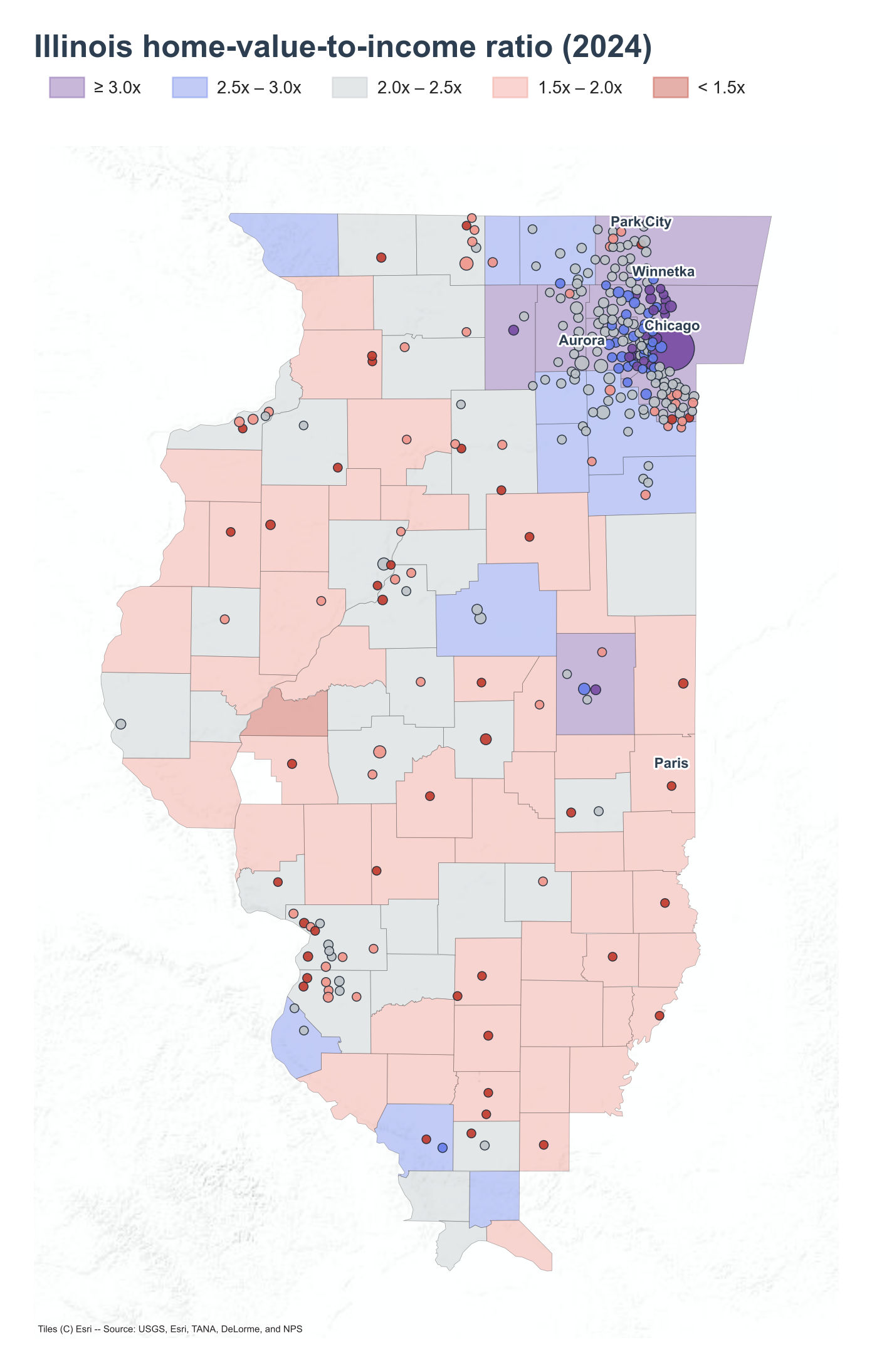
Illinois homes still cost about three times household income, nearly a full point below the United States. The pressure is concentrated in Chicago's North Shore and DuPage suburbs while much of downstate remains under 2x.
Read post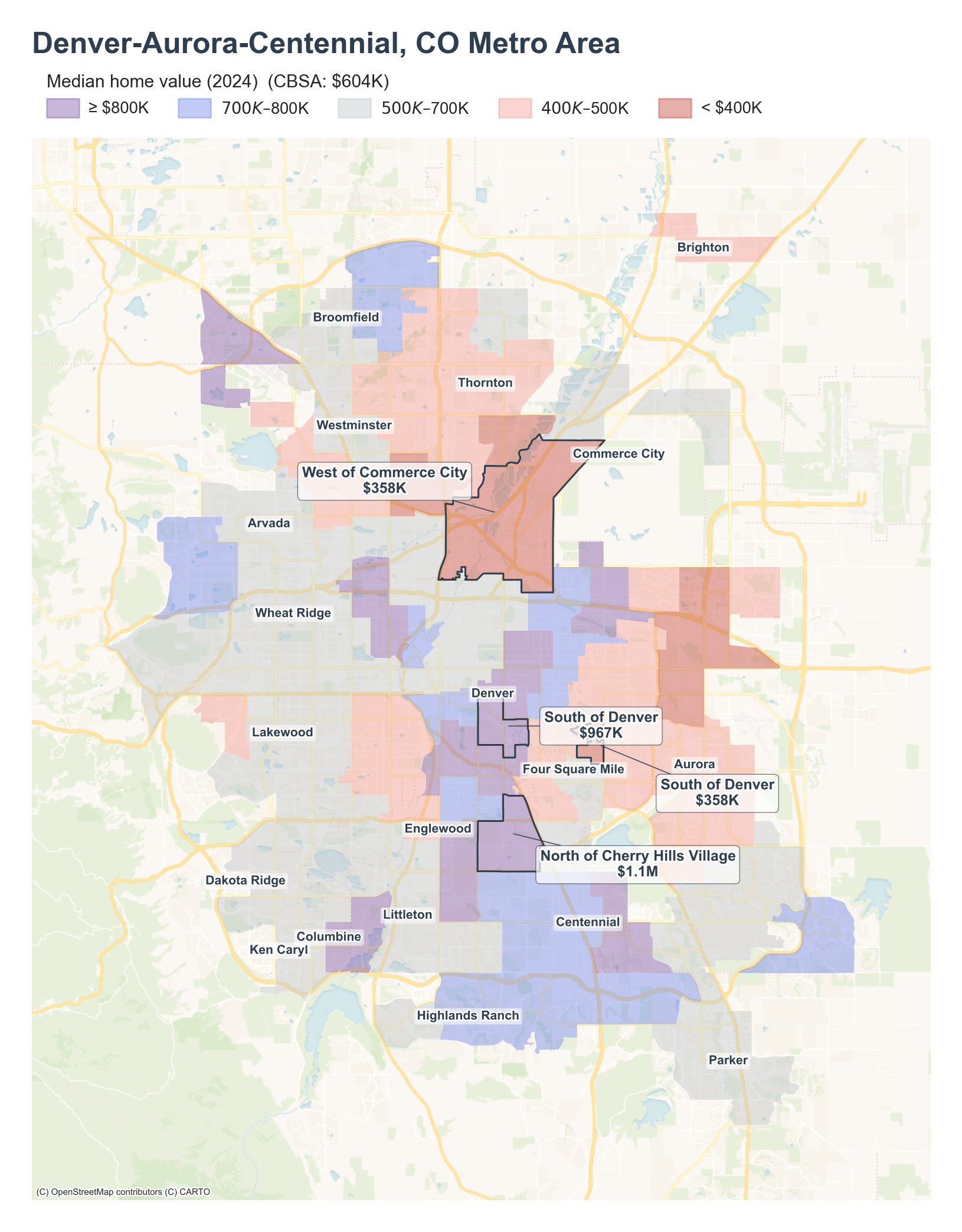
A wealthy southern wedge and a working-class northeast band through Commerce City and north Aurora anchor the metro.
Read post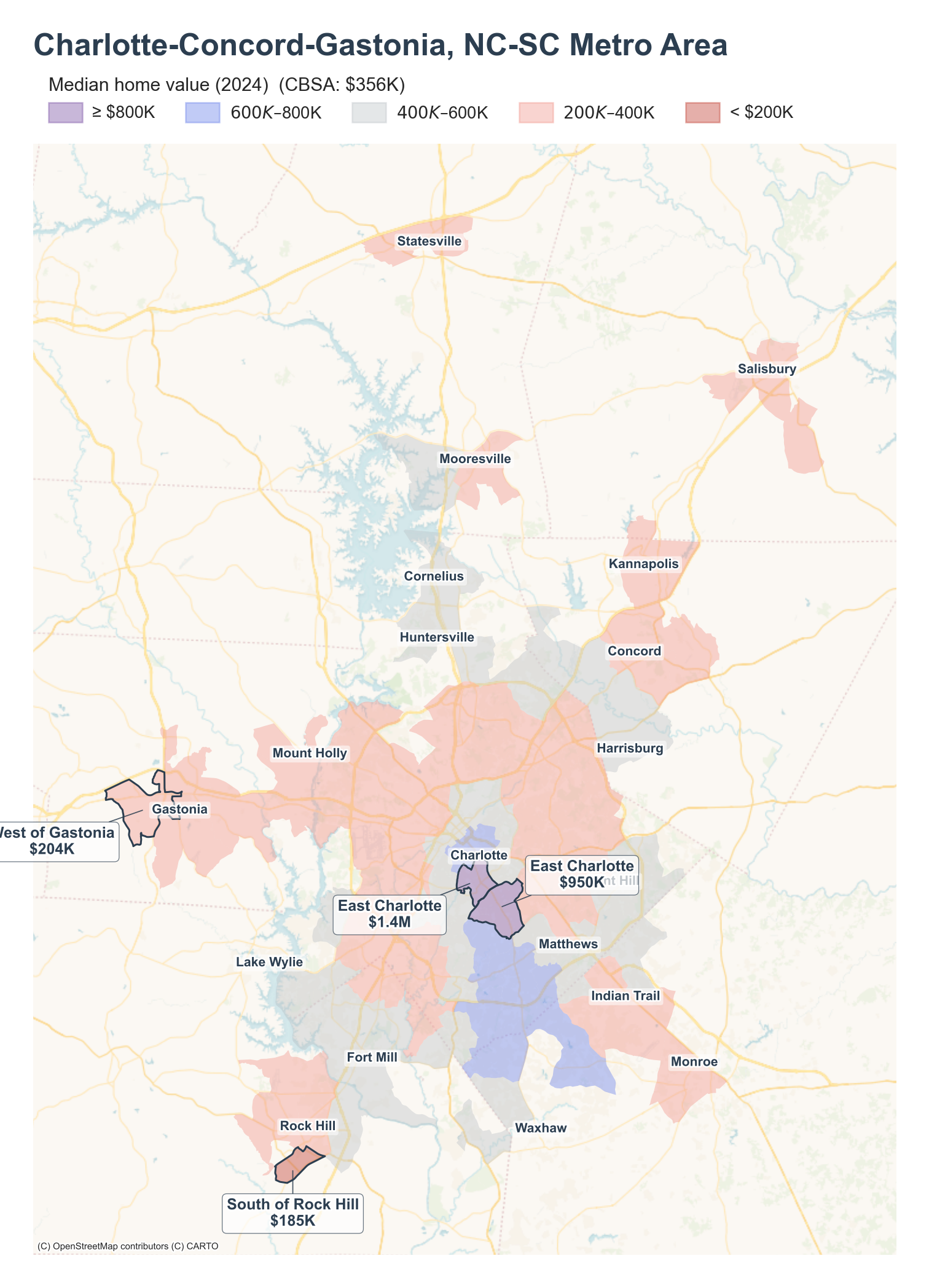
A wealthy southern wedge through uptown contrasts with lower-value mill-town and exurban edges.
Read post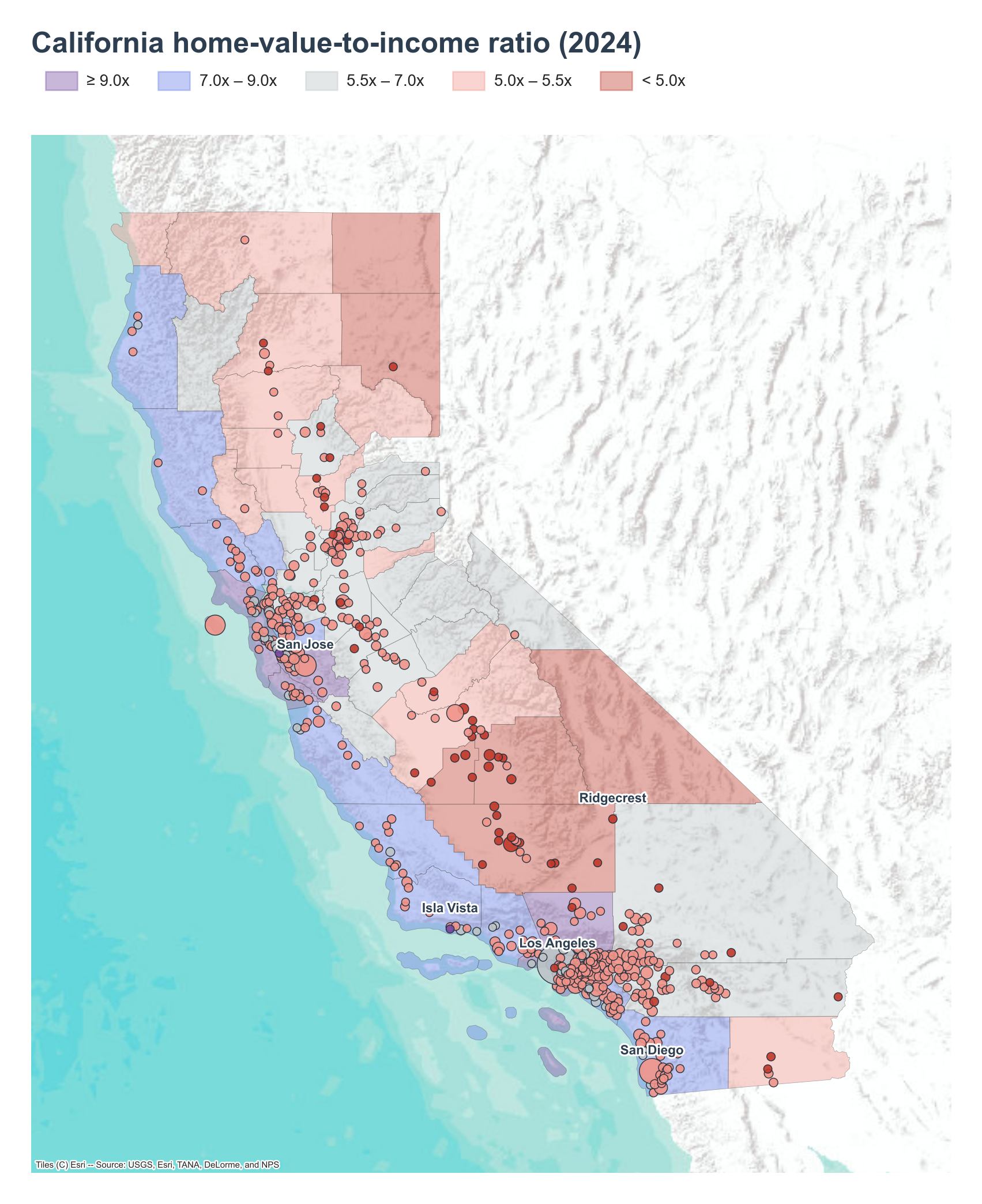
California's home-value-to-income ratio reached 7.41x in 2024, roughly 1.8x the U.S. level, and nearly half of households now live in places at 8x or higher.
Read post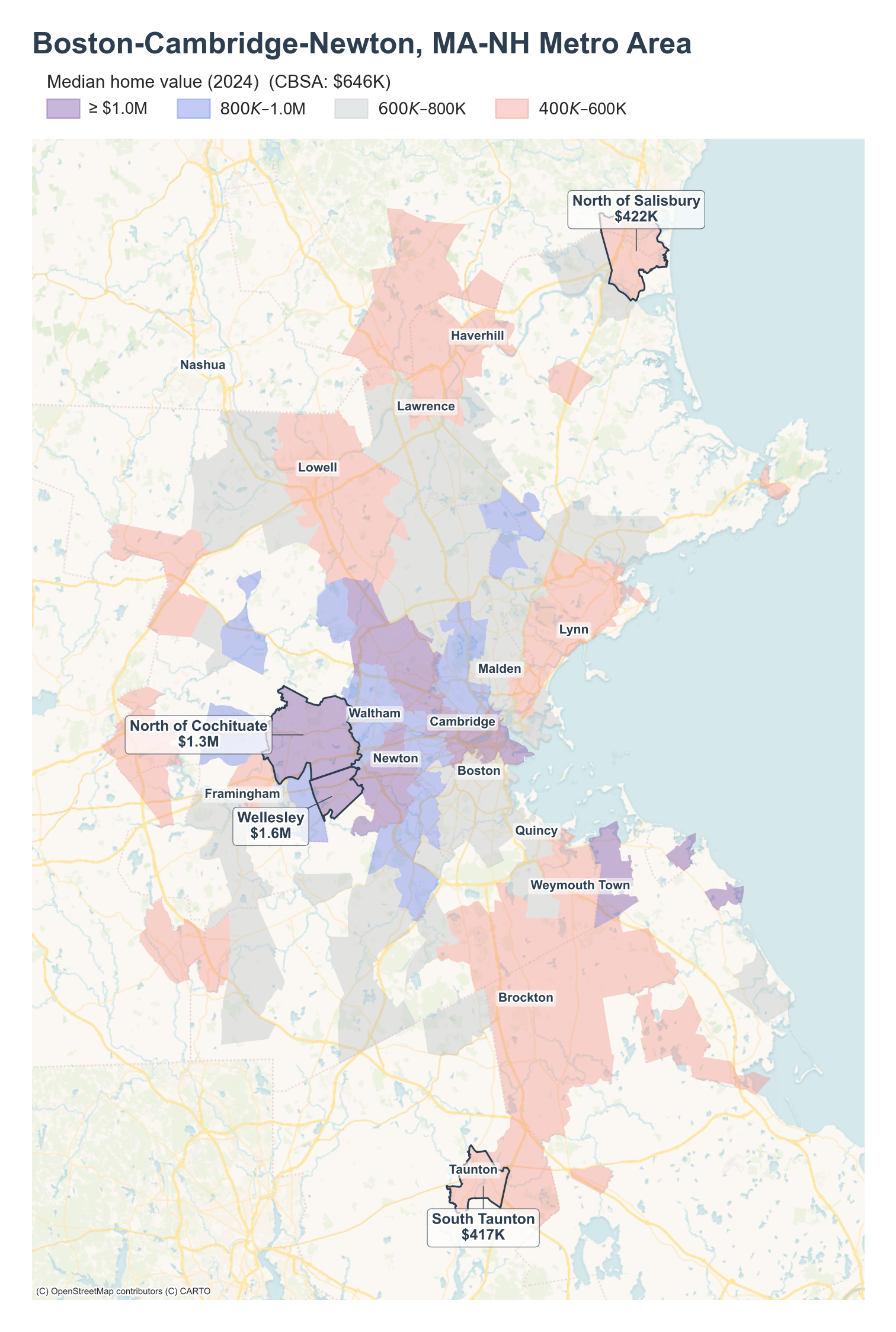
A wealthy MetroWest band running through Wellesley, Newton, and Lexington tops every metric, while the lowest values sit on the metro's southern and northern fringes.
Read post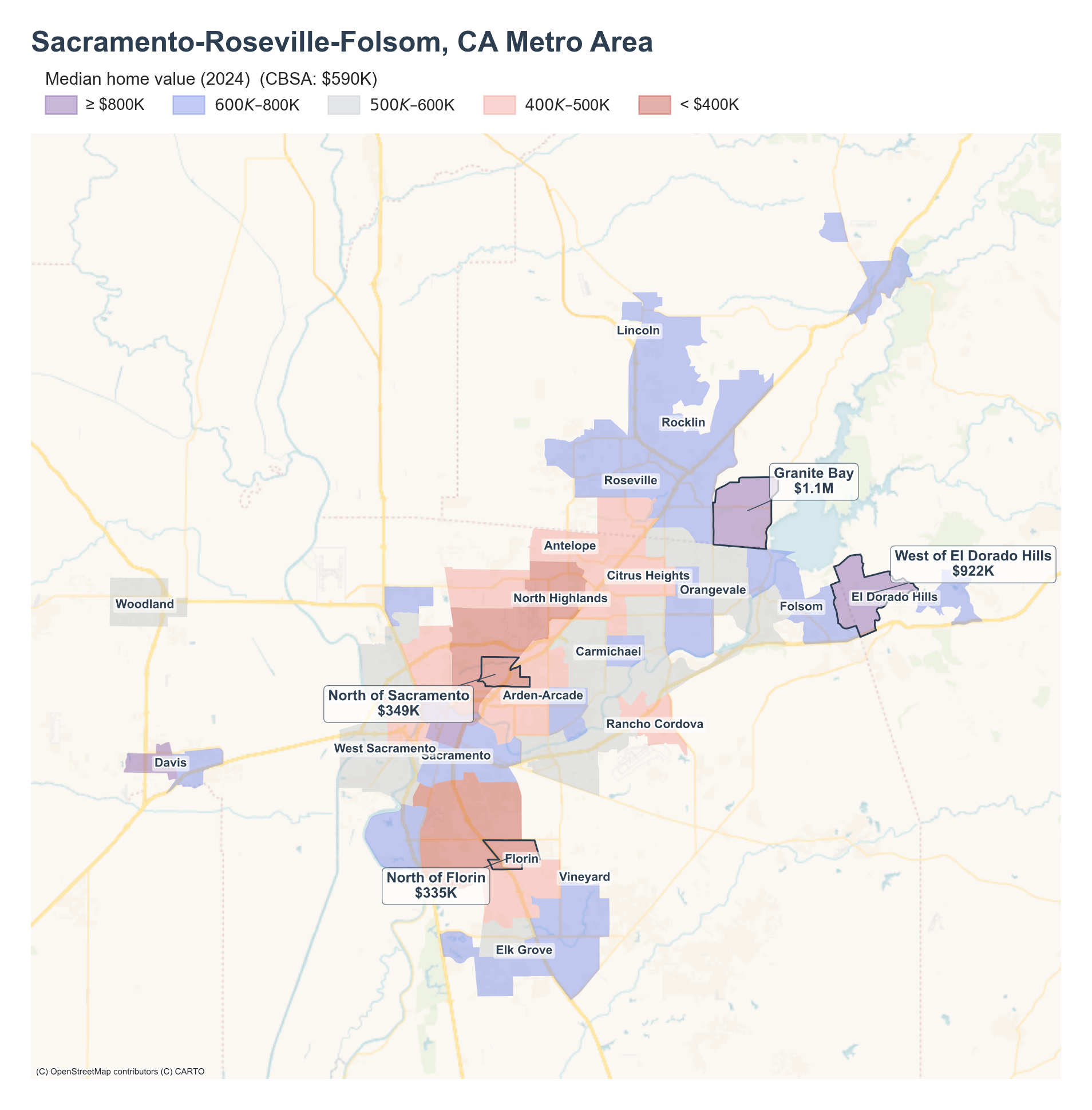
Wealth concentrates along a northeast suburban band from Granite Bay to El Dorado Hills, while inner Sacramento and the North Highlands corridor anchor the metro's lower end.
Read post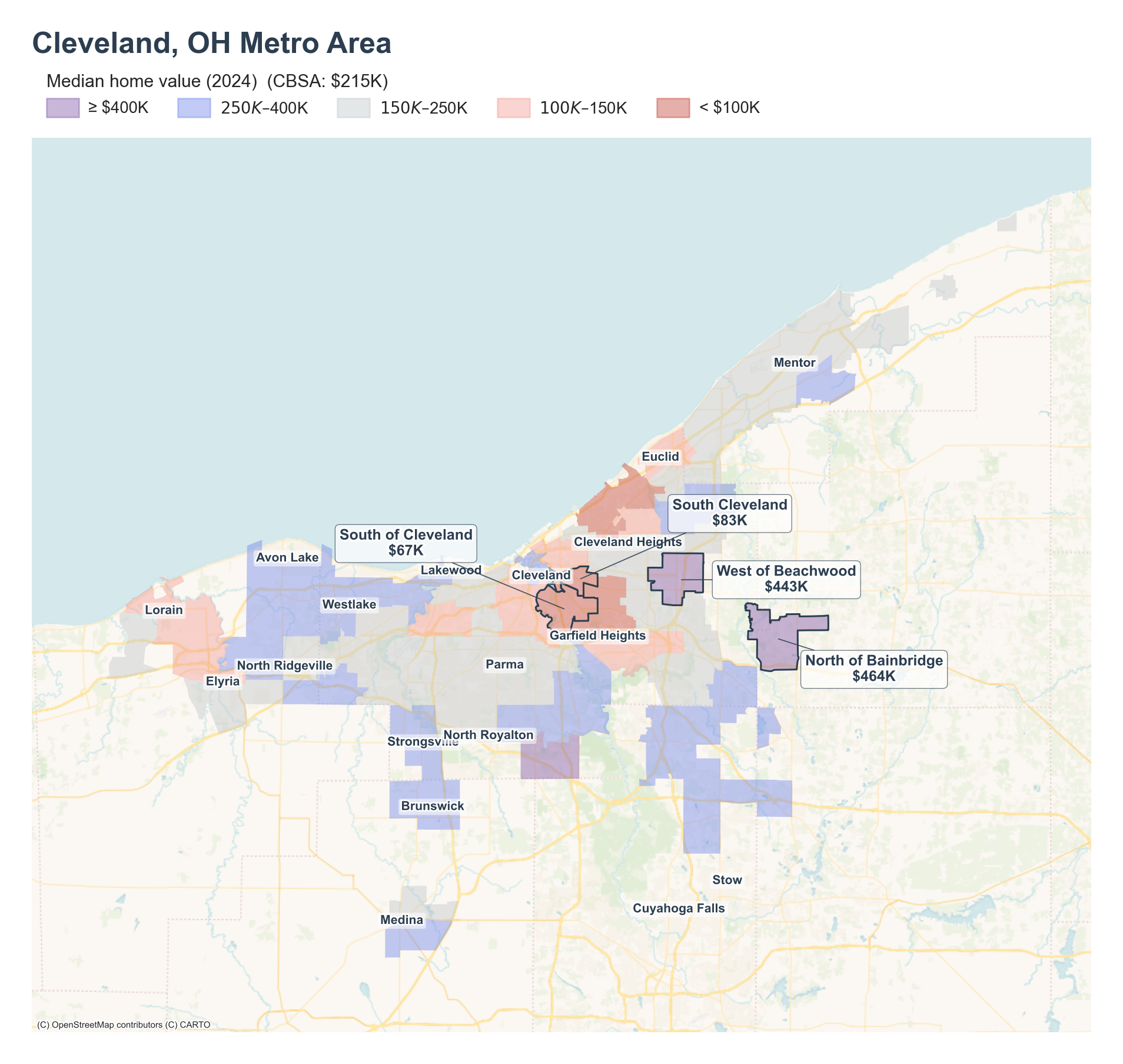
The eastern suburbs around Beachwood and Bainbridge and the western lakefront around Avon lead on wealth, while the city of Cleveland and its inner east side sit at the bottom.
Read post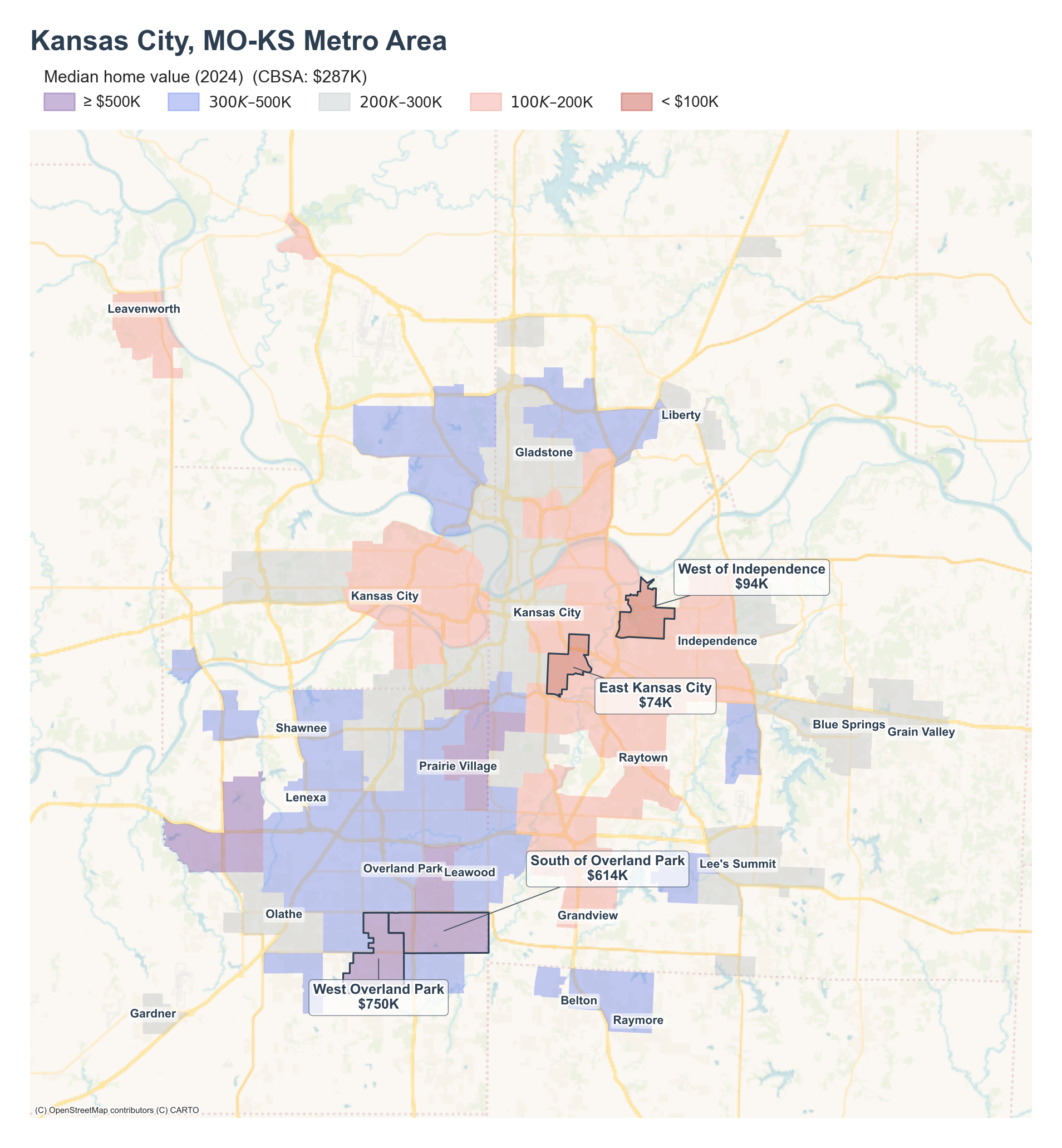
The Johnson County, Kansas suburbs around Overland Park and Olathe lead on wealth and education, while the east side of Kansas City, Missouri sits at the bottom.
Read post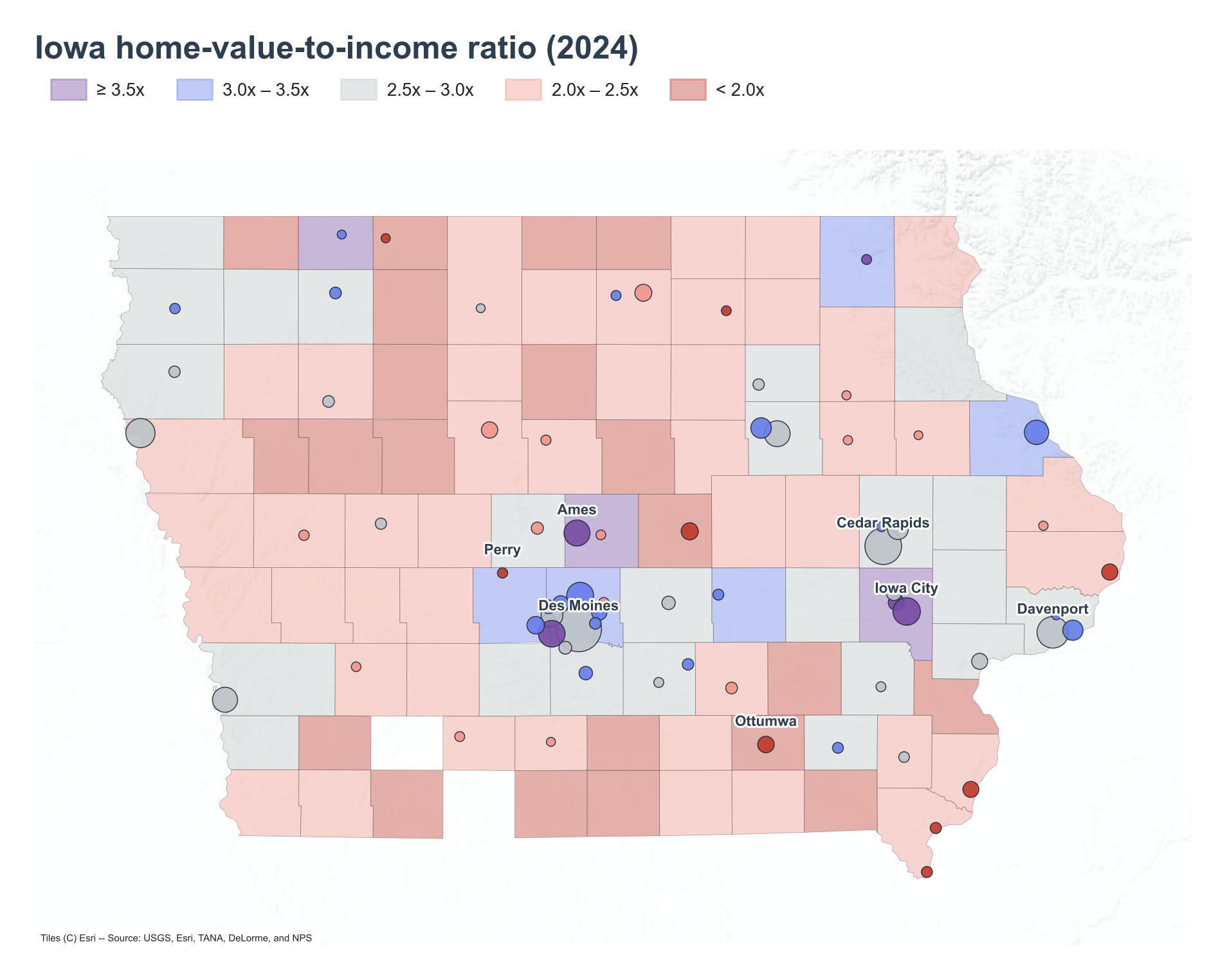
Iowa's home-value-to-income ratio sits well below the national figure, but the gap has widened sharply since 2018 as home values outran incomes and households slid into higher ratio buckets.
Read post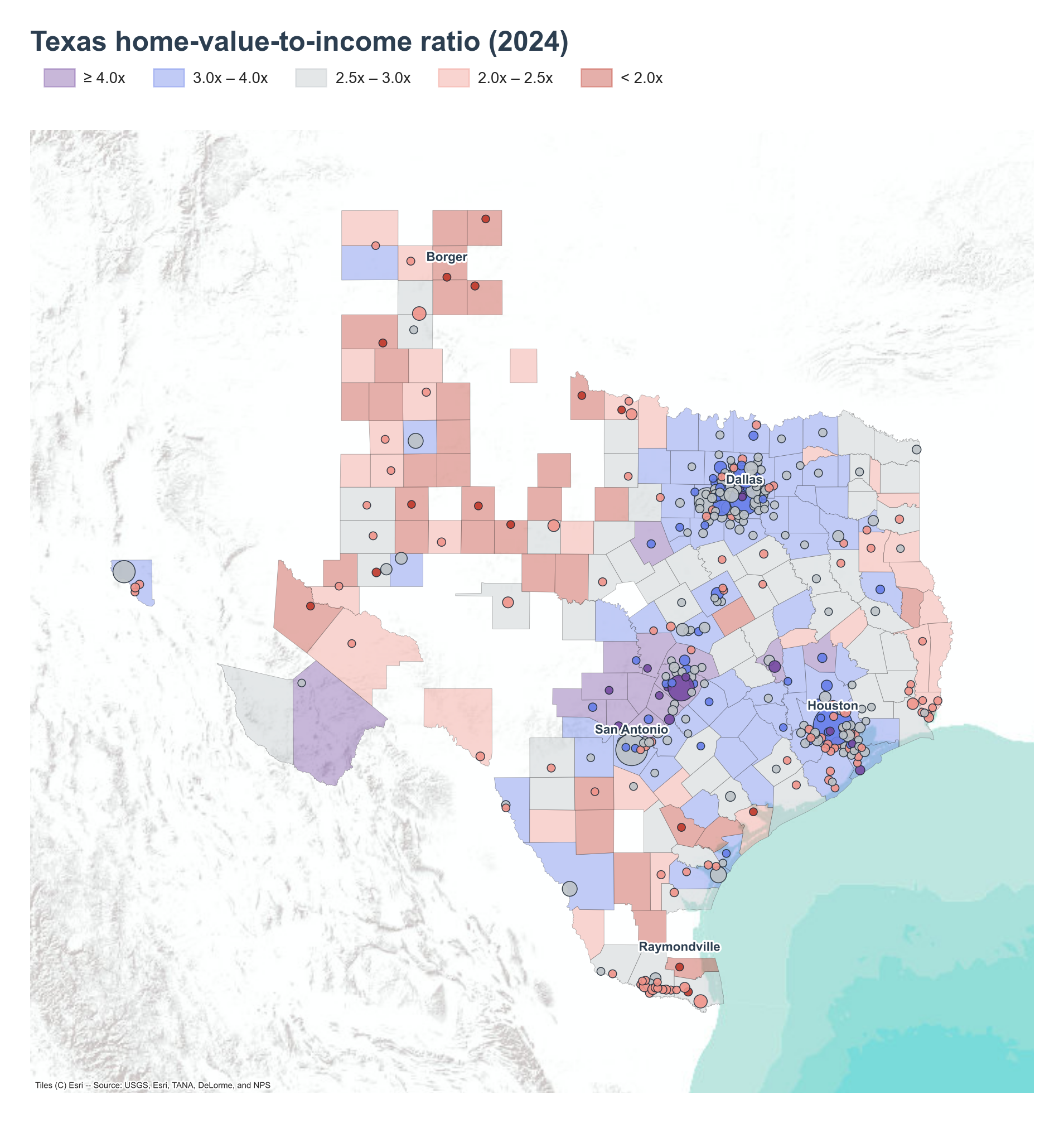
Texas still sits below the national home-value-to-income ratio, but the gap has closed sharply since 2018 as home values raced ahead of incomes. The pressure concentrates in the Hill Country and the Austin–Dallas axis, while the Panhandle and Rio Grande Valley remain the most affordable corners of the state.
Read post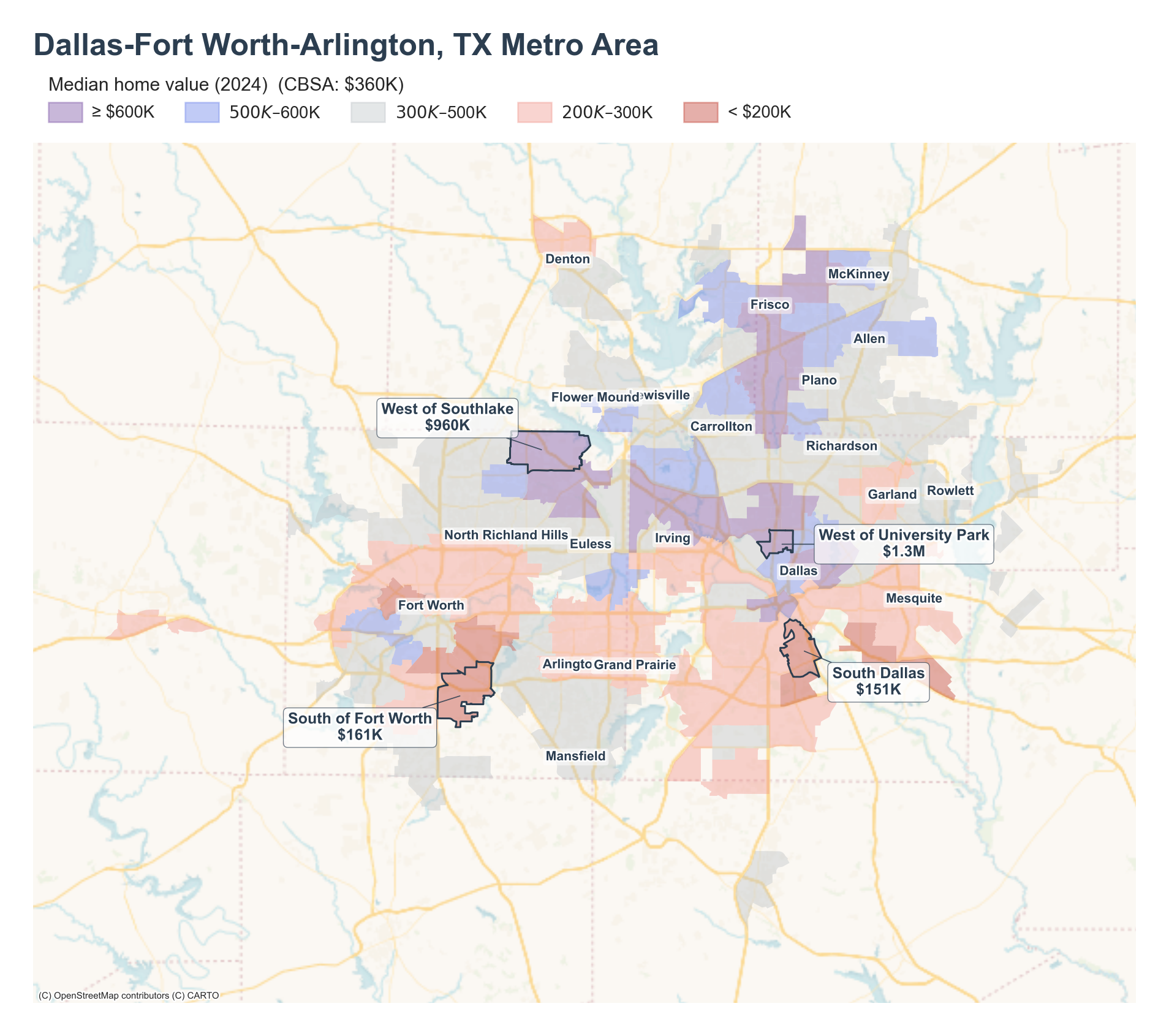
A wealthy spine running from the Park Cities up through Southlake and North Dallas sits above lower-value communities in south Dallas and east Fort Worth.
Read post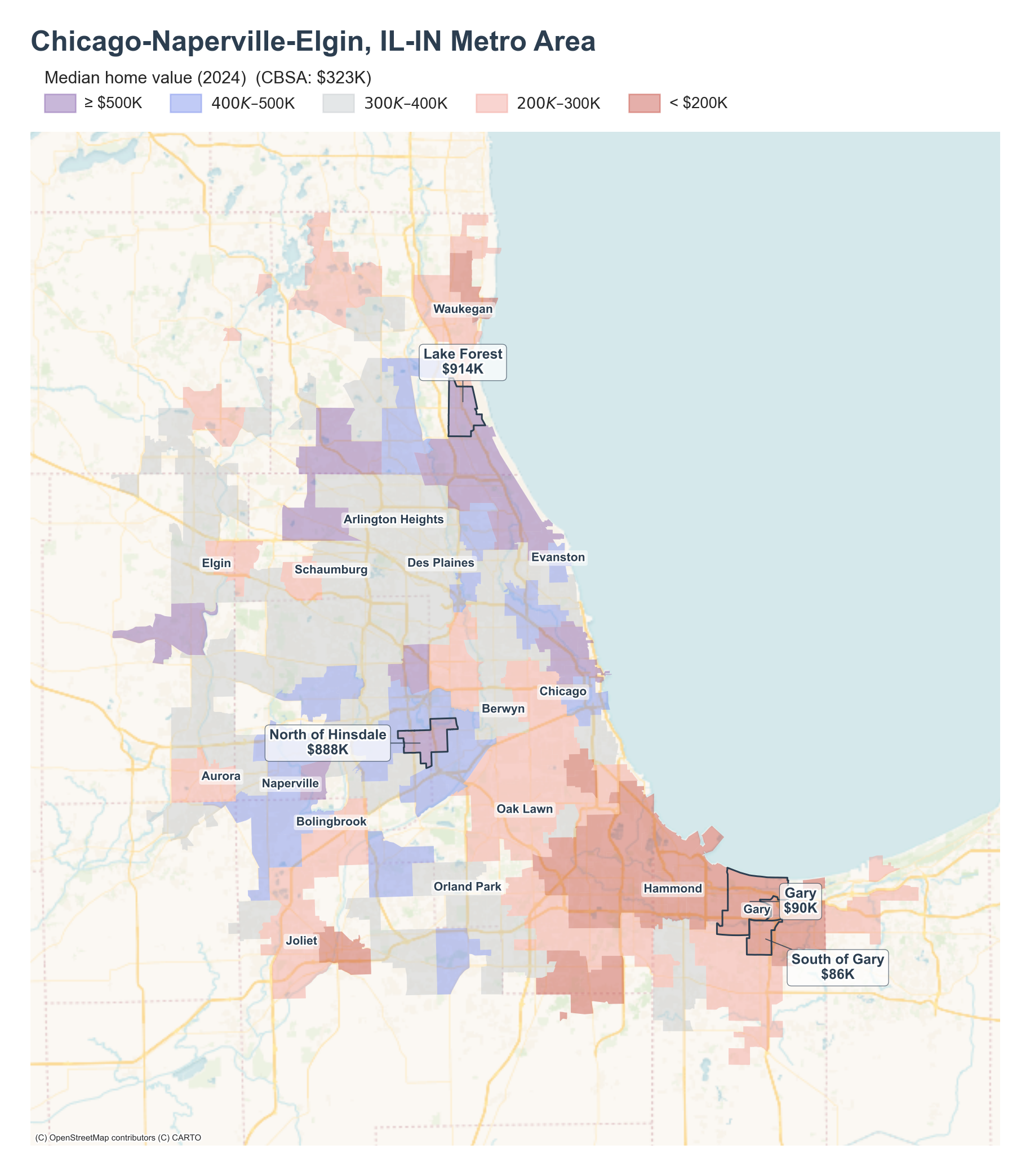
The North Shore and the Hinsdale–Oak Brook western suburbs concentrate wealth and degrees; Gary, East Chicago, and the South Cook County edge sit at the bottom of value, income, and education.
Read post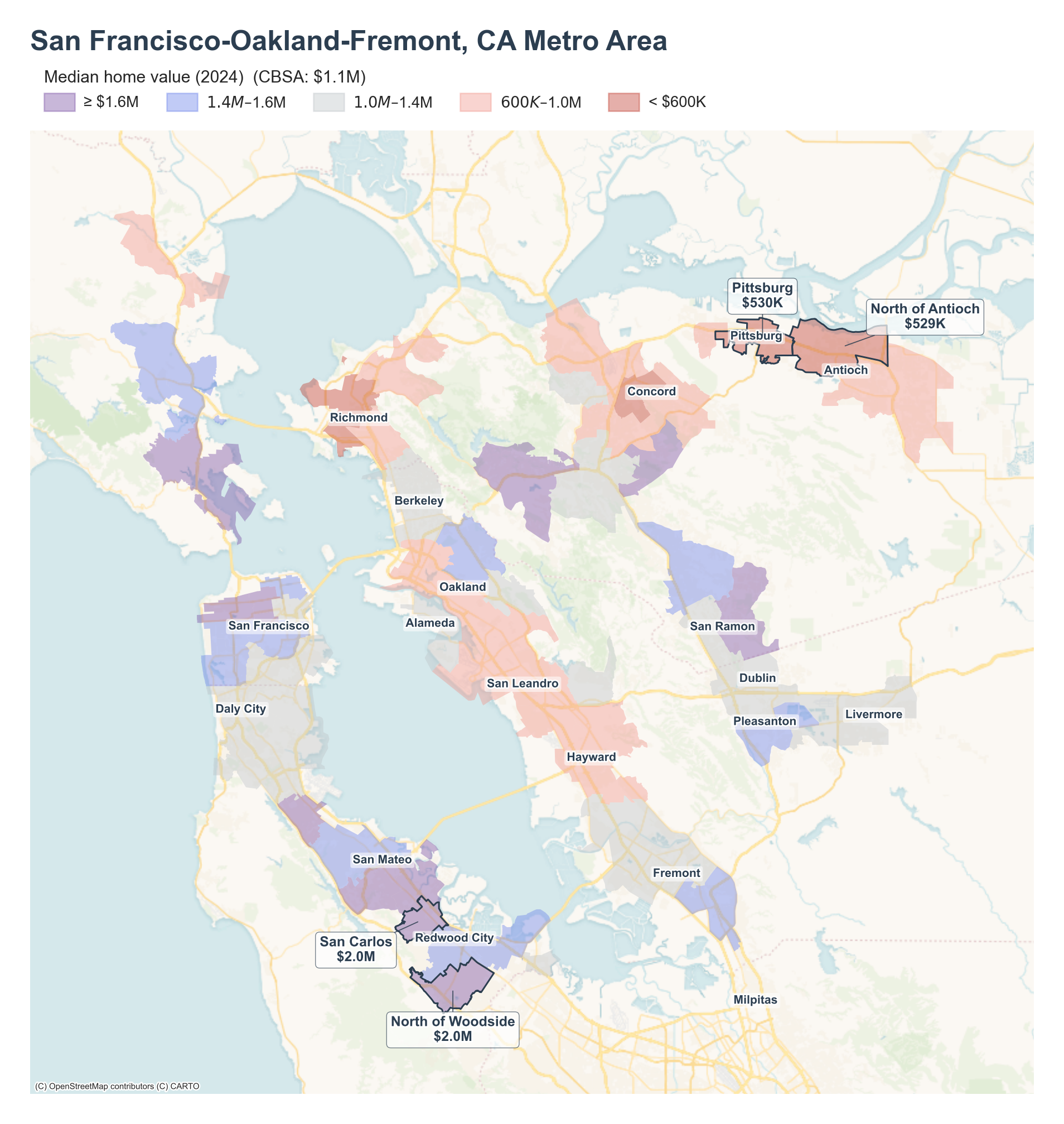
Wealth concentrates around Woodside on the Peninsula, Orinda in the East Bay hills, and Mill Valley to the north, while South Richmond and the eastern Delta around Antioch sit at the bottom.
Read post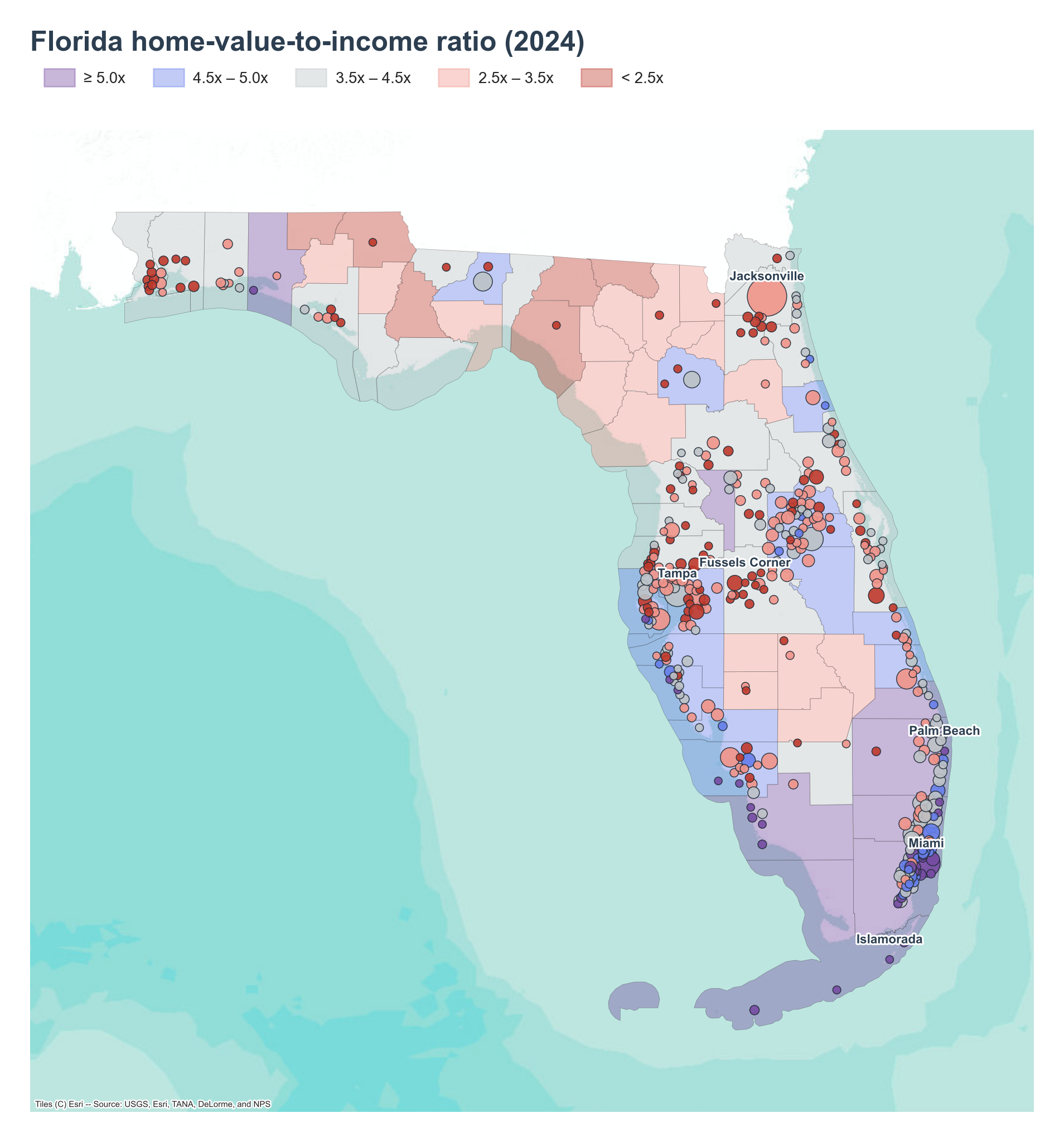
Florida's home-value-to-income ratio crossed the United States line during the pandemic and kept climbing. The pressure concentrates in South Florida and the Keys, while the rural Panhandle stays the most affordable part of the state.
Read post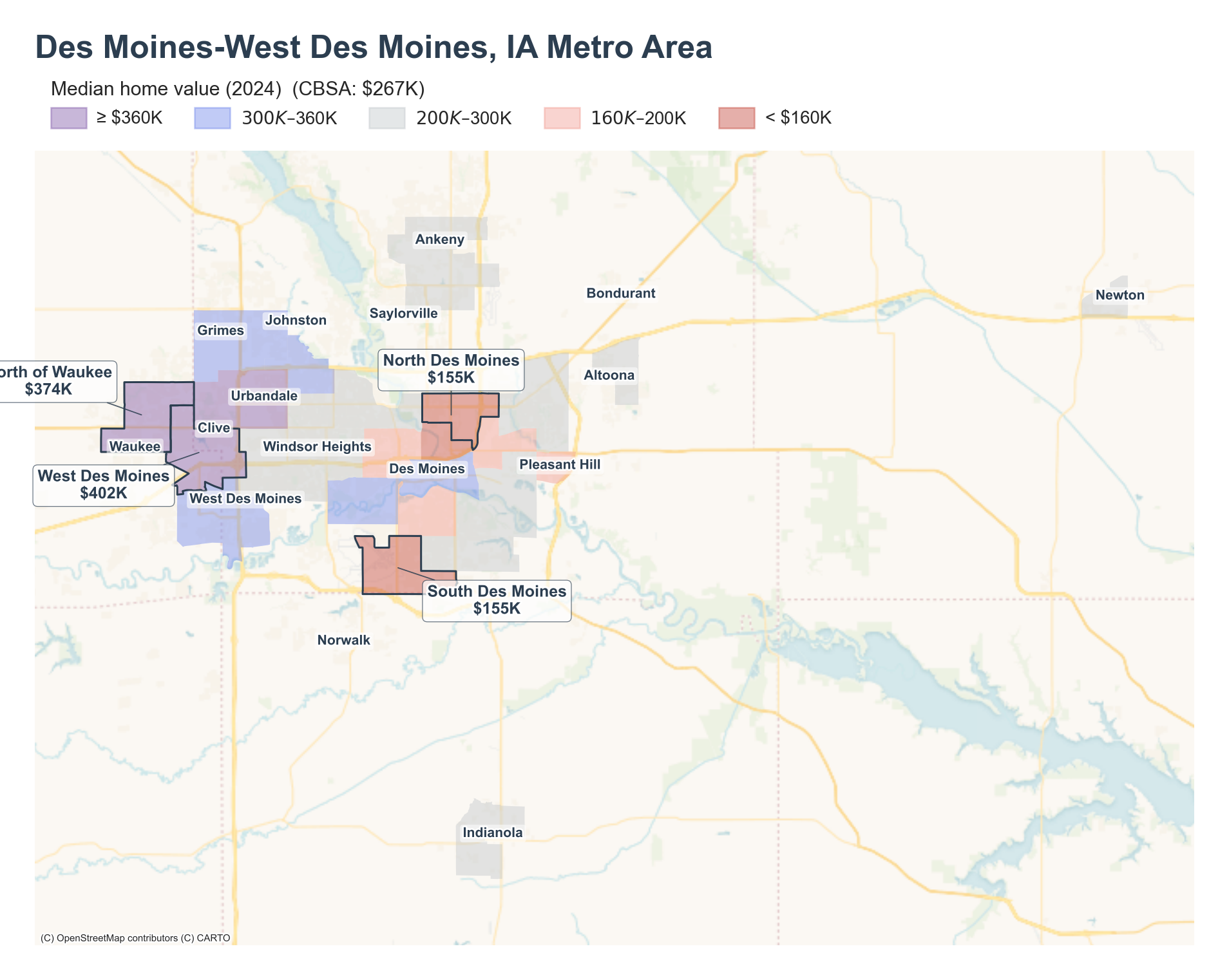
The western suburban band from Waukee through Urbandale concentrates wealth and degrees; central and north-side Des Moines sit at the bottom of value, income, and education together.
Read post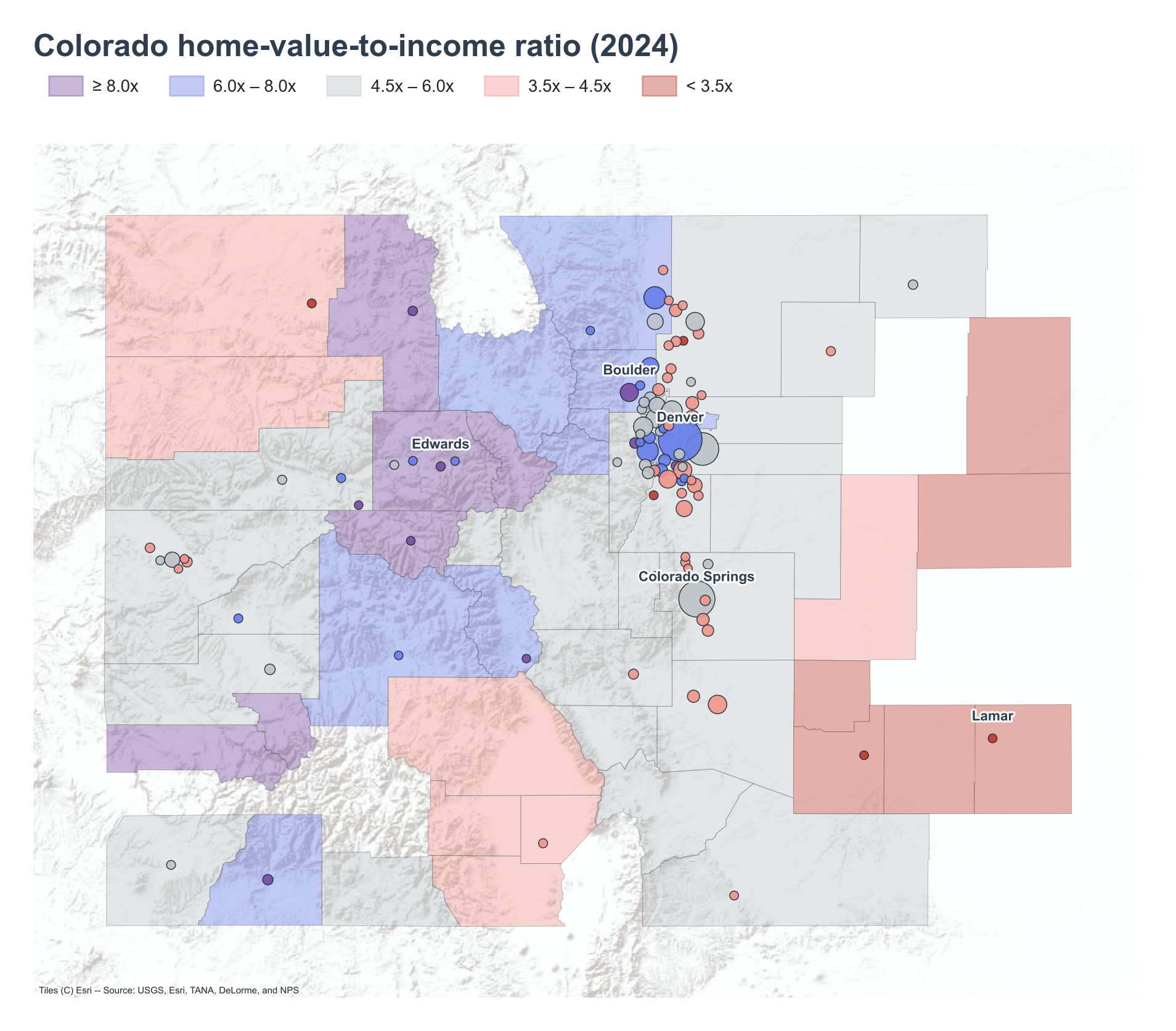
Colorado's home-value-to-income ratio has pulled further away from the United States since 2018, with the mountain resort corridor running near double the state figure and the southeastern plains holding the only affordable corners left.
Read post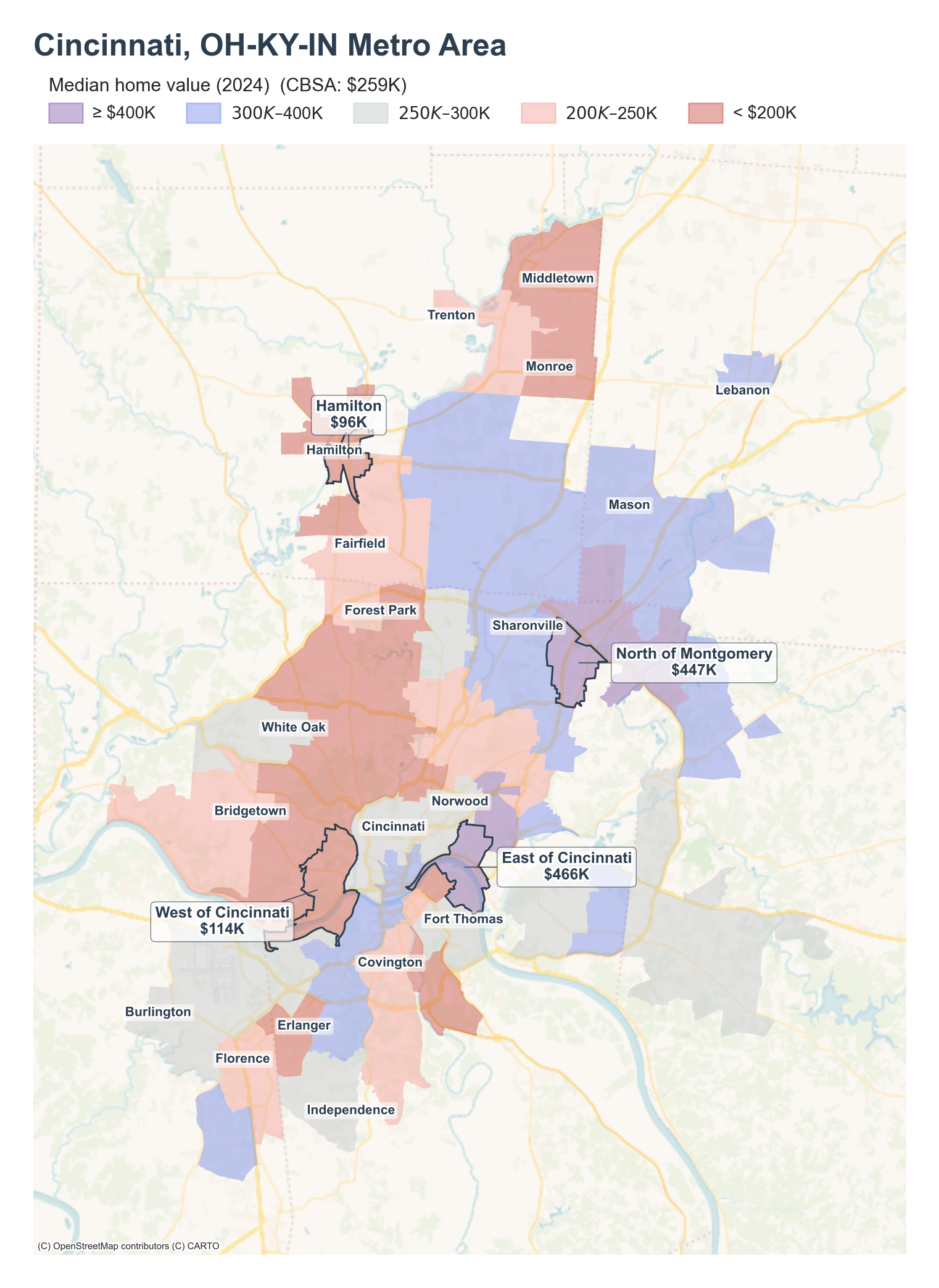
The eastern and northeastern suburbs around Montgomery and Loveland lead on wealth and education, while the northern industrial cities of Hamilton and Middletown and the city's west side sit at the bottom.
Read post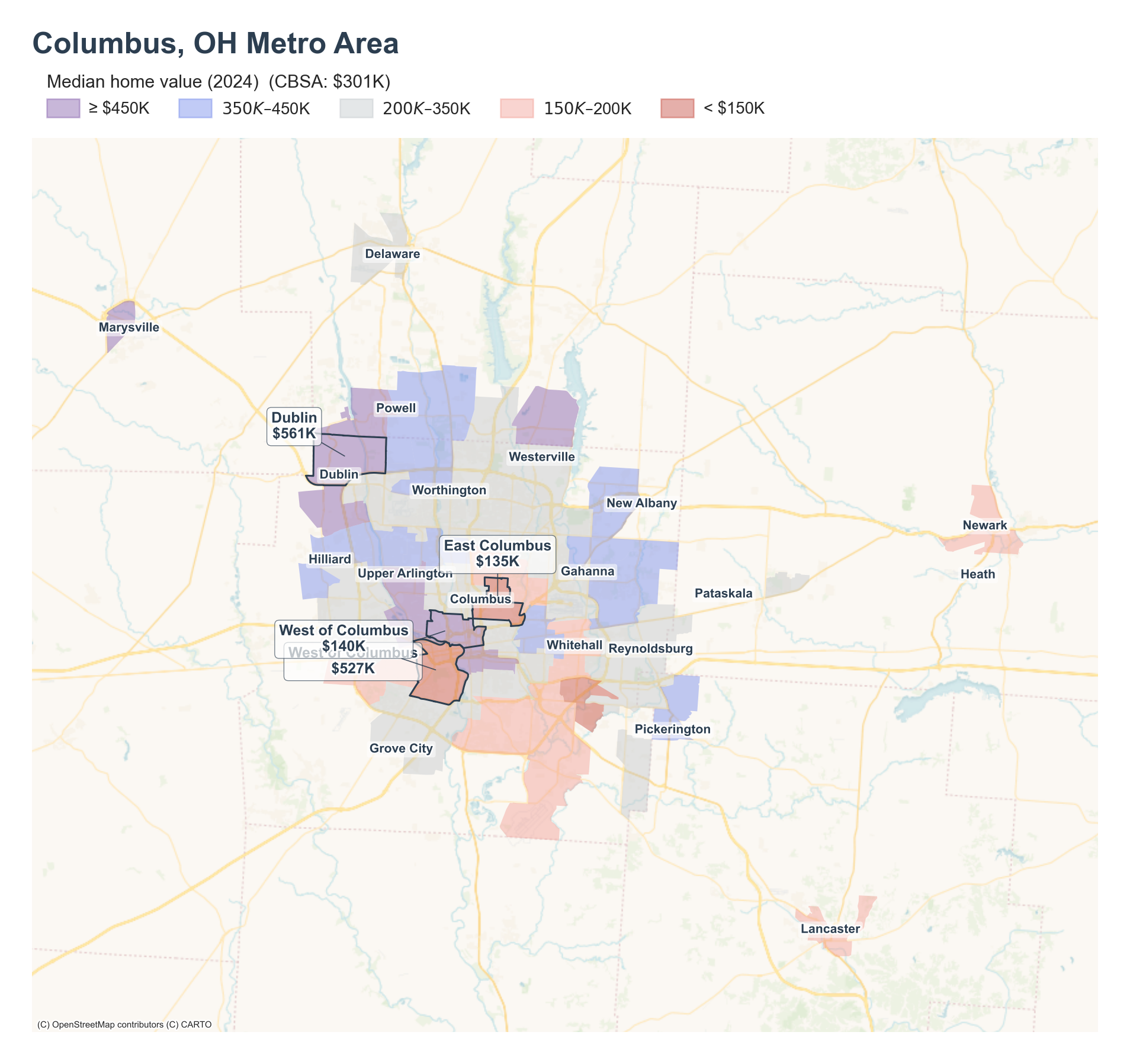
The Dublin–Upper Arlington arc concentrates wealth and degrees; the campus belt skews young; East Columbus and Whitehall sit at the bottom of value, income, and education.
Read post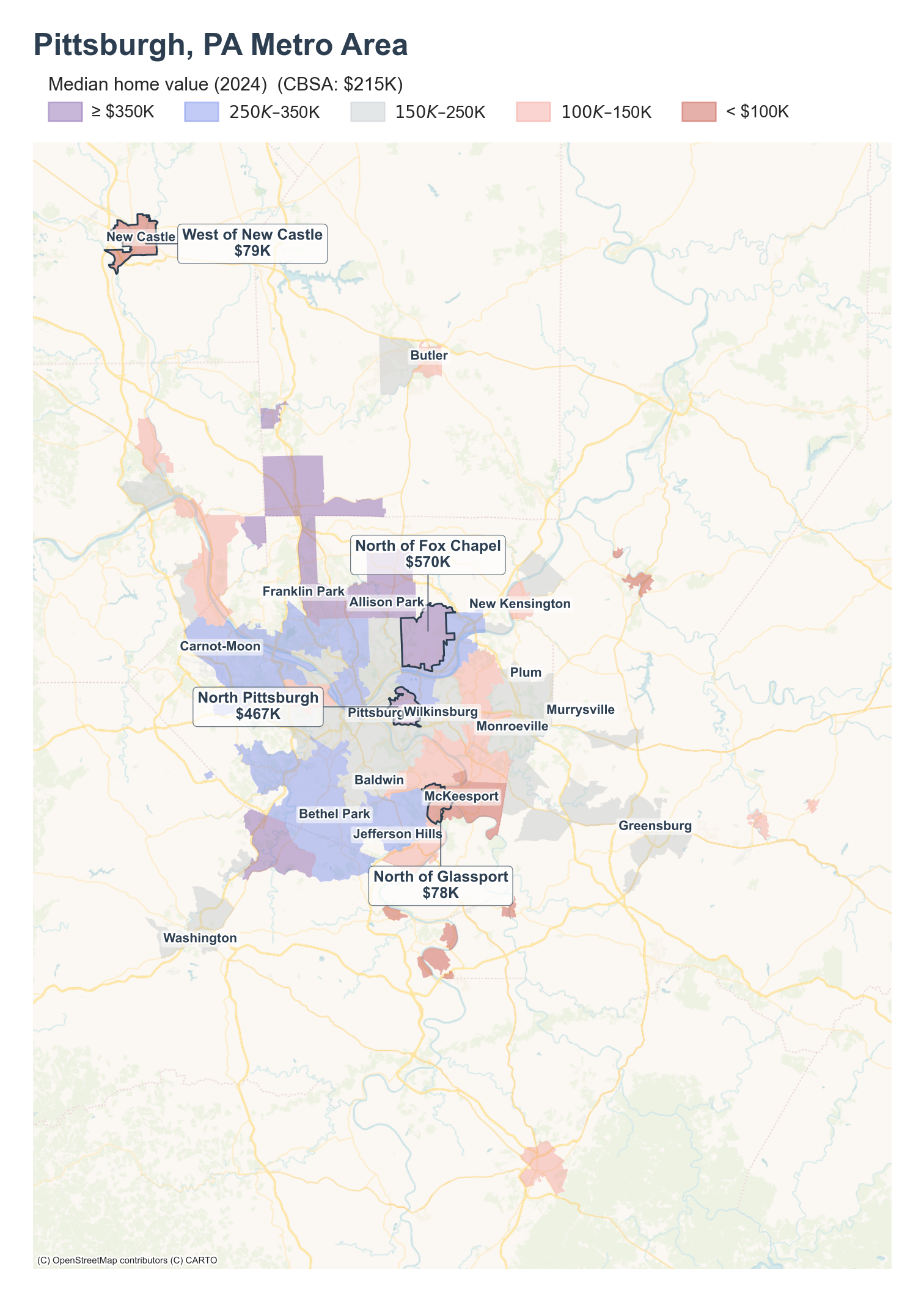
The northern suburbs around Fox Chapel and Franklin Park lead on wealth and education, while the Monongahela Valley mill towns and the New Castle area sit at the bottom.
Read post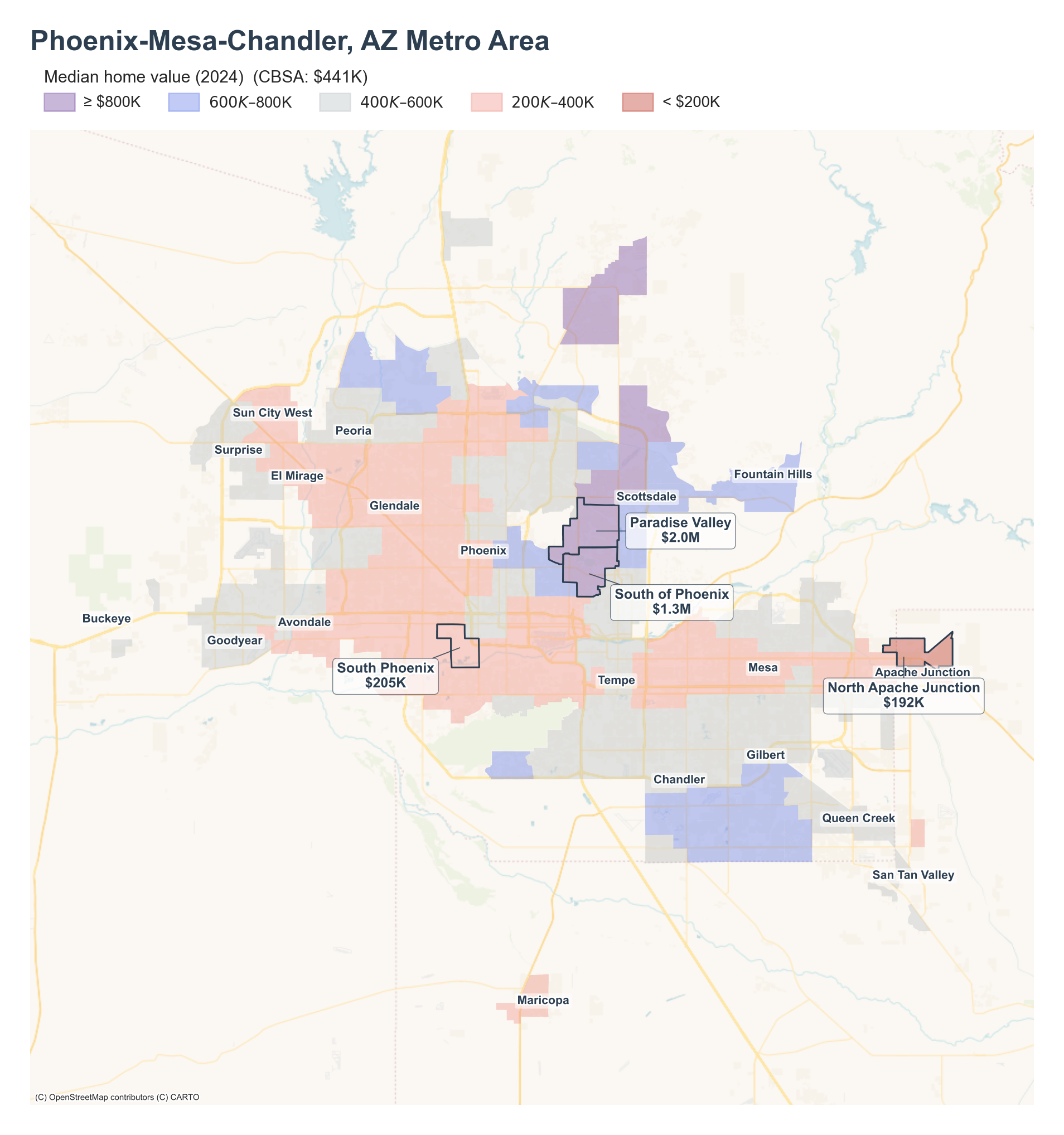
The Paradise Valley–Scottsdale axis leads on home values, incomes, and education together, while south and west Phoenix sit at the bottom and the northwest retirement enclaves around Sun City stand out as the metro's oldest.
Read post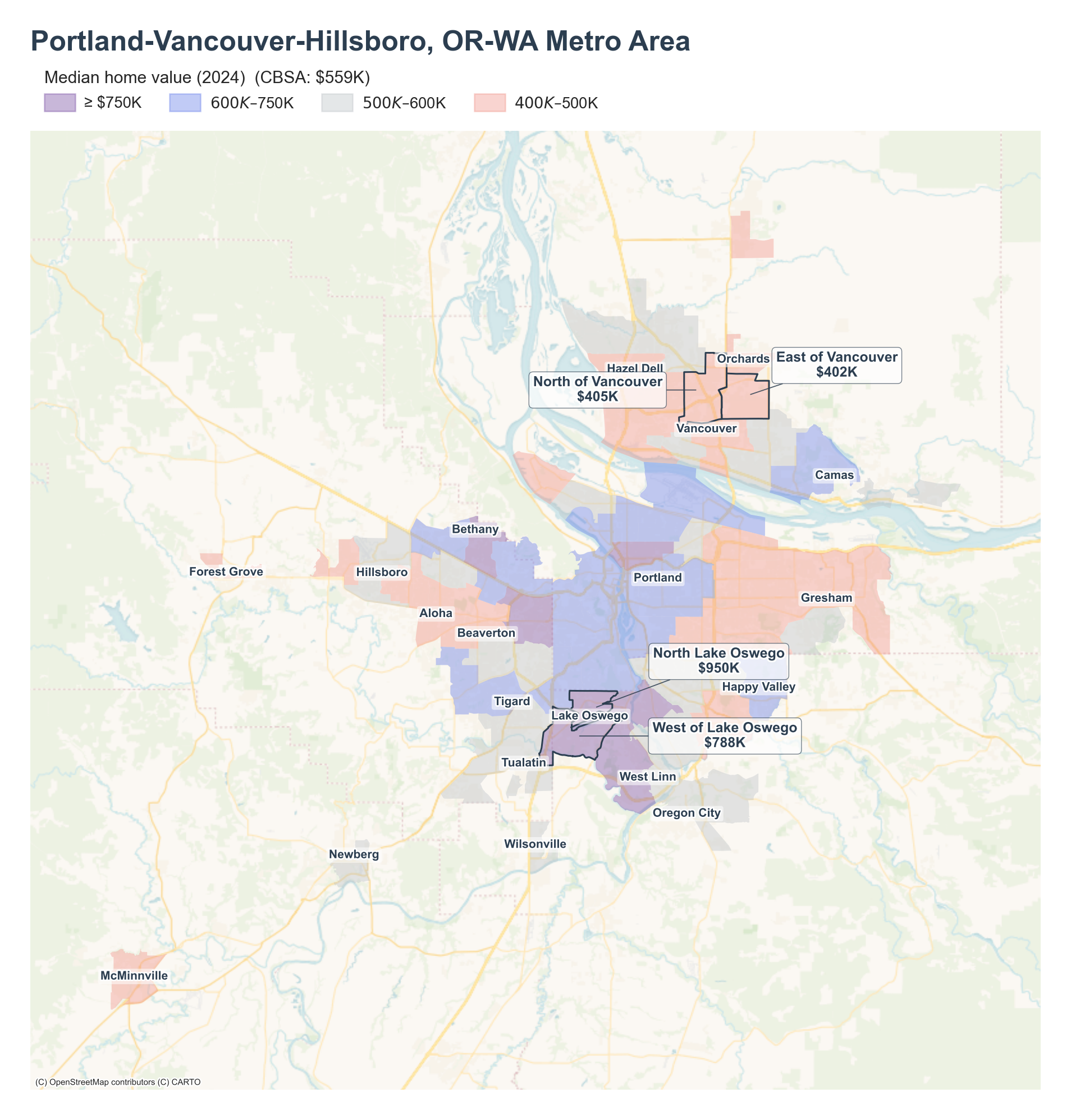
The west-side and south suburbs around Lake Oswego and Bethany lead on wealth and education, while the east side around Gresham and Vancouver, Washington sit at the bottom.
Read post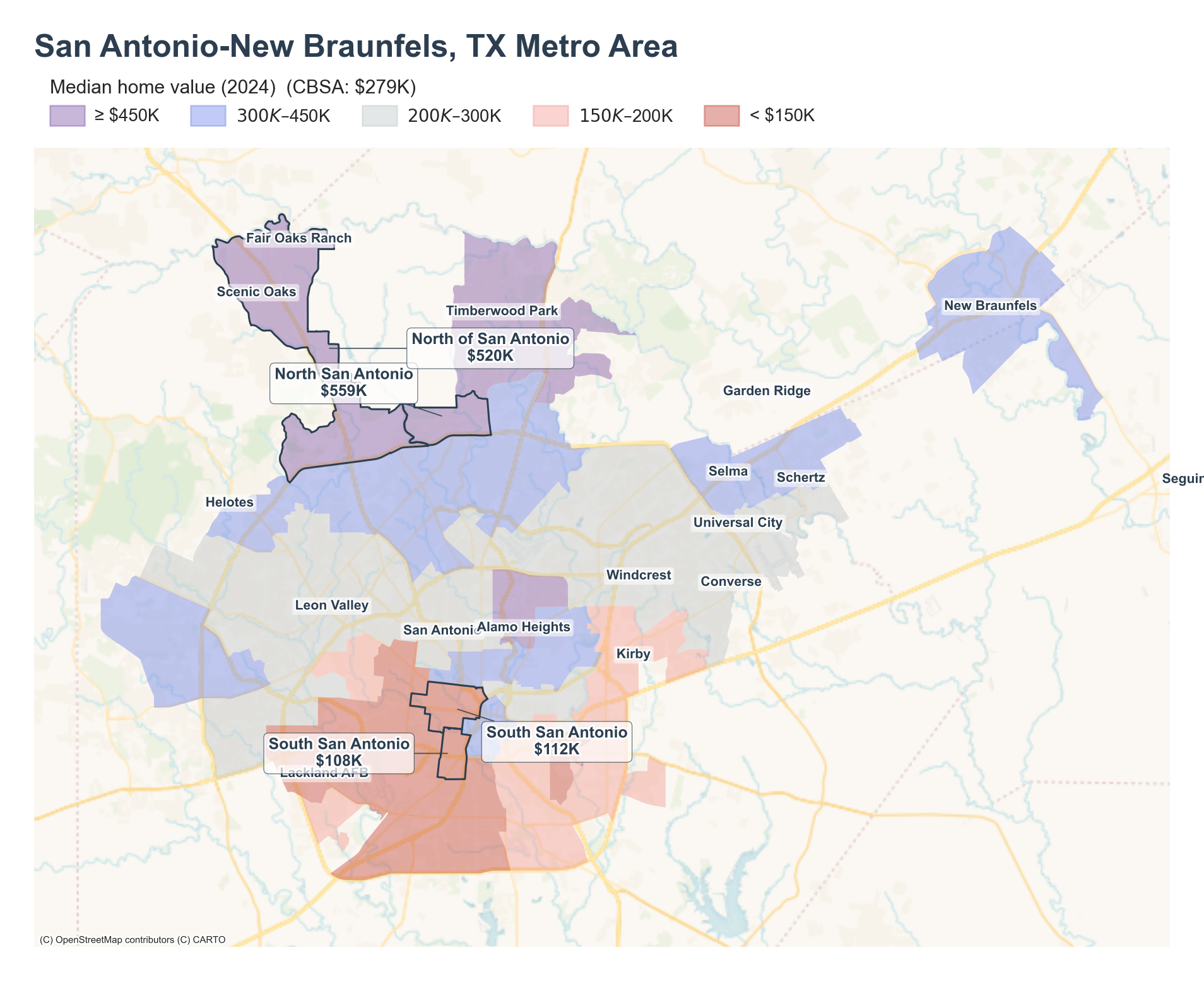
A band of north-side suburbs from Stone Oak through Timberwood Park leads on wealth and education, while the south and southwest sides sit at the bottom.
Read post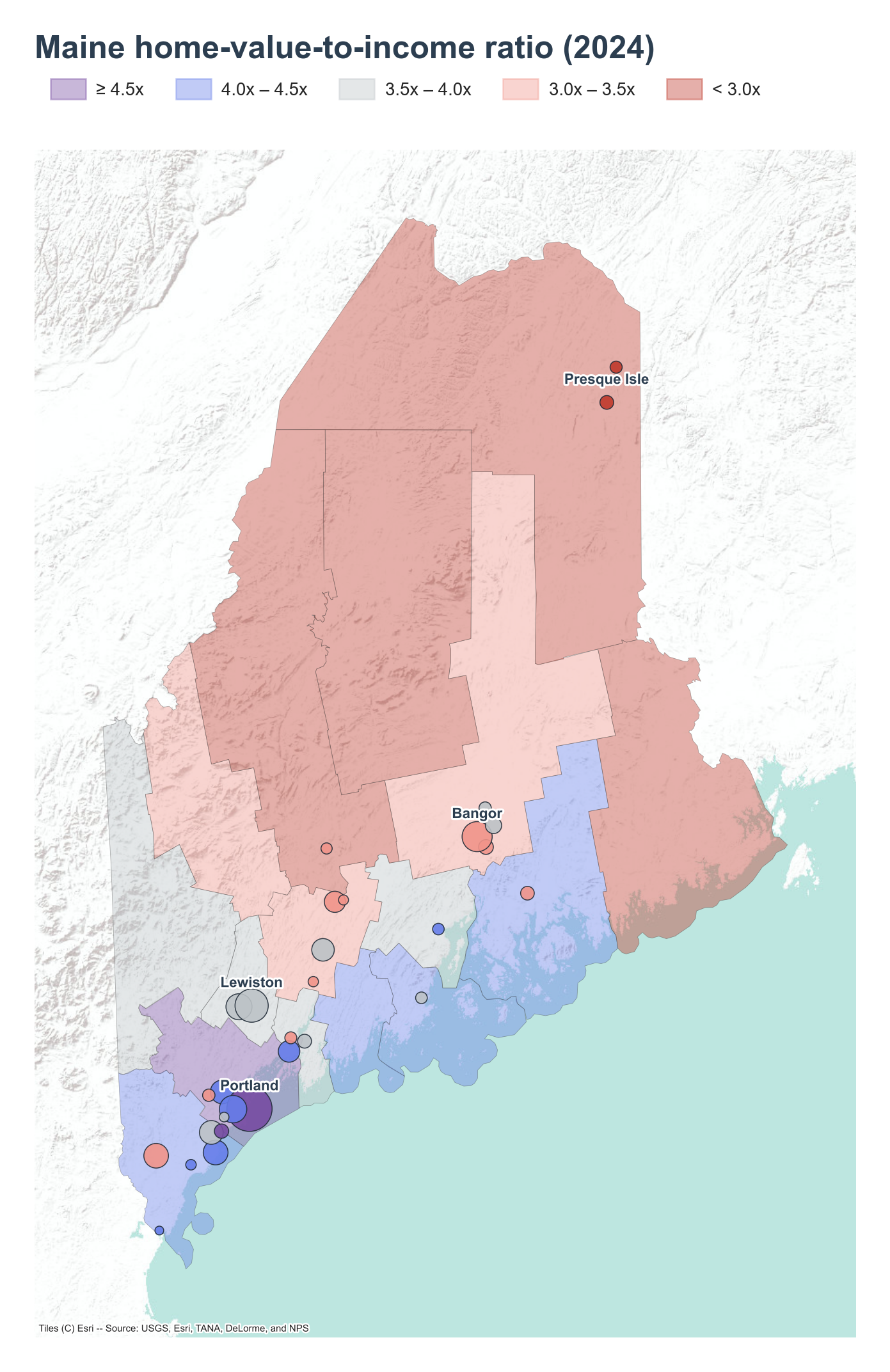
Maine's home-value-to-income ratio climbed from 3.33x in 2018 to 3.97x in 2024, still below the US 4.12x but pulled up by a southern coastal strip where Portland and resort towns now sit above 6x.
Read post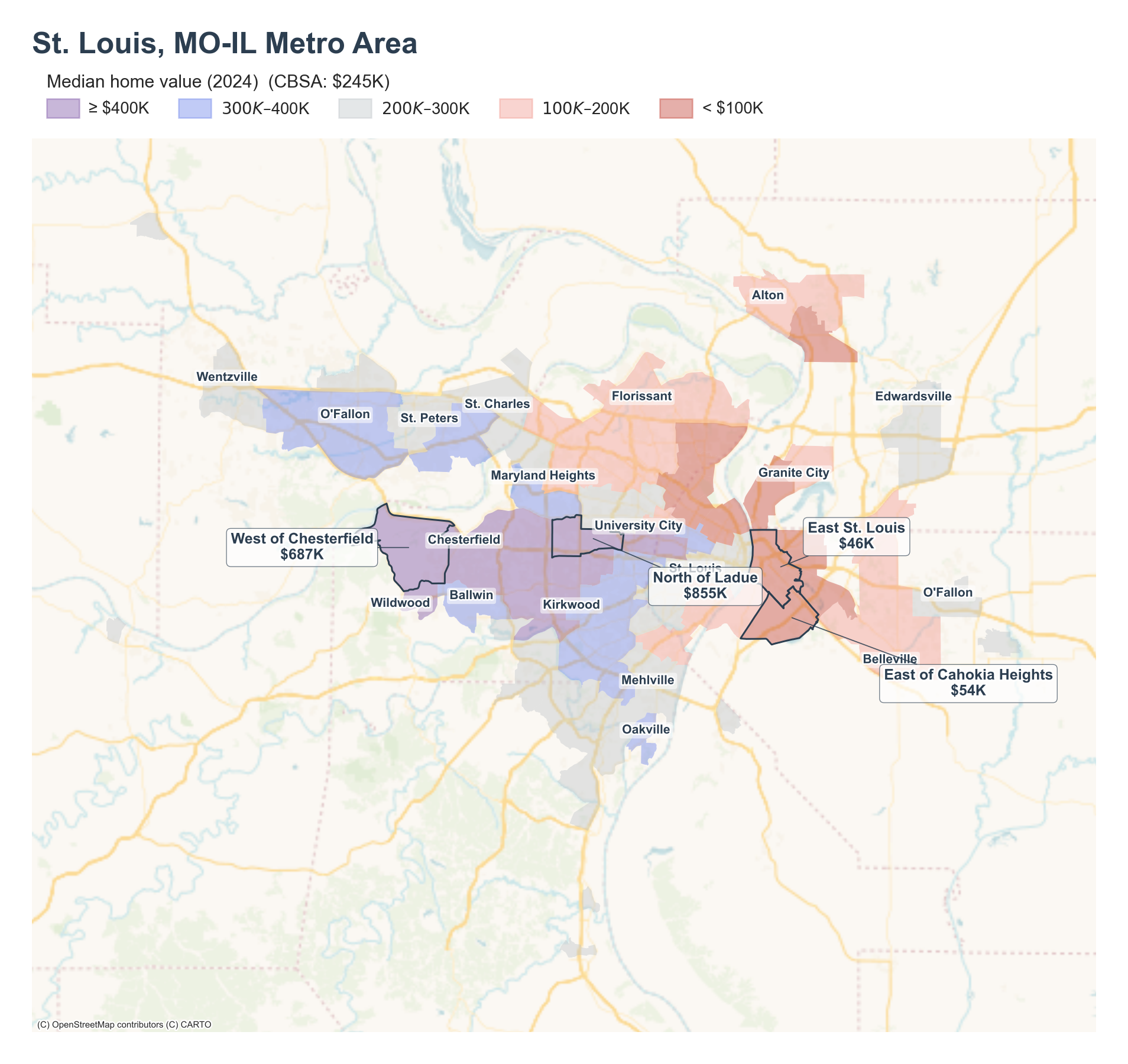
The western St. Louis County suburbs around Ladue and Chesterfield lead on wealth, while the Illinois Metro East and North St. Louis sit at the bottom.
Read post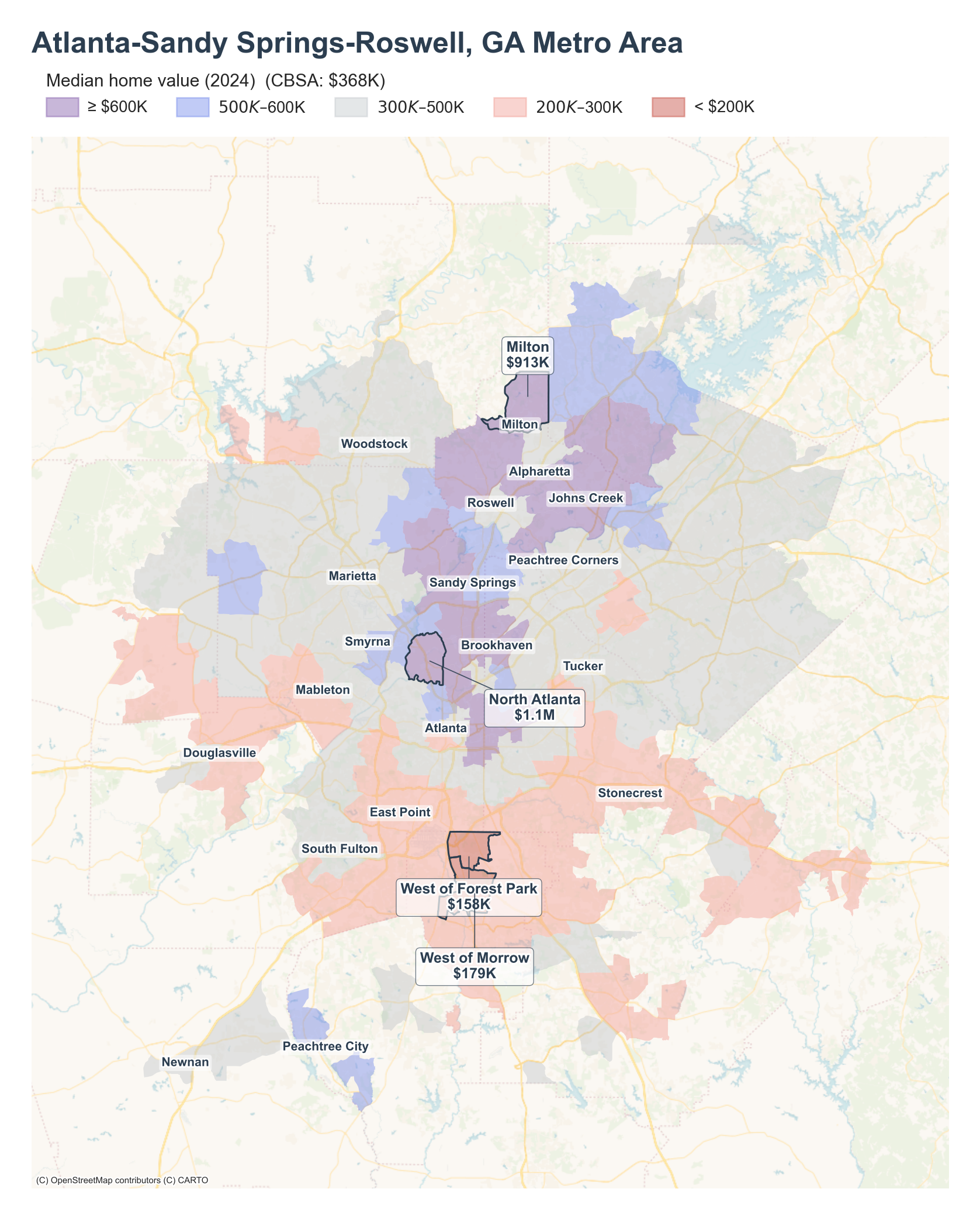
A wealthy northern arc sits beside lower-value southern communities along the airport corridor.
Read post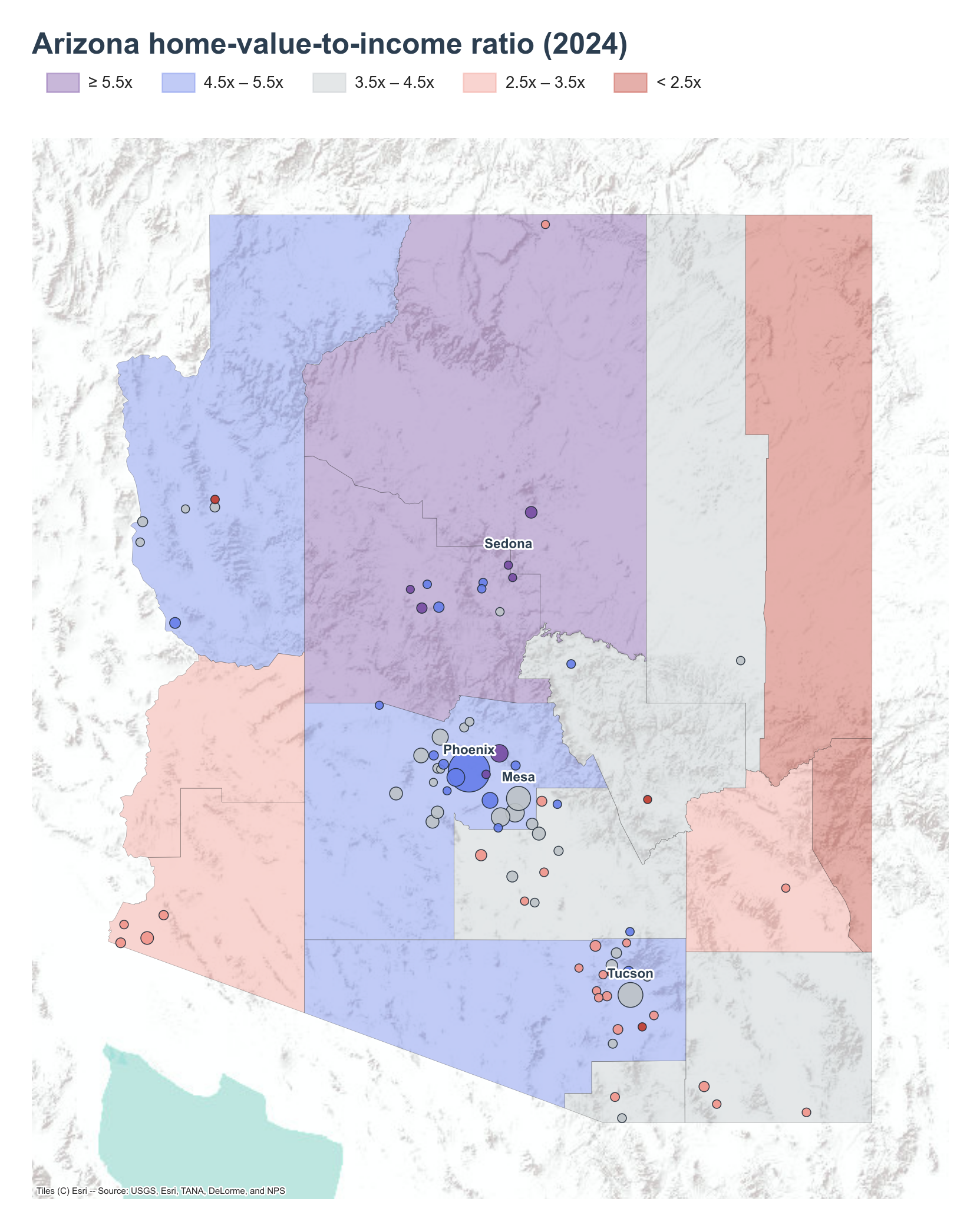
Arizona's home-value-to-income ratio jumped from 3.73x in 2018 to 4.93x in 2024, opening a 0.81x gap above the U.S. and pushing nearly nine in ten Arizonans into places at 4x or higher.
Read post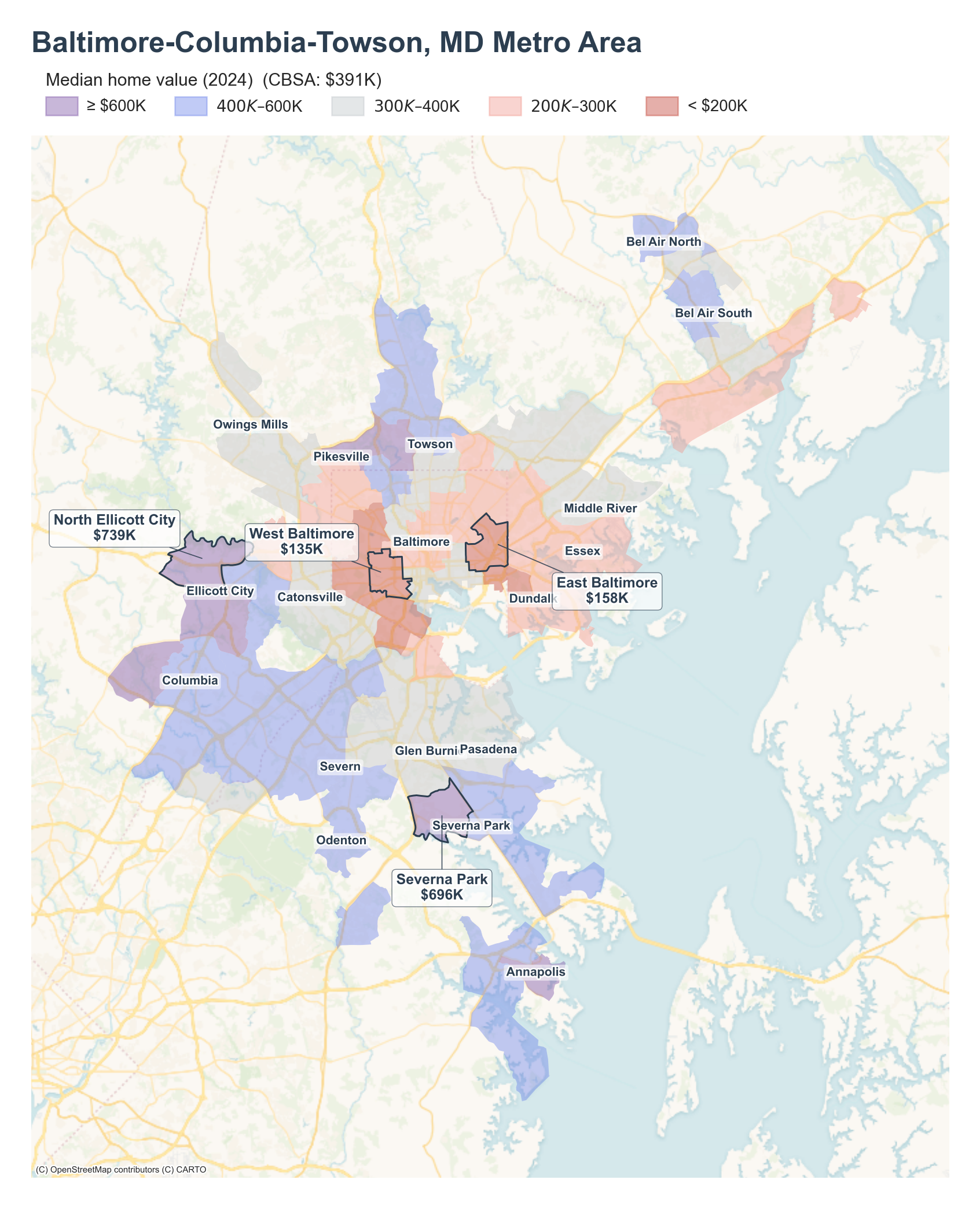
A suburban ring through Howard County, northern Baltimore County, and Anne Arundel leads on wealth, while the Baltimore city core and the industrial east sit at the bottom.
Read post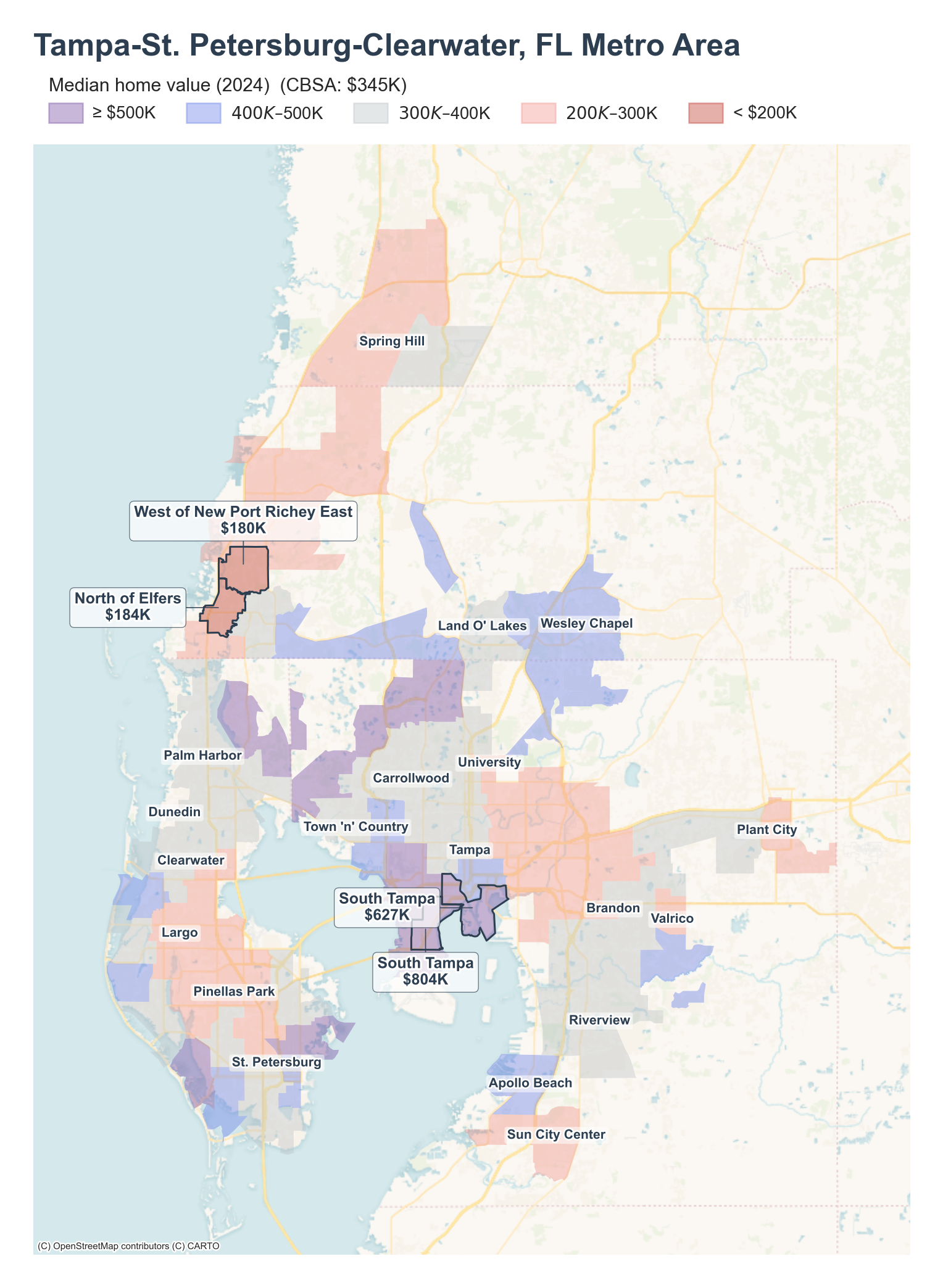
The South Tampa peninsula and the north-county suburbs lead on wealth and education, while the coastal communities of west Pasco County sit at the bottom.
Read post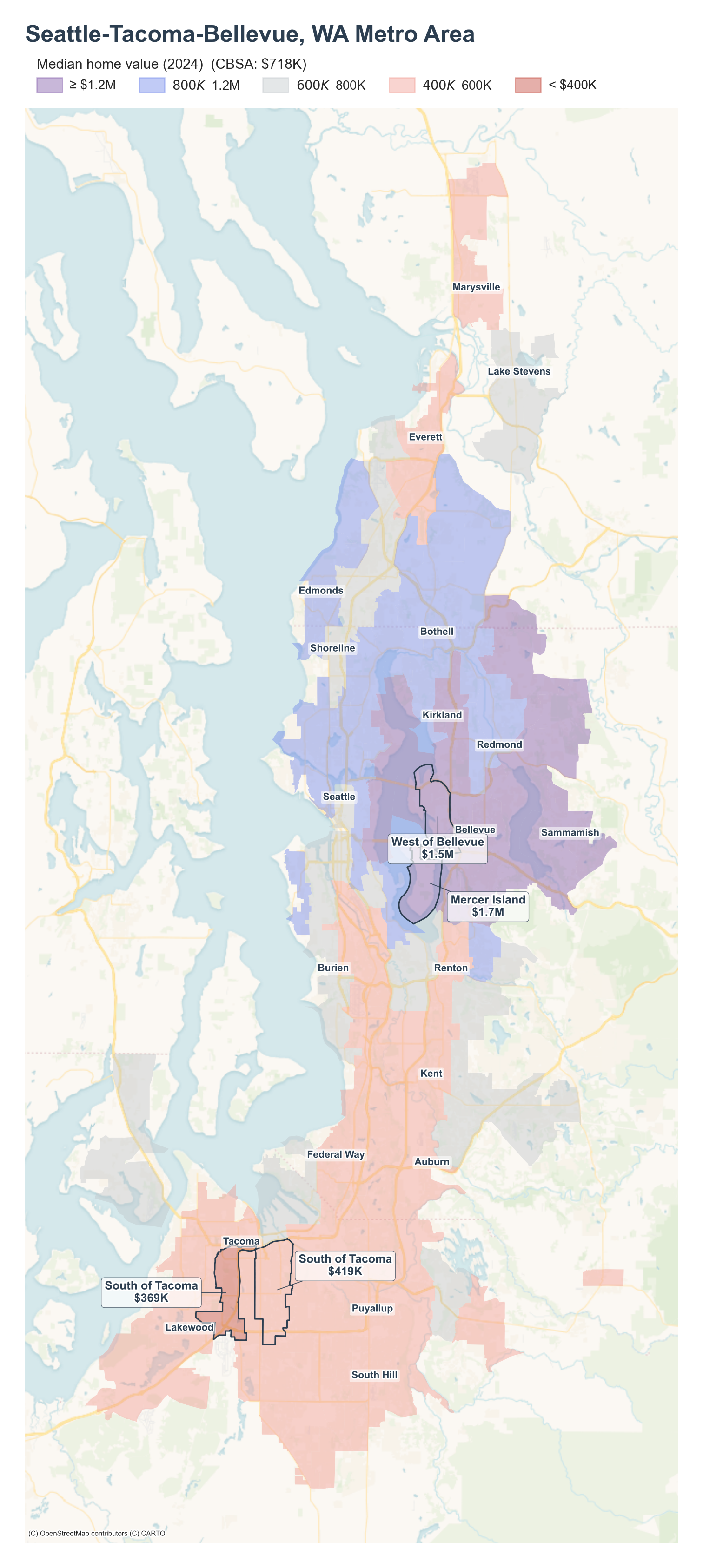
The eastside lakeshore sits far above the metro, while the south-Tacoma corridor sits well below it.
Read post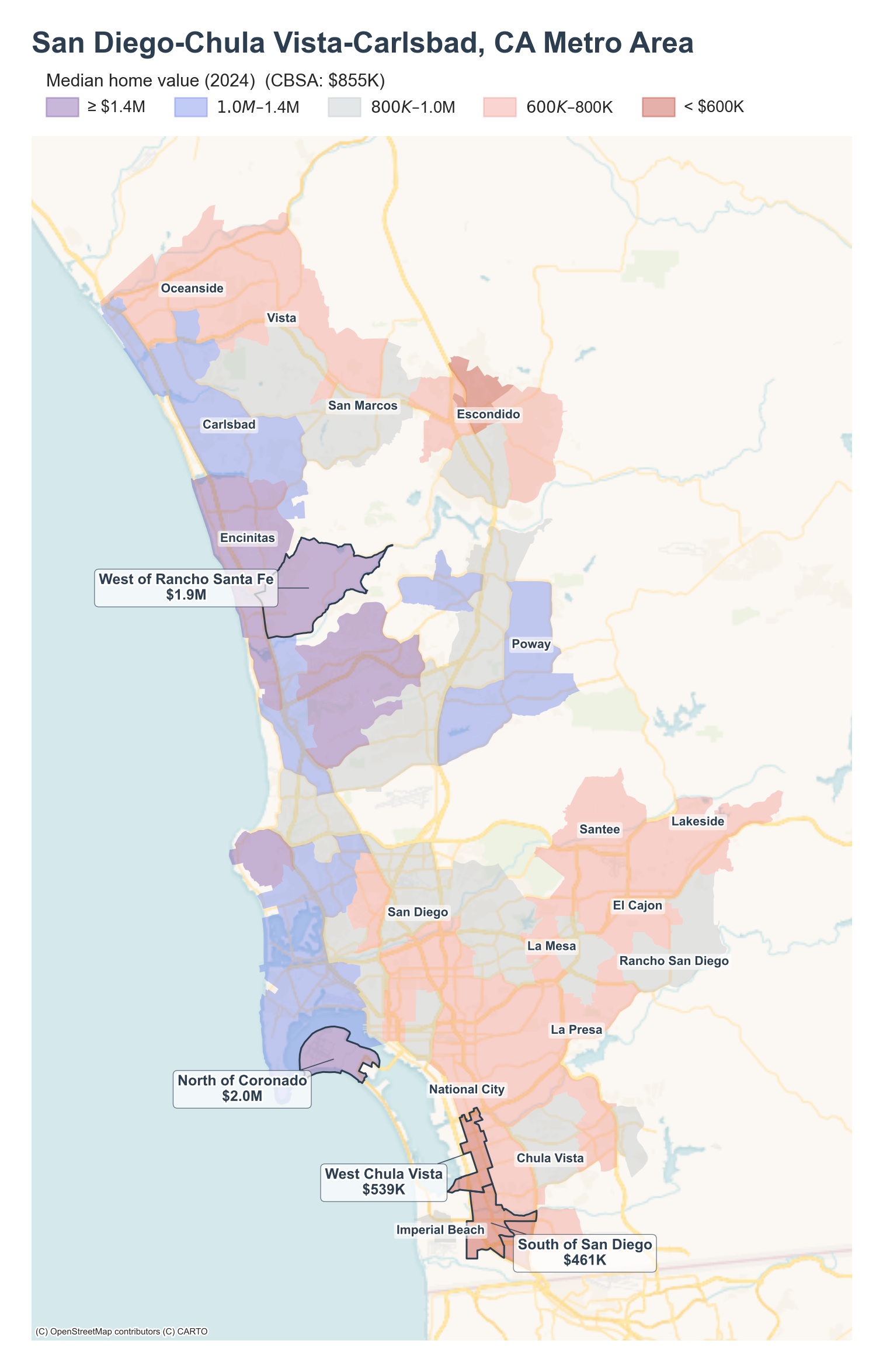
The coastal strip from Coronado up through Rancho Santa Fe and Encinitas holds million-dollar home values, while the South Bay near the border sits at the bottom on value and education.
Read post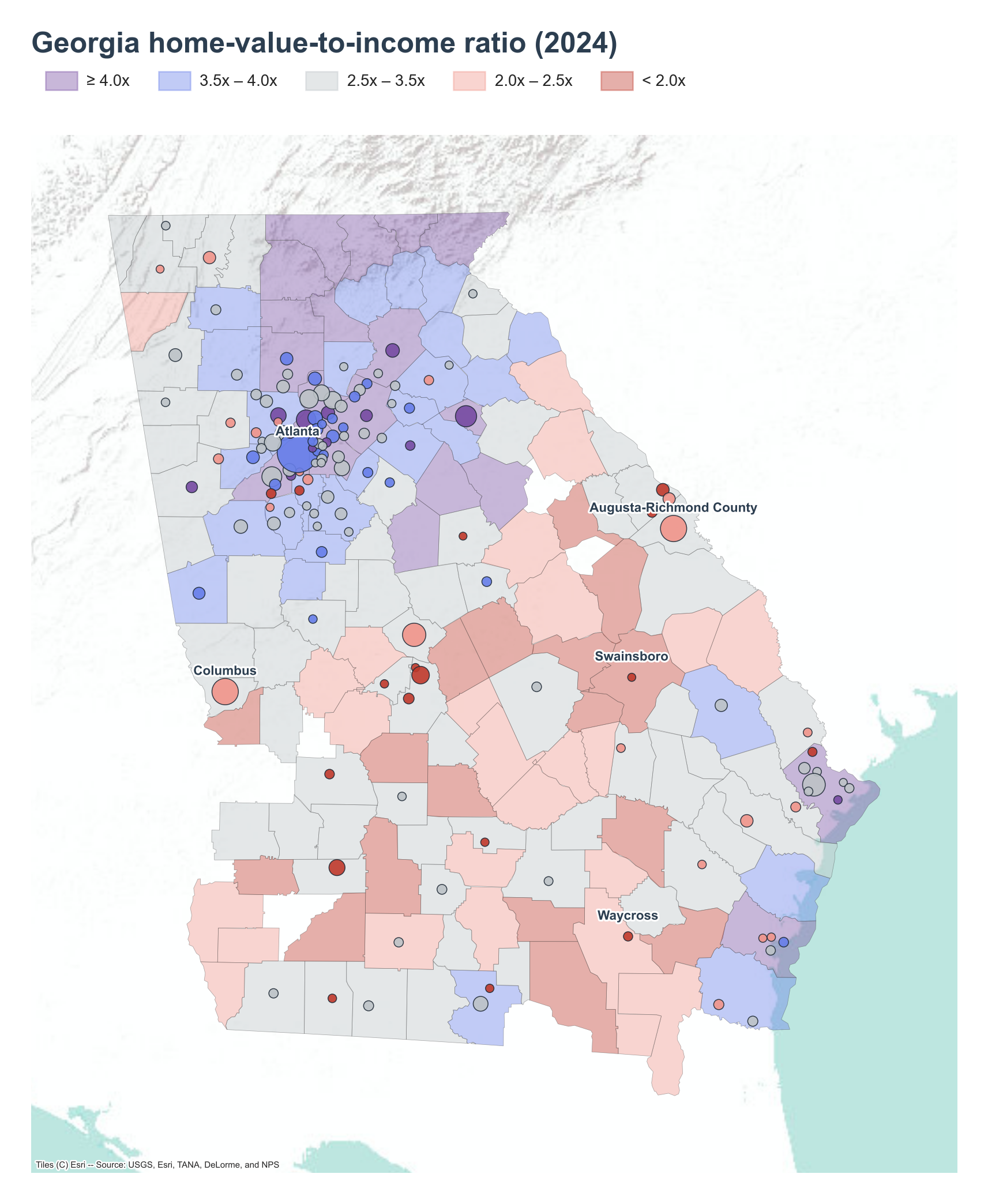
Georgia's home-value-to-income ratio rose from 3.00x in 2018 to 3.92x in 2024, trailing the US 4.12x but climbing on the same slope. Metro Atlanta and the north Georgia mountains pulled the ≥5x bucket; rural south and east Georgia anchored the bottom.
Read post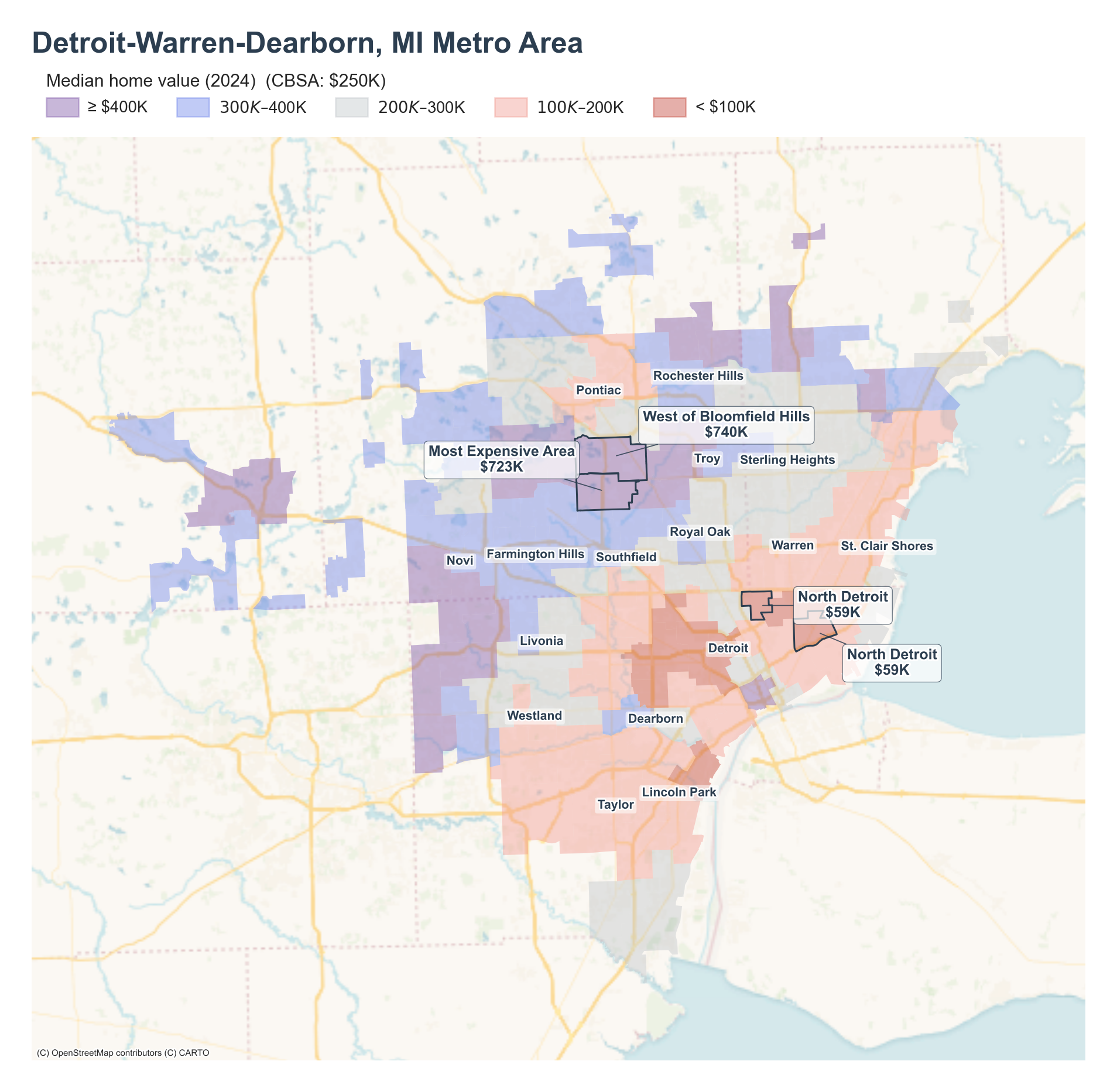
The northern Oakland County suburbs lead on every measure of wealth, while the city of Detroit's core sits at the bottom of home value, income, and education together.
Read post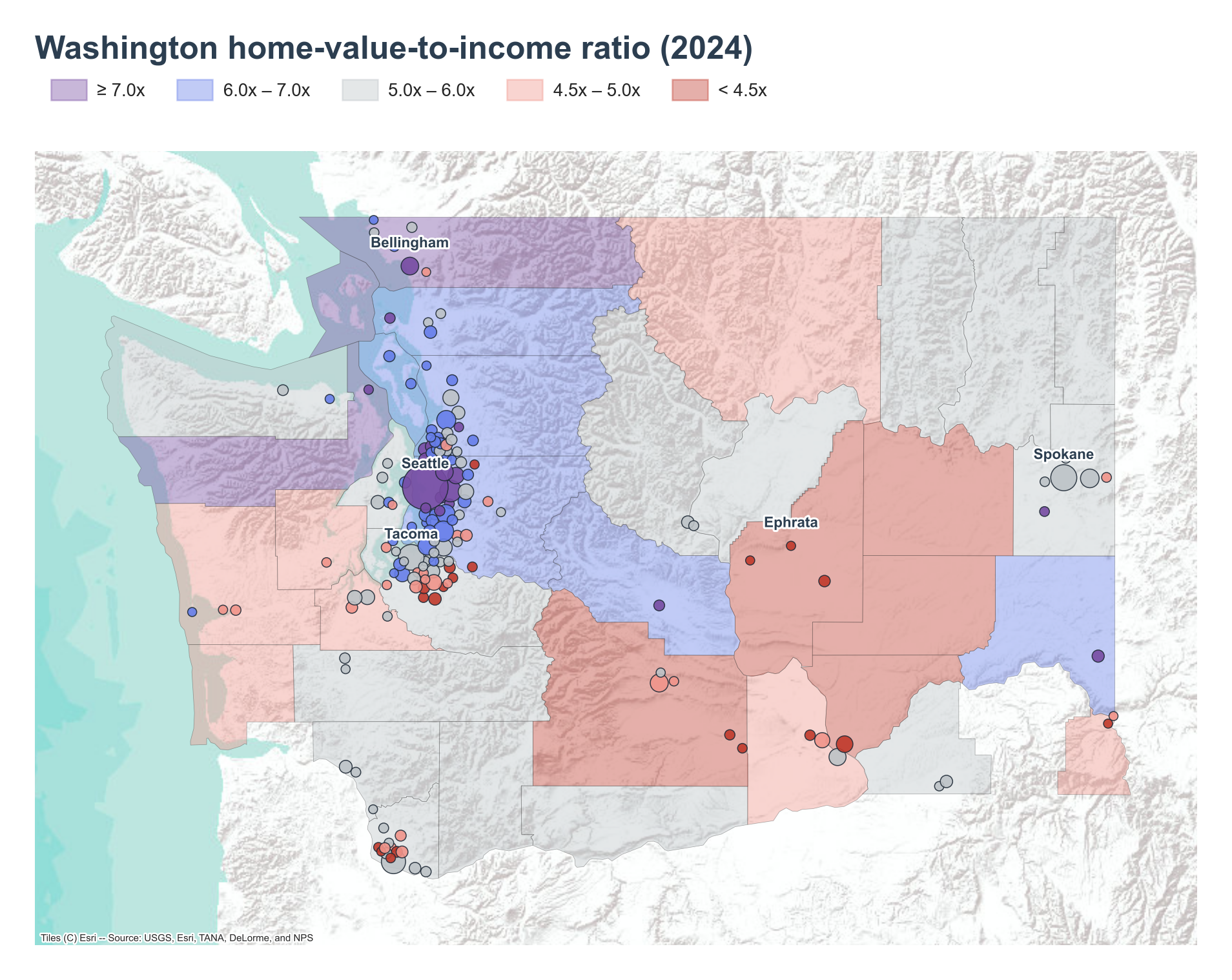
Washington's home-value-to-income ratio reached 5.75x in 2024 against a US figure of 4.12x — a gap that widened every year after 2018 and pushed roughly four in five households into places above the 5x line.
Read post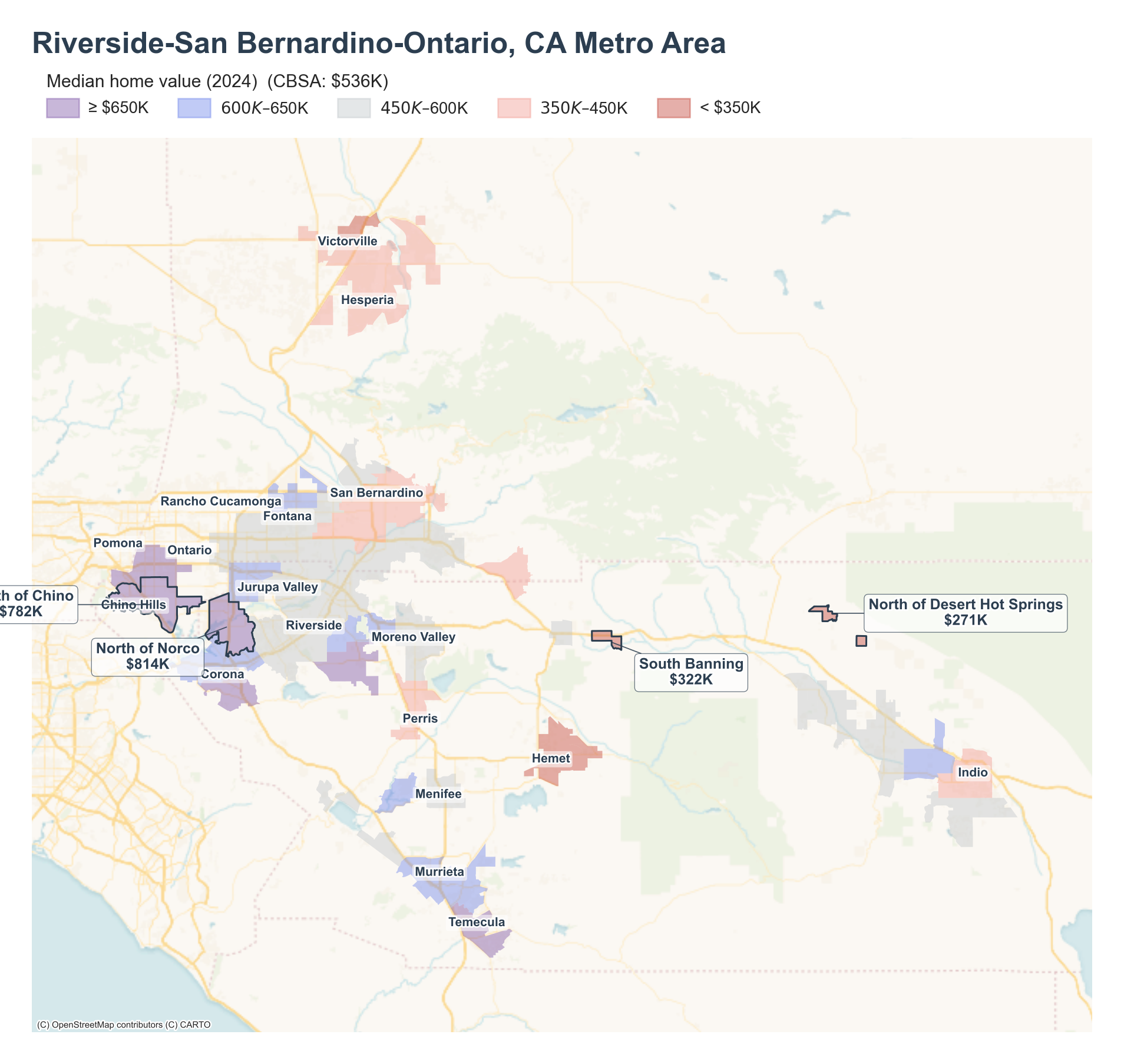
A western edge of commuter suburbs near the Orange County line tops home values and incomes, while the Coachella Valley resort cities to the east hold the oldest, most educated neighborhoods.
Read post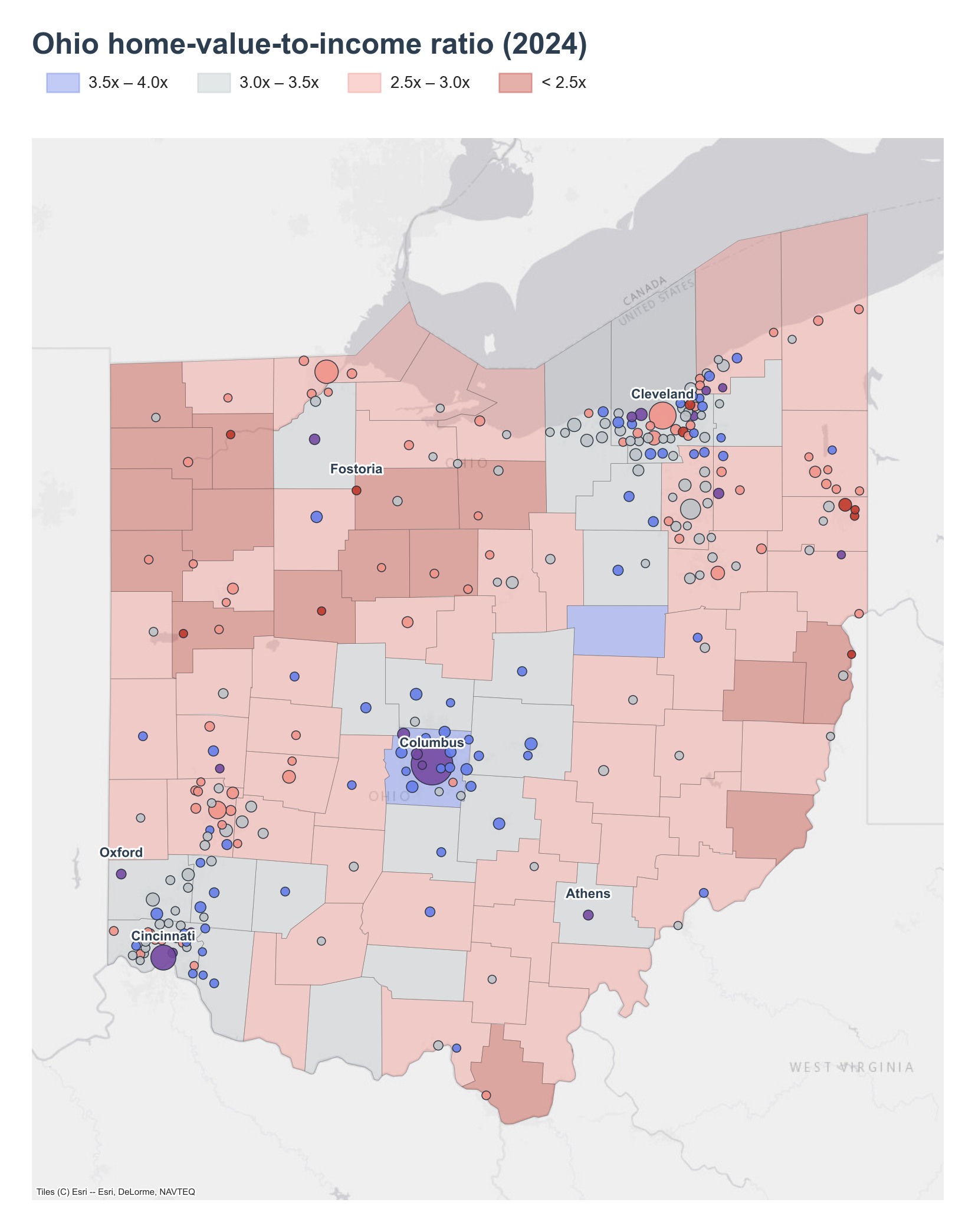
Ohio's home-value-to-income ratio is still well below the U.S. average, but the share of Ohioans living in places at 3x or higher rose from 9.3% in 2018 to 38.9% in 2024.
Read post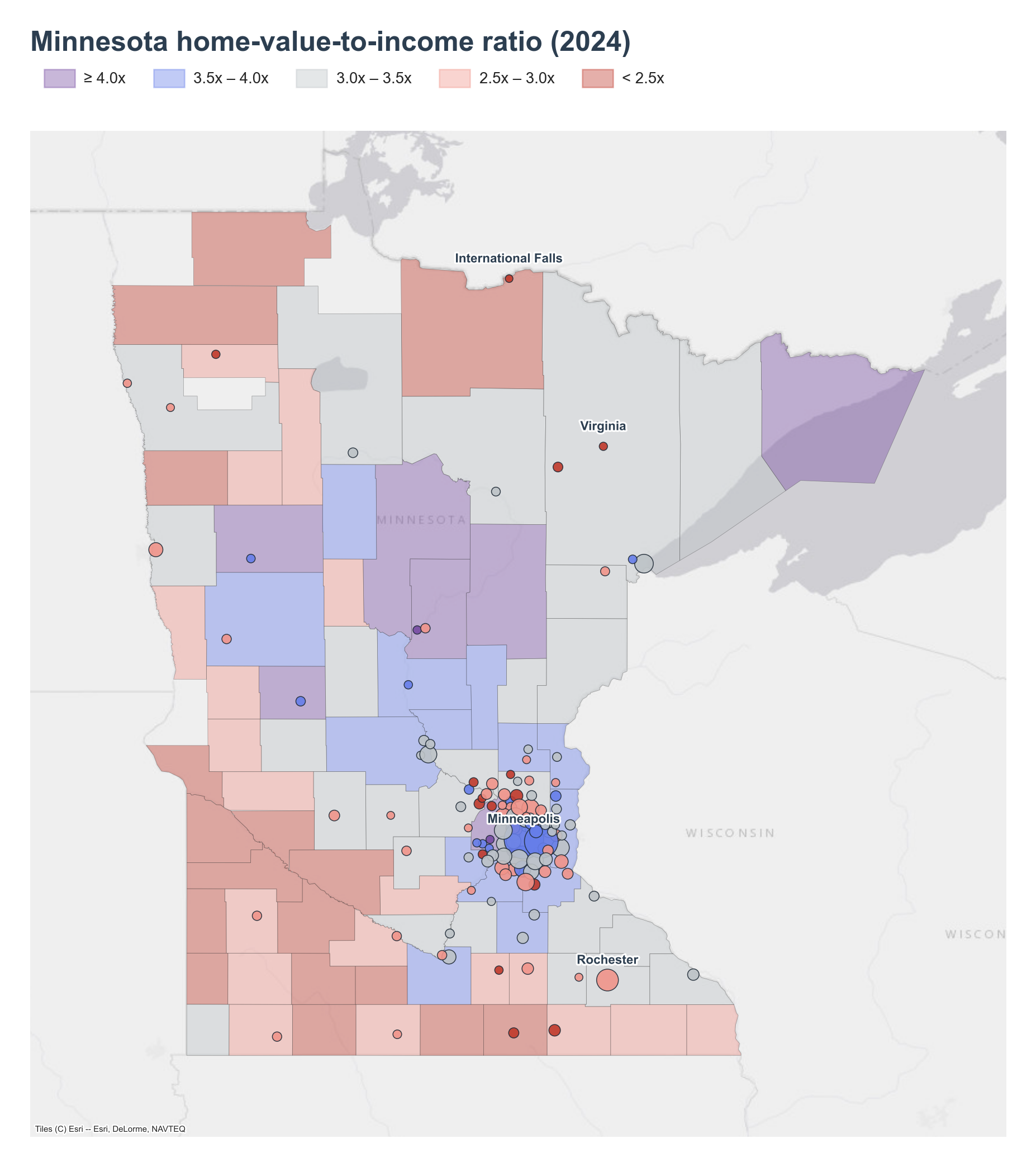
Minnesota's home-value-to-income ratio rose from 3.10x in 2018 to 3.70x in 2024, still below the United States at 4.12x, with the strain concentrated in Twin Cities suburbs and the northern lake counties.
Read post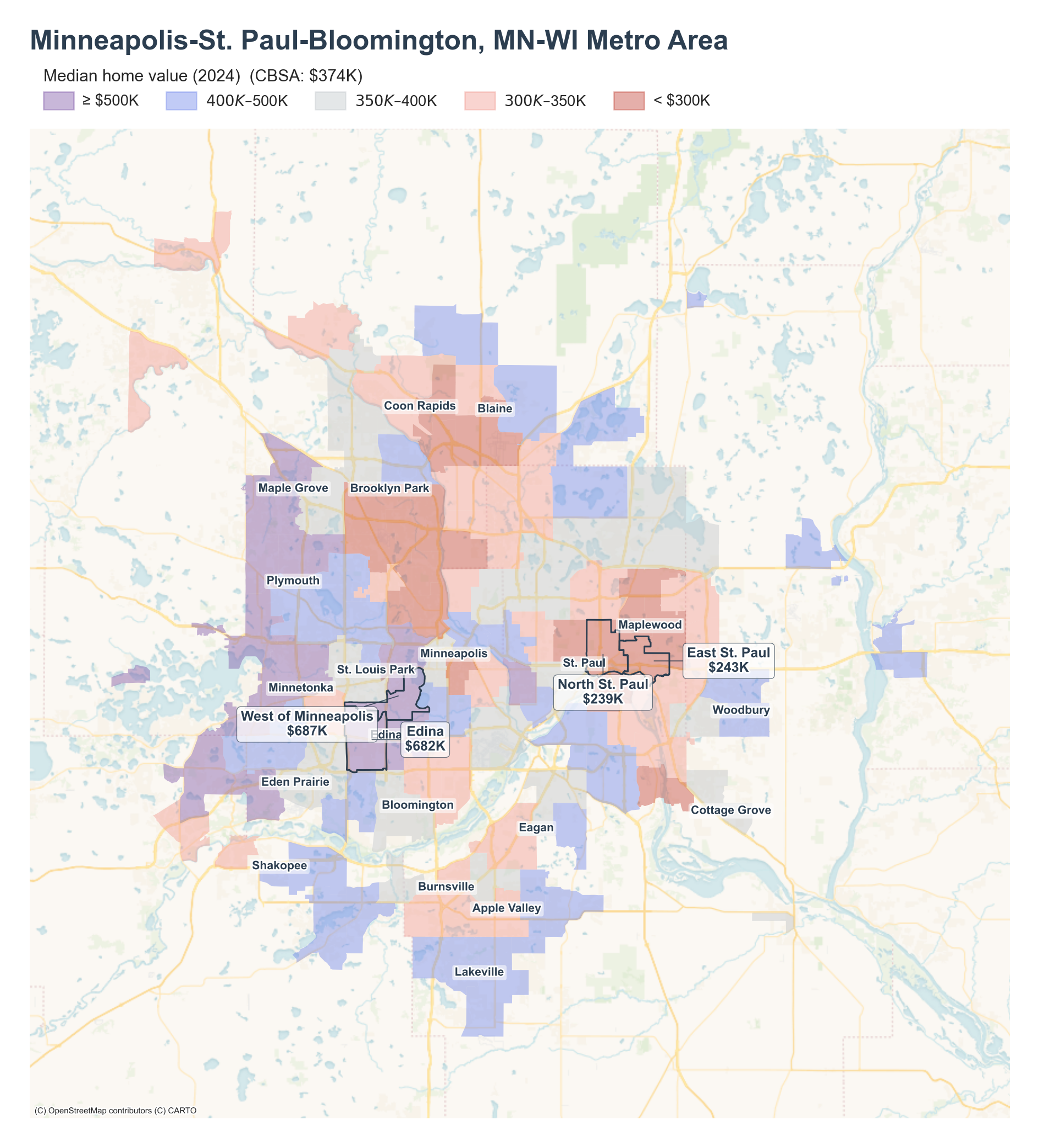
A wealthy western arc through Edina and the Lake Minnetonka suburbs sits beside lower-value pockets ringing east St. Paul.
Read post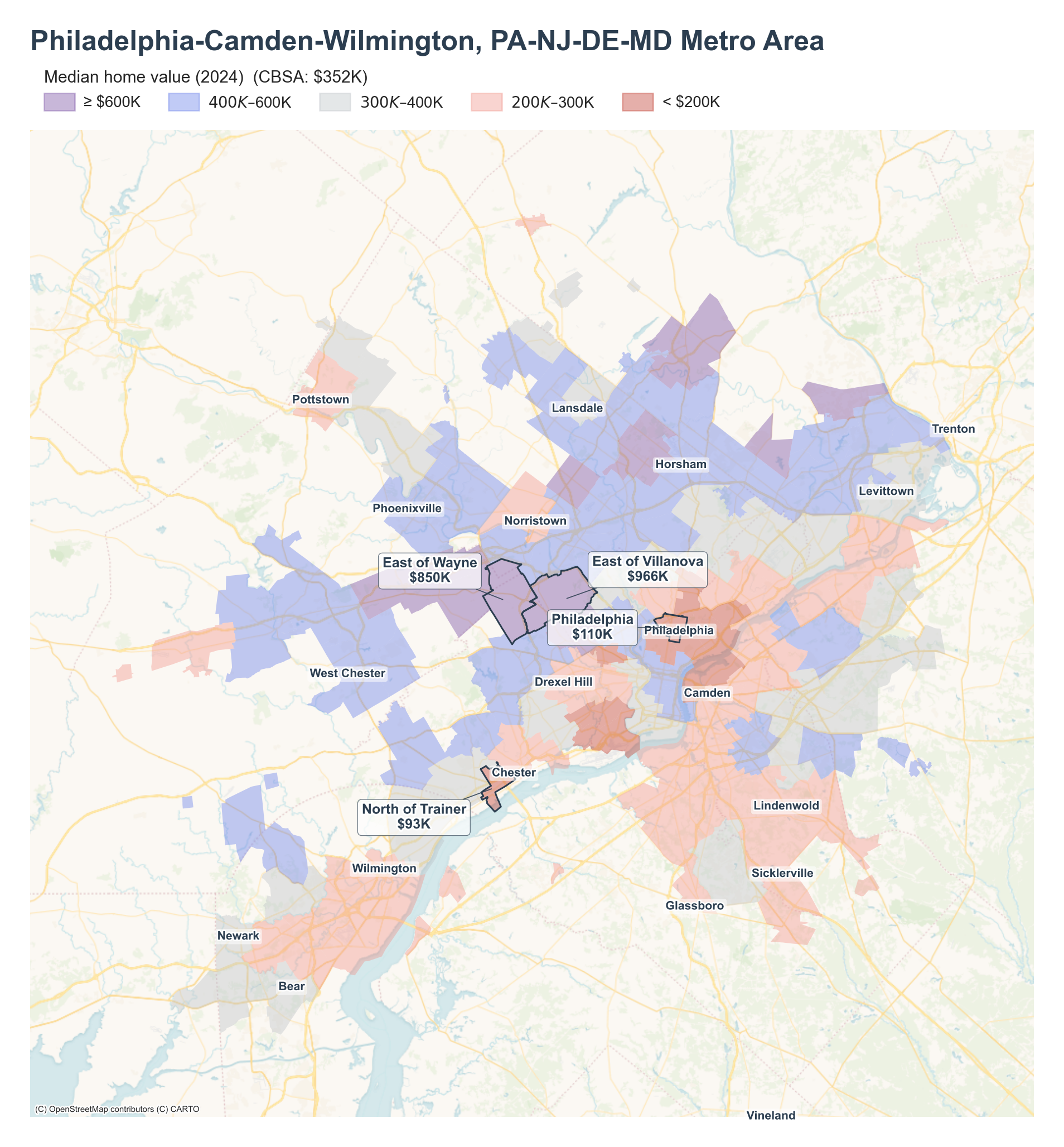
An affluent band of Main Line suburbs west of the city leads on every measure of wealth, while the Philadelphia city core and the Chester riverfront sit at the bottom.
Read post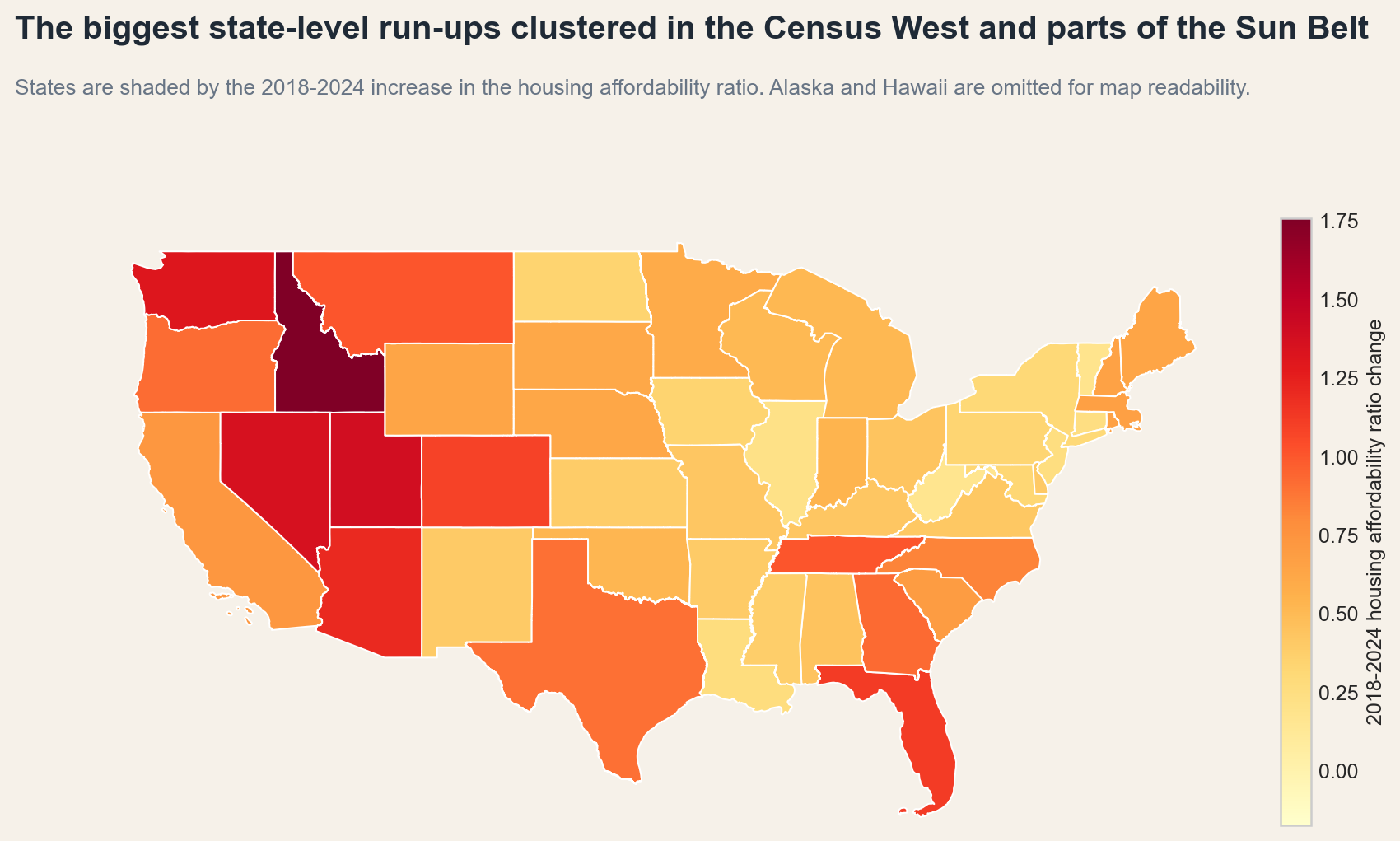
Across states, CBSAs, and Places (named communities), the home value-to-income ratio rose sharply after 2020. The West still sits highest, but the gap between home values and incomes widened across all of the country.
Read post
Census geography is not one simple ladder. Some areas nest cleanly inside one another, while others overlap, split, or sit on a different map entirely. Here is a practical guide to the major Census geographies, how they are defined, and what kind of area or population they usually represent.
Read post
Neighborhood Insights brings together Census geography files and ACS measures on population, age, education, marital status, household income, and home values. This guide explains the main metrics on the site and points to the official Census documentation behind them.
Read post